Con este proyecto, ideado conjuntamente con Juan Carlos Popa, galerista de la galería Poparte, queremos rendir tributo a toda la influencia de la cultura afrocubana, que ha derivado en nuestras raíces culturales. Es un recorrido desde Aponte, Maceo, Juan Gualberto Gómez, líderes independentistas que lucharon por nuestra independencia y el sincretismo cultural a través de la obra de uno de los descubridores de Cuba, Fernando Ortiz, que decía que la isla es un ajiaco donde se mezcla toda la confluencias de culturas. En esta serie hay referencia a escritores como Nicolás Guillén, considerado el poeta nacional, José Martí, que nos …

Personal y profano, y en ese difuso límite entre la santidad y lo diabólico que nos resulta tan atractivo como indistinguible, Elena Gallen traza un recorrido inédito de la mujer fatal. El relato histórico y cinematográfico se ha encargado durante siglos de culpabilizarnos por sentir fascinación por un estereotipo en el que de manera instintiva identificamos que se escondía el germen de nuestra libertad. Los evocadores trazos de Sara Herranz acompañan las reflexiones de Gallén e impregnan cada página de simbolismo y misterio.
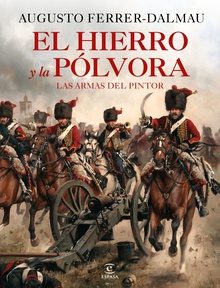
Un libro para disfrutar de la historia de las armas, interpretadas por los pinceles de Augusto Ferrer-Dalmau, el gran pintor de batallas de nuestro tiempo.Augusto Ferrer-Dalmau nos muestra la historia de España a través de las armas y de los ejércitos que las portaron. Las batallas de Ferrer-Dalmau son una lección de historia y un fiel muestrario de armas ofensivas y defensivas; uniformes, caballería, infantería y artillería... El «Pintor de batallas» rescata una vez más la historia y hace que entre por los ojos.

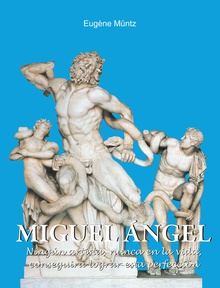
La leyenda de Miguel Ángel (1475-1564) ha permanecido incólume durante quinientos años. Eruditos como Chateaubriand, Manzoni y Rilke vieron en él un maestro de la renovación del arte occidental. En efecto, dotado con un genio creativo casi sobrehumano, Miguel Ángel encarna al “hombre universal” del Renacimiento italiano, y la calidad y alcance de su obra son incomparables, ni siquiera en el caso de Leonardo da Vinci -obras como la Piedad, el David y los frescos de la Capilla Sixtina son prueba de ello. ¿Cómo fue capaz, en tan pocos años, de desarrollar los métodos de una obra digna de sus …
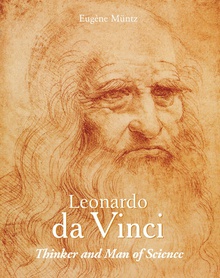
Not only was Leonardo da Vinci (1453-1519) an astonishing painter, but also a scientist, anatomist, sculptor, architect, musician, engineer, inventor, and more. The question is rather, what was he not? During the Italian Renaissance, he mastered the most beautiful works of art for the Medicis’ in Italy and for the King of France. He aroused admiration from his contemporaries, who depicted a universal genius, curious and virtuous. Even today, interest in da Vinci and his work does not fade; his works and writings are still studied by foremost experts hoping to decipher one of the numerous secrets of this visionary …
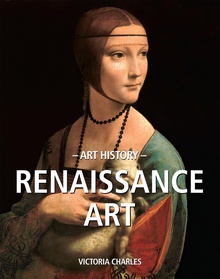
The Renaissance began at the end of the 14th-century in Italy and had extended across the whole of Europe by the second half of the 16th-century. The rediscovery of the splendour of ancient Greece and Rome marked the beginning of the rebirth of the arts following the break-down of the dogmatic certitude of the Middle Ages. A number of artists began to innovate in the domains of painting, as well as sculpture and architecture. Depicting the ideal and the actual, the sacred and the profane, the period provided a frame of reference which influenced European art over the next four …
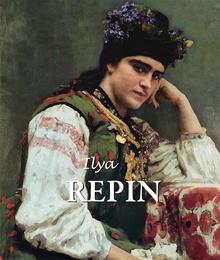
Ilya Repin was the most gifted of the group known in Russia as “The Itinerants”. When only twelve years old, he joined Ivan Bounakov’s studio to learn the icon-painter’s craft. Religious representations always remained of great importance for him. From 1864 to 1873 Repin studied at the Academy of the Arts in Saint Petersburg under Kramskoï. Repin also studied in Paris for two years, where he was strongly influenced by outdoor painting without, becoming an Impressionist, a style that he judged too distant from reality. Taken with French pictorial culture, he worked to understand its role in the evolution of …