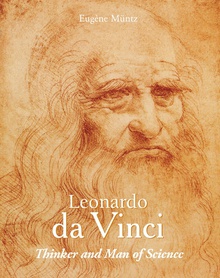
Not only was Leonardo da Vinci (1453-1519) an astonishing painter, but also a scientist, anatomist, sculptor, architect, musician, engineer, inventor, and more. The question is rather, what was he not? During the Italian Renaissance, he mastered the most beautiful works of art for the Medicis’ in Italy and for the King of France. He aroused admiration from his contemporaries, who depicted a universal genius, curious and virtuous. Even today, interest in da Vinci and his work does not fade; his works and writings are still studied by foremost experts hoping to decipher one of the numerous secrets of this visionary …
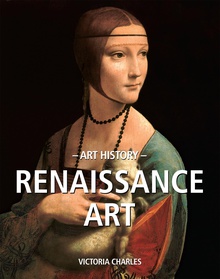
The Renaissance began at the end of the 14th-century in Italy and had extended across the whole of Europe by the second half of the 16th-century. The rediscovery of the splendour of ancient Greece and Rome marked the beginning of the rebirth of the arts following the break-down of the dogmatic certitude of the Middle Ages. A number of artists began to innovate in the domains of painting, as well as sculpture and architecture. Depicting the ideal and the actual, the sacred and the profane, the period provided a frame of reference which influenced European art over the next four …
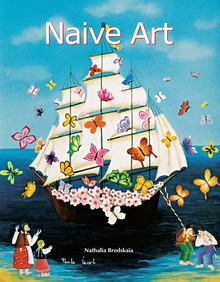
Naive art first became popular at the end of the 19th century. Until that time, this form of expression, created by untrained artists and characterised by spontaneity and simplicity, enjoyed little recognition from professional artists and art critics. Influenced by primitive arts, naive painting is distinguished by the fluidity of its lines, vivacity, and joyful colours, as well as by its rather clean-cut, simple shapes. Naive art counts among it artists: Henri Rousseau, Séraphine de Senlis, André Bauchant, and Camille Bombois. This movement has also found adherents abroad, including such prominent artists as Joan Miró, Guido Vedovato, Niko Pirosmani, and …
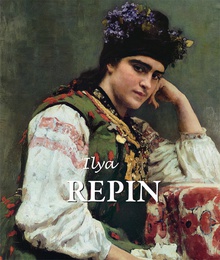
Ilya Repin was the most gifted of the group known in Russia as “The Itinerants”. When only twelve years old, he joined Ivan Bounakov’s studio to learn the icon-painter’s craft. Religious representations always remained of great importance for him. From 1864 to 1873 Repin studied at the Academy of the Arts in Saint Petersburg under Kramskoï. Repin also studied in Paris for two years, where he was strongly influenced by outdoor painting without, becoming an Impressionist, a style that he judged too distant from reality. Taken with French pictorial culture, he worked to understand its role in the evolution of …
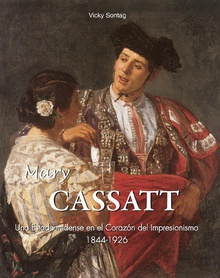
Esta biografía ofrece una visión profunda de la vida y la trayectoria artística de Mary Cassatt, una de las pocas mujeres que logró abrirse camino en el mundo del arte, dominado por los hombres, a finales del siglo XIX y comienzos del XX. Nacida en Estados Unidos, Cassatt desarrolló la mayor parte de su carrera en Francia, donde se convirtió en una figura destacada del impresionismo junto a Edgar Degas y Claude Monet. Con cerca de cien reproducciones de sus obras, este libro muestra cómo Mary Cassatt, desde una perspectiva femenina singular, supo trascender las convenciones artísticas de su tiempo. …
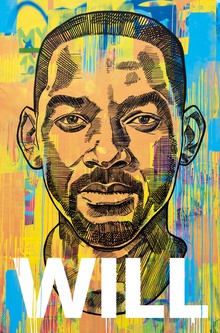
Una de las fuerzas más dinámicas y reconocidas en el mundo del entretenimiento nos muestra su vida en un libro valiente e inspirador donde se conjugan el éxito, la felicidad interior y la conexión humana. Will narra la historia de una de las trayectorias más extraordinarias de la música y el cine.Will Smith, un niño inseguro criado en el tenso Oeste de Filadelfia, se convirtió primero en una de las mayores estrellas del rap de su era y luego en una de las mayores estrellas de Hollywood de todos los tiempos, con una sucesión de éxitos de taquilla que muy …
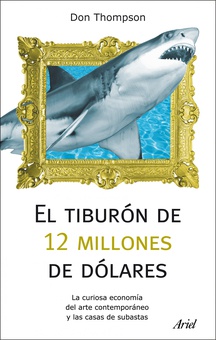
Un banquero multimillonario invierte 12 millones de dólares por el cadáver de un tiburón descomponiéndose dentro de una tinaja.Un lienzo lleno de gotas de colores se vende por 140 millones de dólares.Una chaqueta de cuero abandonada en una esquina se subasta por la suma de 690.000 dólares.Si el negocio del arte moderno es serio, ¿por qué parece una broma?En este recorrido ameno y fascinante por las casas de subastas, las galerías y el mundo de los coleccionistas, Don Thompson desvela los secretos económicos y las estrategias de marketing que impulsan al mercado a producir los precios astronómicos a los que …