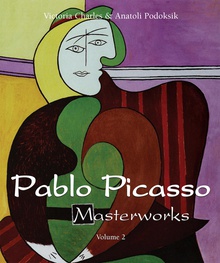
For many people, Pablo Picasso (1881-1973) was undoubtedly the most important artist of the 20th century. Born in Málaga, Spain, Picasso revealed his genius at a very early age and was quick to make contact with the most advanced art circles of his time, first in Barcelona and later in Paris. In the modernist quest for novelty, Picasso turned to pre-modern history and ÂprimitiveÊ art for inspiration. We owe him and his colleague Georges Braque the invention of Cubism, not just one of many avant-garde movements but the aesthetic that would change the art of painting forever. Once free from …
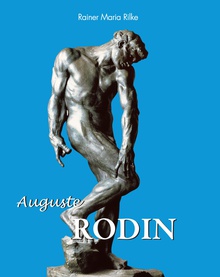
Influenced by the masters of Antiquity, the genius of Michelangelo and Baroque sculpture, particularly of Bernini, Auguste Rodin (1840-1917) is one of the most renowned artists in history. Though Rodin is considered a founder of modern sculpture, he did not set out to critique past classical traditions. Many of his sculptures were criticised and considered controversial because of their sensuality or hyperrealist qualities. His most original works departed from traditional themes of mythology and allegory, and embraced the human body, celebrating individualism and physicality. This book uncovers the life and career of this highly acclaimed artist by exploring his most …
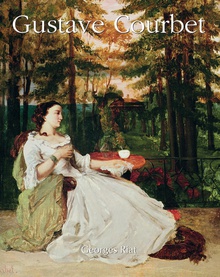
Ornans, Courbet’s birthplace, is near the beautiful valley of the Doubs River, and it was here as a boy, and later as a man, that he absorbed the love of landscape. He was by nature a revolutionary, a man born to oppose existing order and to assert his independence; he had that quality of bluster and brutality which makes the revolutionary count in art as well as in politics. In both directions his spirit of revolt manifested itself. He went to Paris to study art, yet he did not attach himself to the studio of any of the prominent masters. …
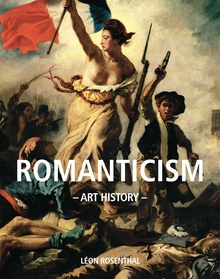
Romanticism was a reaction against the Neoclassicism that invaded the 19th-century, and marked a veritable intellectual rupture. Found in the writings of Victor Hugo and Lord Byron among others, its ideas are expressed in painting by Eugène Delacroix, Caspar David Friedrich and William Blake. In sculpture, François Rude indicated the direction this new artistic freedom would take, endowing his work with a movement and expression never previously seen. By retracing the different stages of its evolution, this book offers a study of the different aspects of the Romantic movement. Thanks to a thorough and in-depth analysis, the reader can understand …
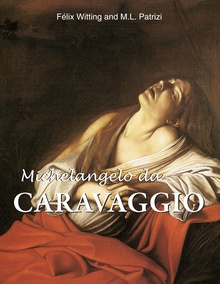
After staying in Milan for his apprenticeship, Michelangelo da Caravaggio arrived in Rome in 1592. There he started to paint with both realism and psychological analysis of the sitters. Caravaggio was as temperamental in his painting as in his wild life. As he also responded to prestigious Church commissions, his dramatic style and his realism were seen as unacceptable. Chiaroscuro had existed well before he came on the scene, but it was Caravaggio who made the technique definitive, darkening the shadows and transfixing the subject in a blinding shaft of light. His influence was immense, firstly through those who were …
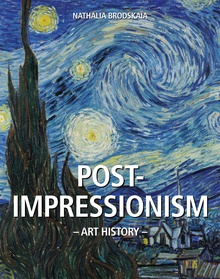
While Impressionism marked the first steps toward modern painting by revolutionising an artistic medium stifled by academic conventions, Post-Impressionism, even more revolutionary, completely liberated colour and opened it to new, unknown horizons. Anchored in his epoch, relying on the new chromatic studies of Michel Eugène Chevreul, Georges Seurat transcribed the chemist's theory of colours into tiny points that created an entire image. With his heavy strokes, Van Gogh illustrated the midday sun, while Cézanne renounced perspective. Rich in its variety and in the singularity of its artists, Post-Impressionism was a passage taken by all the well-known figures of 20th-century painting …
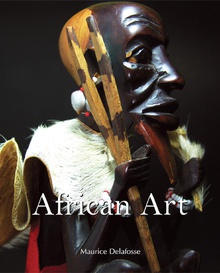
African Art invites you to explore the dynamic origins of the vast artistic expressions arising from the exotic and mystifying African continent. Since the discovery of African art at the end of the nineteenth century during the colonial expositions it has been a limitless source of inspiration for artists who, over time, have perpetually recreated these artworks. The power of Sub-Saharan African art lies within its visual diversity, demonstrating the creativity of the artists who are continuing to conceptualize new stylistic forms. From Mauritania to South Africa and from the Ivory Coast to Somalia, statues, masks, jewelry, pottery and tapestries …
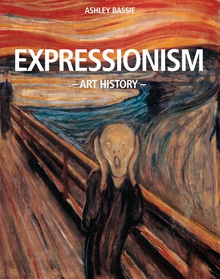
Max Beckmann, Otto Dix, George Grosz, Emil Nolde, E.L. Kirchner, Paul Klee, Franz Marc as well as the Austrians Oskar Kokoschka and Egon Schiele were among the generation of highly individual artists who contributed to the vivid and often controversial new movement in early 20th-century Germany and Austria: Expressionism. This publication introduces these artists and their work. The author, art historian Ashley Bassie, explains how Expressionist art led the way to a new, intense, evocative treatment of psychological, emotional and social themes of the early 20th-century. The book examines the developments of Expressionism and its key works, highlighting the often …

Diego Rivera: Arte y pasión Diego Rivera fue mucho más que un pintor: revolucionario, creador de mitos y figura clave del siglo XX. Su vida, marcada por contradicciones, excesos y pasiones, se refleja en murales que estallan en color, historia e ideología. Esta biografía recorre su formación en México y Europa, su encuentro con el cubismo y el marxismo, y su reinvención del fresco como lenguaje público y político. Entre arte y poder, tradición y revolución, Rivera emerge como símbolo de una época y protagonista de una vida vivida en la encrucijada. Un retrato vibrante y esencial para comprender al …
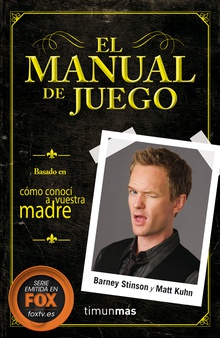
¡Más de setenta y cinco técnicas de seducción, desarrolladas por el gurú del ligue Barney Stinson!Con este sencillo manual podrás llevar a cabo los trucos para ligar más famosos de Barney Stinson, como la SNASA, el ¡No bebas eso!, el Hombre Desnudo, o el Ted Mosby, y pasar de Don Nadie a Don Juan. Desde los albores de la historia, el hombre ha buscado respuesta a la más fundamental de las preguntas: «¿Por qué estoy aquí… y no tirándome a tías?» Con la ayuda de El Manual de Juego seréis capaces de acercaros a cualquier mujer hermosa, descubrir sus deseos …