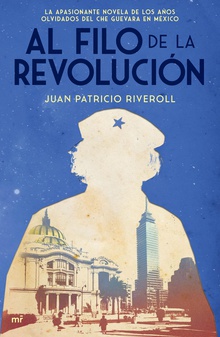
En Al filo de la revolución, Juan Patricio Riveroll vuelve los ojos sobre un periodo poco conocido de la vida de Ernesto Guevara: los años clave en los que el célebre latinoamericano comenzó a definirse como guerrillero y libertador para, finalmente, convertirse en un ícono universal. México, 1954. Tras abandonar una Guatemala golpeada por la intervención armada de la CIA, Ernesto, un joven médico argentino, cruza la frontera de Chiapas hacia la Ciudad de México. No tiene trabajo y el dinero escasea, pero su plan es vivir ahí algún tiempo antes de seguir su camino hacia Europa o China, lugares …
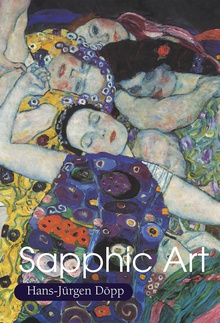
The poetess Sappho did not, in any way, facilitate the relationship between men and women, with her admirable Ode to Aphrodite which celebrates the love and sexuality between two women. With the liberalization of morals, female homosexuality is part of modern society and cannot be ignored. But what does history retain from these practices? How is the love between women appreciated? By infringing on the rules of past societies, how did these women live their particularity and their forbidden sexuality? This difficult exercise, undertaken by Professor Döpp, attempts to explain these censured pleasures, without inclining towards a certain voyeurism.
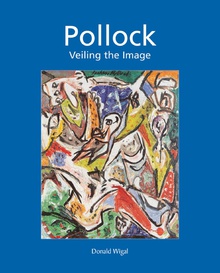
Born in 1912, in a small town in Wyoming, Jackson Pollock embodied the American dream as the country found itself confronted with the realities of a modern era replacing the fading nineteenth century. Pollock left home in search of fame and fortune in New York City. Thanks to the Federal Art Project he quickly won acclaim, and after the Second World War became the biggest art celebrity in America. For De Kooning, Pollock was the “icebreaker”. For Max Ernst and Masson, Pollock was a fellow member of the European Surrealist movement. And for Motherwell, Pollock was a legitimate candidate for …
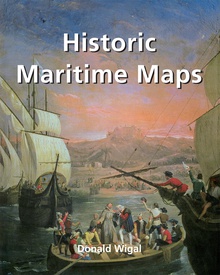
This book presents a selection of oceanic charts dating from the 13th to the 17th century. Though to us they may appear rudimentary, they bear excellent witness to the achievements of the early European navigators, and to their determination to explore the very ends of the Earth. What the charts may lack in geographical accuracy they undoubtedly make up for in charm. And of course they are priceless historical records. Recounting the epic voyages of maritime exploration, from Erik the Red to Robert Peary, author Donald Wigal leads us on an exciting journey from Terra Incognita to the World As …
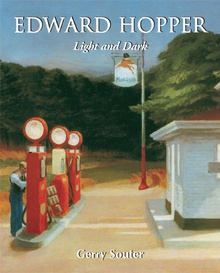
In his works, Hopper poetically expressed the solitude of man confronted to the American way of life as it developed in the 1920s. Inspired by the movies and particularly by the various camera angles and attitudes of characters, his paintings expose the alienation of mass culture. Created using cold colours and inhabited by anonymous characters, Hopper’s paintings also symbolically reflect the Great Depression. Through a series of different reproductions (etchings, watercolours, and oil-on-canvas paintings), as well as thematic and artistic analysis, the author sheds new light on the enigmatic and tortured world of this outstanding figure.
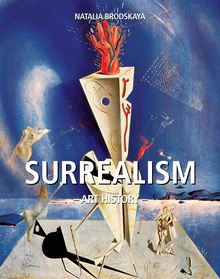
Arriving with a bang on the post-World War I scene, the Surrealists proclaimed a revolution of thought and creation, insisting on breaking away from the past and a world that had been left in ruins. This refusal to integrate into bourgeois society was also a leitmotiv of the Dada movement, a rebellious trait that led André Breton to say that Dadaism was “a machine had not thought to come up with new perspectives. It was this comment that gave birth to Surrealism. The Surrealists frequently collaborated with Dada artists on intellectual levels for which exclusivity had often become the general …
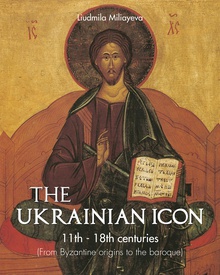
Icon painting, the ultimate expression of Orthodox Christian art, reached its zenith in Ukraine between the 11th and 18th centuries. This book spans the entire period, showing the development of the style. The Ukrainian icon is a surprising synthesis of the traditions of Eastern Byzantine art and the stylistic characteristics of Russian icon painting. The introduction of this book explains the stages of development of icon-painting over five centuries in Ukraine’s major Centres of art - Kyiv, Chernihiv, Transcarpathia, Galicia, and Volhynia - and discusses the life and work of the masters of icon-painting. Despite the strict stylistic considerations imposed …
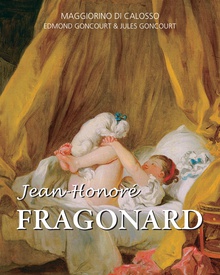
Jean-Honoré Fragonard (1732-1806) punctuates the eighteenth century with a burst of fireworks, closing the arc opened by Watteau with his enchanting poems of love and melancholy. While Watteau was ethereal and profound, Fragonard was delightfully light. He captivates us even as he amuses himself, his emotional distance ever apparent. Specialising in “fêtes galantes” executed in the Rococo style, Fragonard was a pupil of François Boucher and also studied under Chardin. Heeding Boucher’s advice, he portrayed romantic gardens replete with fountains, grottos, temples, and terraces—settings that also reveal the influence of Tiepolo. With King Louis XV as his patron, Fragonard shifted …