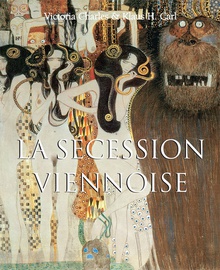
« À chaque âge son art, à chaque art sa liberté. » Voila la devise de la Sécession viennoise, mouvement dissident (1892-1906), qui fut porté par une vingtaine d’artistes éclairés luttant contre l’académisme conservateur pétrifiant Vienne et tout l’empire austro-hongrois. Courant de l’Art nouveau, la Sécession, officiellement fondée en 1897 par Klimt, Moll et Hoffmann, ne fut pas une révolution artistique anonyme parmi tant d’autres. Contestataires par essence, les sécessionnistes viennois ont peint ce qu’on ne devait pas peindre : les frôlements, les baisers, les violences. Se définissant comme un art total sans contrainte politique ni commerciale, l’effervescence de ce …
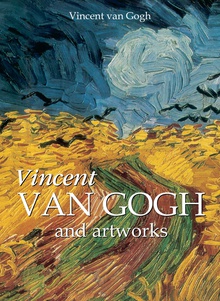
Vincent van Gogh’s life and work are so intertwined that it is hardly possible to observe one without thinking of the other. Van Gogh has indeed become the incarnation of the suffering, misunderstood martyr of modern art, the emblem of the artist as an outsider. An article, published in 1890, gave details about van Gogh’s illness. The author of the article saw the painter as “a terrible and demented genius, often sublime, sometimes grotesque, always at the brink of the pathological.” Very little is known about Vincent’s childhood. At the age of eleven he had to leave “the human nest”, …
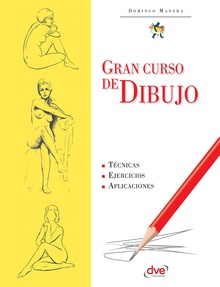
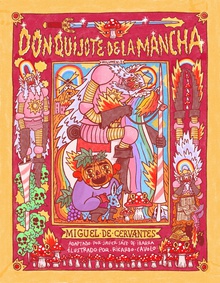
Tras su gran éxito con los poemas de Federico García Lorca, Ricardo Cavolo ilustra la obra más importante de la literatura en castellano.Don Quijote de la Mancha es la obra maestra de la literatura en español y está considerada la primera novela moderna. Esta cuidada adaptación del texto, a cargo de Javier Sáez de Ibarra, se mantiene fiel al argumento y facilita una lectura amena de esta cumbre de las letras universales.Los dibujos de Ricardo Cavolo juegan con los márgenes de las páginas y recrean con vibrante colorido las escenas más emblemáticas de cada capítulo, colmándolas de sugerencias en una …
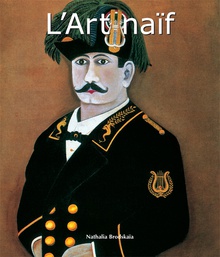
L’art naïf connaît ses premiers succès à la fin du XIXe siècle. Des « peintres du dimanche » développent avec spontanéité et simplicité une forme d’expression qui, jusqu’alors, avait peu intéressé les artistes et les critiques d’art. Influencée par les arts primitifs, la peinture naïve se distingue par la précision de ses traits, la vivacité et la gaieté de ses couleurs, ainsi que ses formes brutes, souvent élémentaires. L’art naïf est représenté par des artistes tels qu’Henri Rousseau, Séraphine de Senlis, André Bauchant et Camille Bombois. Ce mouvement s’est également développé à l’étranger, où se sont démarqués des artistes aussi …
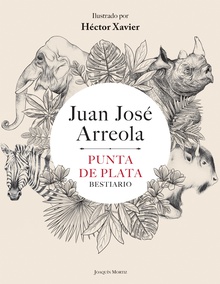
En 1958 Juan José Arreola publicó Punta de plata, donde se reunieron 18 textos literarios de su autoría y 24 dibujos del artista mexicano Héctor Xavier, mismos que retratan los distintos animales que ambos visitaron en el zoológico de Chapultepec.Esos 18 textos iniciales fueron los que más tarde, en 1972, formarían parte del Bestiario, circulando, desde entonces, ya sin las ilustraciones de Xavier.Con esta edición conmemorativa de los 100 años de Juan José Arreola, Editorial Planeta ofrece a sus lectores por primera vez después de sesenta años, un volumen que reúne el fantástico trabajo de ambos artistas. Trabajo que se …
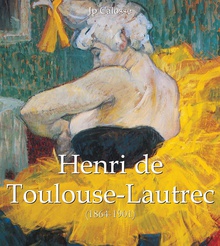
Known for his posters for cabarets and performances, Henri de Toulouse-Lautrec (1864- 1901) was the painter of Parisian nightlife par excellence. Completely immerged in the bohemian milieu of the period, he produced numerous paintings and lithographs representing the lower levels of society. More than any other painter of his time, Lautrec stands out as the embodiment of Paris. At night, the city of hidden and frenzied pleasures, as well as of outdoor games during the day; the city on whose perpetual stage-boards the passing show ceaselessly changes into history has never been better understood or more strikingly expressed on canvas. …
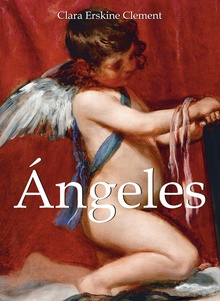
La espléndida estética de los ángeles continúa ejerciendo una atracción irrefrenable incluso en la actualidad. Las imágenes de estos mensajeros celestiales transmiten, en su grandiosidad, protección, inocencia y calma, lo que les ha convertido en una fuente de inspiración para artistas religiosos a lo largo de toda la historia del arte. Este libro presenta algunas de las representaciones más fascinantes de los ángeles, desde cupidos delicados y juguetones a ilustraciones majestuosas del Arcángel Miguel, así como su desarrollo desde la época medieval hasta la actualidad. Con un tamaño cómodo y compacto, este libro es un regalo perfecto.
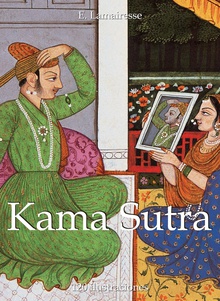
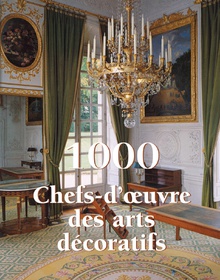
Des poteries sumériennes antiques aux verres teintés de Tiffany, les arts décoratifs constituent une part importante de la vie des hommes depuis des générations. Alors que les beaux-arts demeurent davantage dans les galeries et les musées, les arts décoratifs sont ceux de la vie de tous les jours, associant la beauté à la fonctionnalité, le prosaïque au fantastique. Dans cet ouvrage, Albert Jacquemart et Émile Michel célèbrent la beauté et le potentiel artistique des objets du quotidien. Après avoir parcouru ce livre, les lecteurs auront un nouvel avis sur les subtilités artistiques des objets utilitaires.