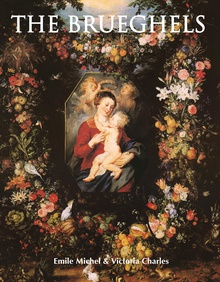
Pieter Brueghel was the first important member of a family of artists who were active for four generations. Firstly a drawer before becoming a painter later, he painted religious themes, such as Babel Tower, with very bright colours. Influenced by Hieronymus Bosch, he painted large, complex scenes of peasant life and scripture or spiritual allegories, often with crowds of subjects performing a variety of acts, yet his scenes are unified with an informal integrity and often with wit. In his work, he brought a new humanising spirit. Befriending the Humanists, Brueghel composed true philosophical landscapes in the heart of which …
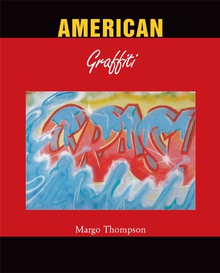
The first appearances of graffiti “tags” (signatures) on New York City subway trains in the early 1970s were discarded as incidents of vandalism or the rough, violent cries of the ignorant and impoverished. However, as the graffiti movement progressed and tags became more elaborate and ubiquitous, genuine artists emerged whose unique creativity and unconventional media captured the attention of the world. Featuring gallery and street works by several contributors to the graffiti scene, this book offers insight into the lives of urban artists, describes their relationship with the bourgeois art world, and discusses their artistic motivation with unprecedented sensitivity.
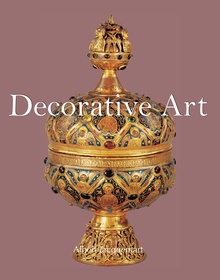
From the Middle Ages to contemporary times, decorative art can be defined by the artistic materials, designs and objects used in both architecture and interior design. Similar to many art forms decorative art continues to evolve, originating with pieces as simple as a chair, noted for its utility, to purely ornamental objects, celebrated for their aesthetic beauty. Decorative Art aims to eulogize these often undervalued objects by giving praise to all mediums of decorative art throughout the centuries. Originally never considered as fine art, their artistic potential was not acknowledged until the twentieth century when industrial production replaced artisanal creation. …

Gothic art finds its roots in the powerful architecture of the cathedrals of northern France. It is a medieval art movement that evolved throughout Europe for more than 200 years. Leaving curved Roman forms behind, the architects started using flying buttresses and pointed arches to open cathedrals to the daylight. A period of great economic and social change, the gothic era also saw the development of a new iconography celebrating the Holy Mary, in contrast to the fearful themes of dark Roman times. Full of rich changes in all the different arts (architecture, sculpture, painting, etc.), Gothic art gave way …
Documents discovered recently in the hidden backrooms of St Petersburg’s Ethnological Museum have proved to be of sensational importance. The contents are published for the very first time in this work. Representing photos and descriptions of art and sculpture, of everyday utensils and everyday activities, all dating from the beginning of the twentieth century, these are the archives of ethnic groups in Siberia who for the most part have fougth tenaciously to maintain their historical traditions. The authors brilliantly convey their enthusiastic admiration for the peoples who have so successfully and for so long contended against both hostile environment and …
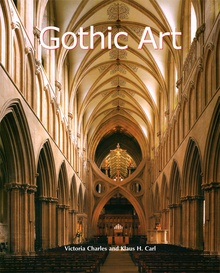
Gothic art finds its roots in the powerful architecture of the cathedrals of northern France. It is a medieval art movement that evolved throughout Europe over more than 200 years. Leaving curved Roman forms behind, the architects started using flying buttresses and pointed arches to open up cathedrals to daylight. A period of great economic and social change, the Gothic era also saw the development of a new iconography celebrating the Holy Mary – in drastic contrast to the fearful themes of dark Roman times. Full of rich changes in all of the various art forms (architecture, sculpture, painting, etc.), …
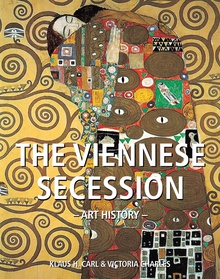
Influenced by Art Nouveau, this movement (created in 1897 by Gustav Klimt, Carl Moll, and Josef Hoffmann) was not an anonymous artistic revolution. Defining itself as a “total art”, without any political or commercial constraint, the Viennese Secession represented the ideological turmoil that affected craftsmen, architects, graphic artists, and designers from this period. Turning away from an established art and immersing themselves in organic, voluptuous, and decorative shapes, these artists opened themselves to an evocative, erotic aesthetic that blatantly offended the bourgeoisie of the time. Painting, sculpture, and architecture are addressed by the authors and highlight the diversity and richness …
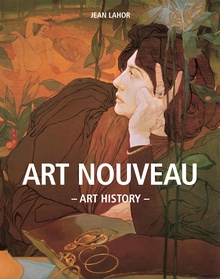
Art Nouveau designates a decorative and architectural style developed in the 1880s and 1890s in the West. Born in reaction to the Industrial Revolution and to the creative vacuum it left behind, Art Nouveau was at the heart of a "renaissance" in the decorative arts. The primary objective of the movement was the creation of a new aesthetic of nature through a return to the study of natural subjects. In order to achieve this, such artists as Gustav Klimt, Koloman Moser, Antoni Gaudí, Jan Toorop, and William Morris favoured innovation in technique and novelty of forms. After its triumph at …
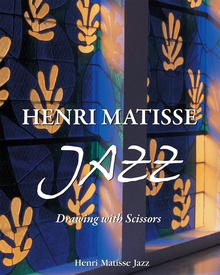
In Jazz, Matisse composes with scissors what he could no longer paint with brushes. From this limitation emerged a new kind of freedom — a whirlwind of shapes and colours, a dance that is both joyful and profound. Page after page, he cuts, paces, invents a visual language of striking intensity, somewhere between abstraction and figuration. Conceived as an artist's book, Jazz brings together the famous cut-outs and handwritten texts in which Matisse reflects on art, colour, music, and life. The silence of the images enters into a dialogue with the words — like breaths, surges, pauses. A final masterpiece, …