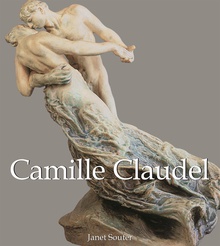
Versetzen Siesich in die exquisite, sinnliche Skulptur von Camille Claudel mit ihrem tiefgründigen Blick auf ihr bemerkenswertes Werk. Zusammen mit vielen ihrer Gemälde und Zeichnungen wird ihre Skulptur mit einem Fokus untersucht, der jedes komplizierte Detail ihrer unglaublichen Darstellungen von Bewegung und menschlicher Emotion offenbart. Bereits in jungen Jahren fasziniert, hat die französische Bildhauerin, Malerin und Zeichnerin Camille Claudel (1864-1943) die Hürden weiblicher Künstler überwunden und sich einen Platz in der Kunstgeschichte geschaffen. Nach einer Lehre bei Alfred Boucher trat Camille in das Atelier von Auguste Rodin ein, mit dem sie eine turbulente zehnjährige Liebesbeziehung hatte, die ihre Kunst oft …
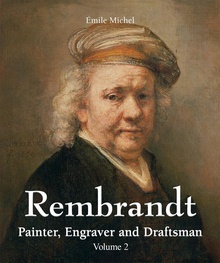
There is no other artist who represents the Dutch Golden Age like Rembrandt. With his realistic oil paintings, detailed engravings, and exquisite drawings he is the figurehead of an entire generation. As famous during his lifetime as after his death, Rembrandt (1606-1669) was one of the greatest masters of the Dutch Golden Age of the 17th century. His portraits not only transport us back to that fascinating time, but also represent, above all, a human adventure; beneath every dab of paint the spirit of the model seems to stir. Yet these portraits are only the tip of the Rembrandt iceberg, …
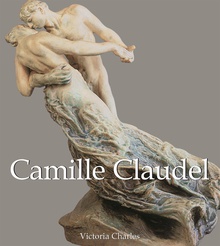
Delve into the exquisite, sensuous sculpture of Camille Claudel with this in-depth look at her remarkable body of work. Along with many of her paintings and drawings, her sculpture is examined with a focus which reveals every intricate detail of her incredible renditions of movement and human emotions. Fascinated from a young age by crafting models with her hands, French sculptor, painter, and draughtswoman Camille Claudel (1864-1943) fought to overcome the hurdles placed in the way of female artists and carved a place for herself in the history of art. Following an apprenticeship with Alfred Boucher, Claudel entered the studio …
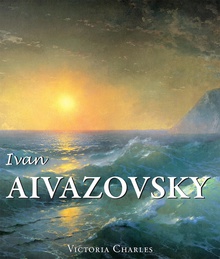
The seascapes of Ivan Aivazovsky (1817-1900) made his name in Russia, his native country where he was a painter of the court of Nicholas I, yet his fame barely extended beyond these borders. Master of the Sublime, he made the ocean the principal subject of his work. Sometimes wild and raging, sometimes calm and peaceful, the life of the ocean is composed of as many allegories as the human condition. Like Turner, whom he knew and whose art he admired, he never painted outside in nature, nor did he make preliminary sketches; hispaintings were the fruit of his exceptional memory. …
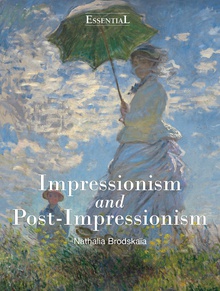
Impressionism is the most famous artistic movement. But what appears today as a charming and exquisite landscape painting, was actually one of the first avant-garde movements whose members had decided to fight the values of traditional art. The impressionist outdoor paintings shocked the public by the technique used, but also by their apparent banality. As Monet, Sisley, Pissarro and many others sought to capture the ephemeral nature of light, the next generation would reject naturalism. Indeed, post-impressionists such as Gauguin, Van Gogh, Cézanne and Seurat favored the subjective rather than the objective and the eternal rather than the concrete. In …
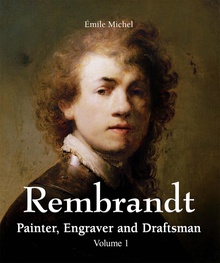
As famous during his lifetime as after his death, Rembrandt (1606-1669) was one of the greatest masters of the Dutch Golden Age of the 17th century. His portraits not only transport us back to that fascinating time, but also represent, above all, a human adventure; beneath every dab of paint the spirit of the model seems to stir. Yet these portraits are only the tip of the Rembrandt iceberg, which consists of over 300 canvasses, 350 engravings, and 2,000 drawings. Throughout his oeuvre, the influence of Flemish Realism is as powerful as that of Caravaggio. He applied this skilful fusion …
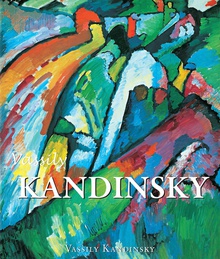
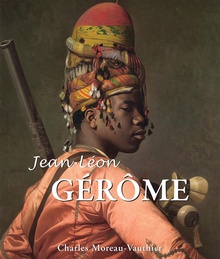
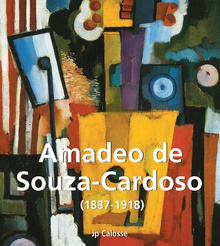
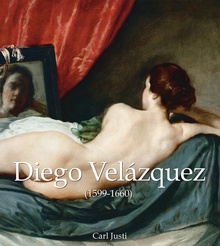
Während seiner gesamten fruchtbaren Karriere malte Velázquez die Mächtigen genauso gut wie die Normalbürger Spaniens. Sein Werk ist geprägt von Realismus, der den größten flämischen Meistern dieser Zeit in Nichts nachsteht, und trotz äußerer Einflüsse gelang es ihm zweifellos, seine eigenen künstlerischen Prinzipien zu entwickeln. Diego Velázquez (1599-1660) ist einer der berühmtesten Künstler der Welt. Als Vertreter der europäischen Malerei des 17. Jahrhunderts arbeitete er für den spanischen Hof und für die wichtigsten Persönlichkeiten dieser Zeit und vervollständigte zahlreiche Porträts. Die menschliche Figur faszinierte Velázquezund sein Werk umfasst auch Porträts von einzelnen Personen und Gruppen aus dem Volksleben, Darstellungen des …