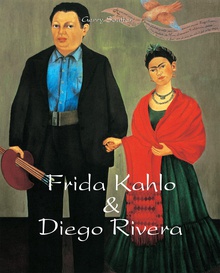
They met in 1928; Frida Kahlo was then 21 years old and Diego Rivera was twice her age. He was already an international reference, she only aspired to become one. An intense artistic creation, along with pain and suffering, was generated by this tormented union, in particular for Frida. On both continents, America and Europe, these committed artists proclaimed their freedom and left behind them the traces of their exceptional talent. In this book, Gerry Souter brings together both biographies and underlines with passion the link which existed between the two greatest Mexican artists of the 20th century.
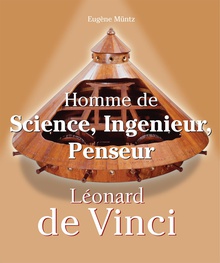
Léonard passa la première partie de sa vie à Florence, la seconde à Milan et ses trois dernières années en France. Le professeur de Léonard fut Verrocchio, d'abord orfèvre, puis peintre et sculpteur. En tant que peintre, Verrocchio était représentatif de la très scientifique école de dessin ; plus célèbre comme sculpteur, il créa la statue de Colleoni à Venise. Léonard de Vinci était un homme extrêmement attirant physiquement, doté de manières charmantes, d'agréable conversation et de grandes capacités intellectuelles. Il était très versé dans les sciences et les mathématiques, et possédait aussi un vrai talent de musicien. Sa maîtrise …
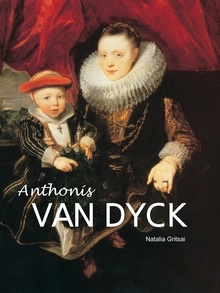
17th-century Flemish painter Van Dyck’s career was as short as it was dazzling. A student of Rubens, he very quickly became the favourite painter of princes and kings and was the portraitist of English and Italian families of the high nobility. With his rigorous compositions, Van Dyck endowed his models with dignity, grandeur, and spirituality. Proud ladies and lords gambolling on their horses − Van Dyck knew how to render the nonchalant elegance and the ennui of a refined society. A Baroque painter with a shimmering style, he played with a light and nuanced palette, and reproduced, with the greatest …
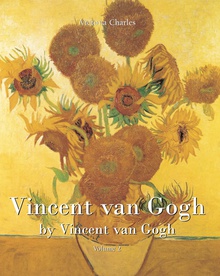
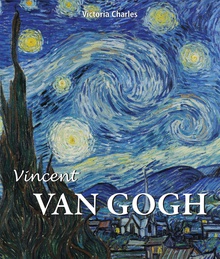
This paradox - the sadness and health of the country - reflects van Gogh’s own situation: nature always was a kind of home for him - a home that he could never share with anyone else. In Saint-Rémy, van Gogh had worked on a picture named The Reaper: “For I see in this reaper […] the image of death, in the sense that humanity might be the wheat he is reaping. So he is — if you like — the antithesis of that sower I tried to do before. But there’s nothing sad in this death, it goes its way …
Leur rencontre eut lieu en 1928, Frida Kalho avait vingt-et-un ans et Diego Rivera le double. Lui était déjà une référence internationale, elle n’aspirait qu’à l’être. De leur union tumultueuse naquit certes une création artistique intense, en particulier pour Frida, mais aussi de la souffrance. Toujours dans l’ombre de son époux, supportant ses infidélités, la jalousie, Frida exorcise sa douleur sur la toile et gagne peu à peu l’intérêt du public. Sur les deux continents, les Amériques et l’Europe, ces artistes engagés proclameront leur liberté et laisseront derrière eux des traces de leur immense talent. Dans ce coffret, Gerry Souter …
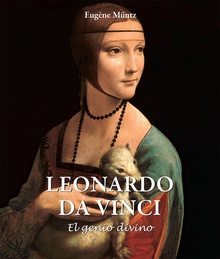
¿La fuerte vocación de Leonardo hacia la investigación científica le resultó una ayuda o un estorbo en sus logros como artista? Es común que se le mencione como un ejemplo de las posibilidades que existen cuando se unen las artes y las ciencias. En él, se dice, el genio activo recibió un nuevo impulso a través de sus facultades analíticas; la razón reforzó la imaginación y las emociones. […] Profundo conocedor y creador incomparable, es el único hombre en la historia de la humanidad que ha penetrado en la belleza más resplandeciente y que ha unido la ciencia de Aristóteles …
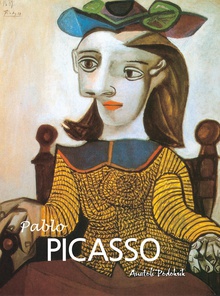
Cet ouvrage présente un grand nombre d’œuvres de Pablo Picasso réalisées entre 1881 et 1914. La première manière de l’artiste est marquée par l’influence du Greco, de Munch et de Toulouse-Lautrec qu’il découvre à Barcelone. Fortement intéressé par l’expression psychologique, il exprime dans sa période « bleue » (1901–1904) la misère morale : scènes de genre, natures mortes et portraits sont empreints de mélancolie. Il se passionne ensuite pour des figures de saltimbanques ; période « rose ». À partir de 1904, date de son installation à Paris, son esthétique évolue considérablement. L’influence de Cézanne et de la statuaire ibérique …

Chagall loved blue. “The blue of the sky which ceaselessly combats the clouds which pass, which pass…” (Baudelaire). Marc Chagall’s journey began in his native Russia and concluded with his Parisian triumph, the extraordinary ceiling of the Paris Opera House, commissioned by André Malraux. On the way, he embraced the spirit of the twentieth century without ever disowning his Jewish-Russian origins. This work follows the path of the artist through his early works, his discovery of the United States and his passion for France. Marc Chagall, unaffiliated with any movement but influenced by his encounters with Bakst, Matisse and Picasso, …
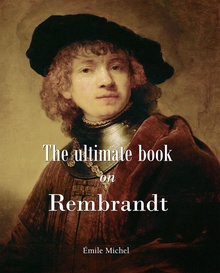
As famous during his lifetime as after his death, Rembrandt (1606-1669) was one of the greatest masters of the Dutch Golden Age of the 17th century. His portraits not only transport us back to that fascinating time, but also represent, above all, a human adventure; beneath every dab of paint the spirit of the model seems to stir. Yet these portraits are only the tip of the Rembrandt iceberg, which consists of over 300 canvasses, 350 engravings, and 2,000 drawings. Throughout his oeuvre, the influence of Flemish Realism is as powerful as that of Caravaggio. He applied this skilful fusion …