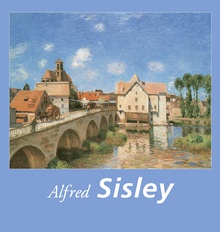
A painter of the Impressionist movement, Alfred Sisley was born on October 30th 1839 in Paris but was of British origin. He died on January 29th 1899 in Moret-sur-Loing. Growing up in a musical family, he chose to pursue painting rather than the field of business. In 1862 he enrolled in Gleyre’s studio where he encountered Renoir, Monet, and Bazille. The four friends left their master’s studio in March 1863 to work outdoors, setting their easels to paint the forest scenes of Fontainebleau. Sisley tirelessly chose the sky and water as subjects for his paintings, animated as they were by …
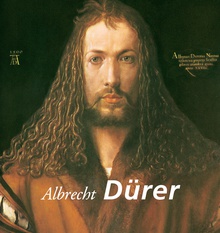
Dürer is the greatest of German artists and most representative of the German mind. He, like Leonardo, was a man of striking physical attractiveness, great charm of manner and conversation, and mental accomplishment, being well grounded in the sciences and mathematics of the day. His skill in draughtsmanship was extraordinary; Dürer is even more celebrated for his engravings on wood and copper than for his paintings. With both, the skill of his hand was at the service of the most minute observation and analytical research into the character and structure of form. Dürer, however, had not the feeling for abstract …
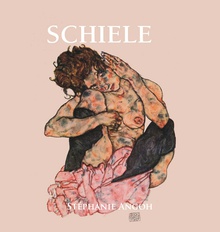
Egon Schiele’s work is so distinctive that it resists categorisation. Admitted to the Vienna Academy of Fine Arts at just sixteen, he was an extraordinarily precocious artist, whose consummate skill in the manipulation of line, above all, lent a taut expressivity to all his work. Profoundly convinced of his own significance as an artist, Schiele achieved more in his abruptly curtailed youth than many other artists achieved in a full lifetime. His roots were in the Jugendstil of the Viennese Secession movement. Like a whole generation, he came under the overwhelming influence of Vienna’s most charismatic and celebrated artist, Gustav …
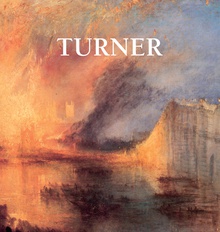
At fifteen, Turner was already exhibiting View of Lambeth. He soon acquired the reputation of an immensely clever watercolourist. A disciple of Girtin and Cozens, he showed in his choice and presentation of theme a picturesque imagination which seemed to mark him out for a brilliant career as an illustrator. He travelled, first in his native land and then on several occasions in France, the Rhine Valley, Switzerland and Italy. He soon began to look beyond illustration. However, even in works in which we are tempted to see only picturesque imagination, there appears his dominant and guiding ideal of lyric …
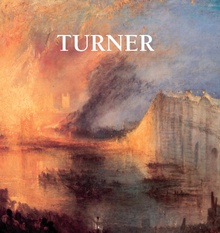
Joseph Mallord William Turner (Londres, 1775 – 1851) A 15 ans, Turner exposait déjà une Vue de Lambeth. Il acquit très tôt la réputation d'un aquarelliste extrêmement habile. Disciple de Girtin et de Cozens, il montra par son choix et la façon de présenter ses thèmes une imagination pittoresque qui semblait le destiner à une brillante carrière d'illustrateur. Il voyagea, d'abord dans son pays natal et puis, à plusieurs occasions, en France, dans la vallée du Rhin, en Suisse et en Italie. Son intérêt commença toutefois à dépasser le cadre de l'illustration : l'idéal du paysage lyrique, dominant et inspirateur, …
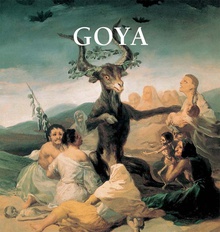
Goya is perhaps the most approachable of painters. His art, like his life, is an open book. He concealed nothing from his contemporaries, and offered his art to them with the same frankness. The entrance to his world is not barricaded with technical difficulties. He proved that if a man has the capacity to live and multiply his experiences, to fight and work, he can produce great art without classical decorum and traditional respectability. He was born in 1746, in Fuendetodos, a small mountain village of a hundred inhabitants. As a child he worked in the fields with his two …

J'No hay fotografías que puedan ser negadas. Todas las fotografías poseen categoría de realidad. Lo que ha de examinarse es de qué modo la fotografía puede o no dar significado a los hechos.'
Estas palabras de John Berger y el conocido fotógrafo suizo Jean Mohr, dos de nuestros más reflexivos y elocuentes indagadores de lo visual, son la base sobre la que construyen una singular reflexión acerca de las ambigüedades de lo que, en apariencia, es nuestra forma de arte más sencilla: la fotografía. Otra manera de contar explora la tensión existente entre el fotógrafo y lo fotografiado, entre la imagen …
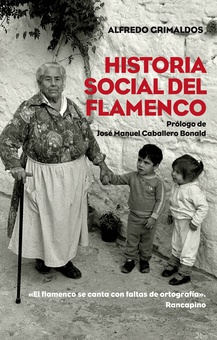
El flamenco es un arte de transmisión oral que, durante mucho tiempo, se ha preservado, fundamentalmente, en el seno de grandes dinastías gitanas de la Baja Andalucía, transmitiéndose de generación en generación en el ámbito familiar y en el barrio. En sus letras hay un poso de rebeldía, fruto de la persecución y la marginación. Durante los años 30, se dedicaron fandangos al capitán de Jaca Fermín Galán y a las «banderitas republicanas». Por otro lado, a lo largo de los últimos años del franquismo y la Transición, numerosos artistas adquirieron un claro compromiso sociopolítico. Del duro trabajo en el …

Dirige tu vida habla de cinco películas singulares. Pero no es un libro de cine. Es algo más: un libro de película escrito por el reconocido periodista, conferenciante y comunicador Javier Reyero y el formador en competencias emocionales Álvaro Merino, que han unido su experiencia en la formación a ejecutivos para descubrirnos que el cine, además de distraernos, refuerza conceptos como el trabajo en equipo, la resiliencia, el liderazgo transformador o la negociación. Para ello, ambos autores han escogido cinco películas universales que contienen secuencias impactantes e inspiradoras: Invictus, Glengarry Glen Ross, El mundo en sus manos, Un domingo cualquiera …