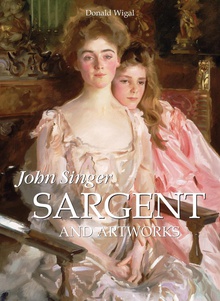
Sargent was born in Florence, in 1856, the son of cultivated parents. When Sargent entered the school of Carolus-Duran he attained much more than the average pupils. His father was a retired Massachusetts gentleman, having practised medicine in Philadelphia. Sargent’s home life was penetrated with refinement, and outside it were the beautiful influences of Florence, combining the charms of sky and hills with the wonders of art in the galleries and the opportunities of an intellectual and artistic society. Accordingly, when Sargent arrived in Paris, he was not only a skilful draughtsman and painter as a result of his study …
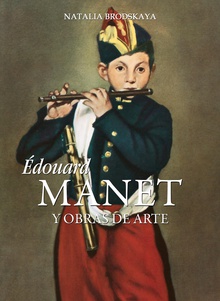
Manet es uno de los artistas más famosos de la segunda mitad del siglo XIX, ligado por lo general a los impresionistas, aunque en realidad no era uno de ellos. Tuvo gran influencia en la pintura francesa, en parte por la elección de sus temas, que sacaba de la vida cotidiana, pero también por el uso de los colores puros y por su técnica rápida y libre. En su propia obra se materializó la transición entre el realismo de Courbet y los impresionistas. Nació en la alta burguesía, decidió convertirse en pintor después de no haber podido ingresar en la …
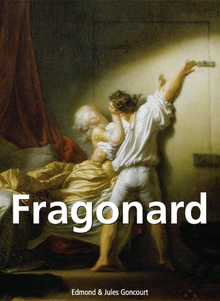
Poète de l’Art d’aimer du temps », voilà comment les Goncourt définissent Jean-Honoré Fragonard (1732-1806), un des artistes les plus importants de sa génération, qui a pourtant failli plonger dans l’oubli, dépassé par l’influence grandissante du mouvement néo-classique dans la deuxième moitié du XVIIIème siècle. Peintre de l’amour et de la volupté, il a également donné naissance à une œuvre riche et plurielle ; peintures historico-mythologiques, scènes galantes et religieuses, portraits et paysages, le génie de Fragonard ne connaît ni école ni contrainte. De son geste rapide et aérien, il capture l’essence de son époque, une douceur de vivre et …
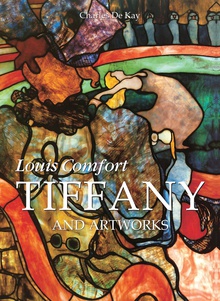
A jeweler with an established reputation through the world, Louis Comfort Tiffany was the spearhead of the Art Nouveau movement in the United States. At a time and in a country in perpetual growth, Tiffany succeeded in elevating the decorative to the rank of fine art. Glass was the field of expertise of Tiffany’s workshops. There they developed groundbreaking techniques of treatment which produced beautiful effects on glass. Following the examples of Gallé or Daum, Tiffany made the most of this material: playing with colors, opaqueness and transparency… However, his most famous success is his lamps in mosaic of glass, …

Francisco de Goya y Lucientes (Fuentetodos, 1746 – Bordeaux, 1828) Goya est peut-être le peintre le plus accessible entre tous. Son art, comme sa vie, est un livre ouvert. Il ne cachait rien de ses contemporains, et leur offrait son art avec la même franchise. L'entrée dans son monde n'est pas barricadée de difficultés techniques. Il prouva que si un homme a la capacité de vivre et de multiplier ses expériences, de se battre et de travailler, il peut produire un grand art sans besoin de recourir au décorum classique, ni à la décence traditionnelle. Il naquit en 1746, à …
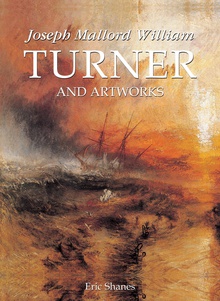
At fifteen, Turner was already exhibiting View of Lambeth. He soon acquired the reputation of an immensely clever watercolourist. A disciple of Girtin and Cozens, he showed in his choice and presentation of theme a picturesque imagination which seemed to mark him out for a brilliant career as an illustrator. He travelled, first in his native land and then on several occasions in France, the Rhine Valley, Switzerland and Italy. He soon began to look beyond illustration. However, even in works in which we are tempted to see only picturesque imagination, there appears his dominant and guiding ideal of lyric …
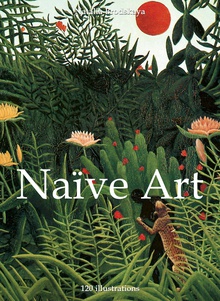
Until the end of the 19th century Naïve Art, created by untrained artists and characterised by spontaneity and simplicity, enjoyed little recognition from professional artists and art critics. Naïve painting is often distinguished by its clarity of line, vivacity and joyful colours, as well as by its rather clean-cut, simple shapes, as represented by French artists such as Henri Rousseau, Séraphine de Senlis, André Bauchant and Camille Bombois. However, this movement has also found adherents elsewhere, including Joan Miró (who was influenced by some of its qualities), Guido Vedovato, Niko Pirosmani, and Ivan Generalic.
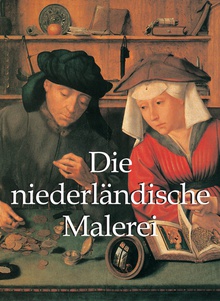
Die Einzigartigkeit der niederländischen Landschaft mit ihren Wasserwegen und ihrem Farbreichtum spiegelt sich nicht nur in den Naturgemälden, sondern auch in bekannten Einzel- und Gruppenporträts aus dieser Region Europas wieder. Dieses handliche Buch versammelt die Höhepunkte der niederländischen Malerei vom 15. bis zum 19. Jahrhundert mit Werken von, zum Beispiel, Bosch, Rembrandt, Rubens und van Eyck. Das innovative Layout der Mega Square-Reihe hebt drei charakteristische Ausschnitte eines jeden Bildes hervor und unterstreicht damit jene Detailliebe, die so bezeichnend ist für die niederländische Malerei.

Am Zeitraum zwischen Geburt und Tod der Georgia O’Keeffe (1887-1986) streift die gesamte moderne Geschichte der Vereinigten Staaten vorbei wie ein Hollywood-Film. Aus einer kleinen Stadt stammend, schafft sich Georgia O’Keeffe erst in New York einen Namen; jenes New York, das Mitte des 20. Jahrhunderts Paris als Welthauptstadt der Kunst ablöst. Sie wurde vor allem durch ihre komplexen Naturbeschreibungen wie beispielsweise der Zartheit eines Herbstblattes, den subtilen Nuancen einer Blüte oder der Symmetrie eines Tierschädels bekannt. Heute assoziiert man Georgia O’Keeffe mit kraftvollen Farben und der wilden Schönheit der Wüste Neu Mexikos, wo sie bis zu ihrem Tod im Jahr …