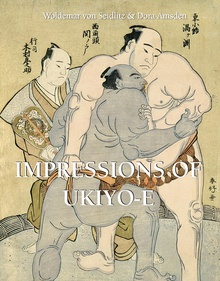
Ukiyo-e (‘pictures of the floating world’) is a branch of Japanese art which originated during the period of prosperity in Edo (1615-1868). Characteristic of this period, the prints are the collective work of an artist, an engraver, and a printer. Created on account of their low cost thanks to the progression of the technique, they represent daily life, women, actors of kabuki theatre, or even sumo wrestlers. Landscape would also later establish itself as a favourite subject. Moronobu, the founder, Shunsho, Utamaro, Hokusai, and even Hiroshige are the most widely-celebrated artists of the movement. In 1868, Japan opened up to …
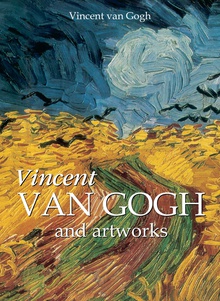
Vincent van Gogh’s life and work are so intertwined that it is hardly possible to observe one without thinking of the other. Van Gogh has indeed become the incarnation of the suffering, misunderstood martyr of modern art, the emblem of the artist as an outsider. An article, published in 1890, gave details about van Gogh’s illness. The author of the article saw the painter as “a terrible and demented genius, often sublime, sometimes grotesque, always at the brink of the pathological.” Very little is known about Vincent’s childhood. At the age of eleven he had to leave “the human nest”, …
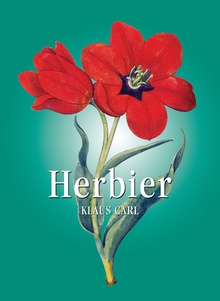
Le terme « herbier » dans son acceptation première désigne un ouvrage traitant des plantes. C'est ce sens qu'il faudra retenir pour l'herbier que nous vous proposons. Nous avons choisi l'herbier de Basilius Besler, médecin, botaniste et éditeur allemand, du XVIe-XVIIe siècle. Besler dirigea la pharmacie Zum Marienbild à Nuremberg de 1589 à 1629, ville où il créa également un jardin botanique et un cabinet de curiosités. En 1597, l'évêque d'Eichstätt demanda à Besler de créer un jardin botanique sur un terrain à Willibaldsburg. Le jardin dessiné par Besler, d'une superficie d'un hectare et comportant huit terrasses, devint rapidement célèbre. …
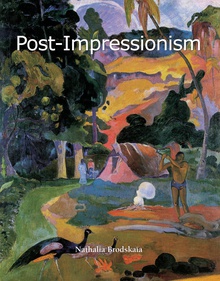
Whilst Impressionism marked the first steps toward modern painting by revolutionising an artistic medium stifled by academic conventions, Post-Impressionism, even more revolutionary, completely liberated colour and opened it to new, unknown horizons. Anchored in his epoch, relying on the new chromatic studies of Michel Eugène Chevreul, Georges Seurat transcribed the chemist’s theory of colours into tiny points that created an entire image. With his heavy strokes, Van Gogh illustrated the midday sun, whilst Cézanne renounced perspective. Rich in its variety and in the singularity of its artists, Post-Impressionism was a passage taken by all the well-known figures of 20th century …
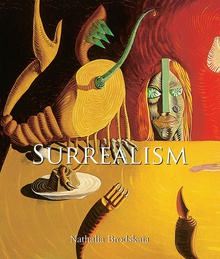
The Dada movement and then the Surrealists appeared in the First World War aftermath with a bang: revolution of thought, creativity, and the wish to break away from the past and all that was left in ruins. This refusal to integrate into the Bourgeois society lead Georg Grosz to remark of Dada, “it’s the end of-isms.” Breton asserted that Dada does not produce perspective, “a machine which functions full steam, but where it remains to be seen how it can feed itself.” Surrealism emerged amidst such feeling. These artists often changed from one movement to another. They were united by …
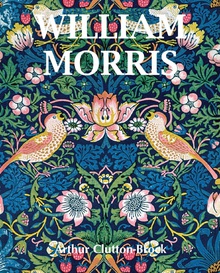
William Morris (1834-1896), par son éclectisme, fut l’une des personnalités emblématiques du XIXe siècle. Peintre, architecte, poète et ingénieur, maniant avec autant de talent la plume que le pinceau, il bouleversa la société victorienne en refusant les standards instaurés par l’industrie conquérante. Son engagement dans la rédaction du manifeste socialiste fut la suite naturelle de cette révolution qu’il incarna dans l’habitat, les formes et les couleurs. Précurseur des designers du XXe siècle, il fut le co-fondateur, avec John Ruskin, du mouvement des Arts and Crafts. En homme libre, William Morris ouvrit les chemins qui conduisirent à l’Art nouveau et, plus …

When asked about Picasso, towards the end of his life, what was the difference between art and eroticism, he replied meditatively and dreamily: “But there is no difference.” others feared eroticism, Picasso warned against the dangerous experiments of art: “Art is never chaste, it should be kept away from all innocent ignorant. People insufficiently prepared should never come into contact with him. Yes, art is dangerous. When he is chaste, he is no longer art. ”The notion of erotic art is surrounded by a halo of hypocritical, deceptive and dissimulating concepts: art or pornography, sex or eroticism, obscenity or originality, …
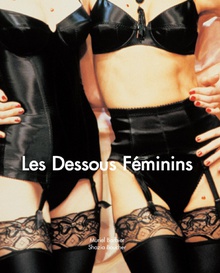
Quelle est l’utilité des dessous féminins qui s’affichent aujourd’hui tant sur les affiches que dans les magazines, enveloppant des corps de femmes parfaites ? Pour beaucoup de femmes, les dessous sont achetés pour faire plaisir à l’autre, « l’homme ». Et pourtant, depuis la haute Antiquité, les femmes apparaissent toujours vêtues, cachant ces tissus qui dissimulent leur intimité. Le sous-vêtement féminin a donc une autre fonction que celle d’érotiser les corps. L’auteur, Muriel Barbier, s’appuyant sur une riche iconographie, explore trois aspects de la lingerie dans son rapport à la société, à l’intimité et à l’économie. Comment le sous-vêtement s’inscrit-il …
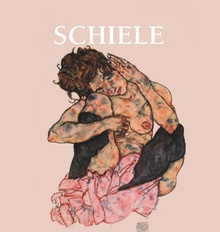
Egon Schiele (Tulln, 1890 – Vienne,1918) L’oeuvre d’Egon Schiele est tellement singulière qu’elle résiste à toute catégorisation. Admis à l’Académie des Beaux-Arts de Vienne dès l’âge de seize ans, ce fut un artiste extraordinairement précoce, dont le talent consommé pour le maniement de la ligne, plus que tout autre chose, conférait une tension expressive à toute son oeuvre. Profondément convaincu de sa propre importance en tant qu’artiste, Schiele réalisa plus de choses dans sa jeunesse, brutalement abrégée, que beaucoup d’artistes dans toute leur existence. Ses racines puisaient dans le Jugendstil du mouvement de la Sécession Viennoise. Comme toute sa génération, …
En ce début de millénaire, il nous a semblé intéressant de publier ce volumineux ouvrage sur l’histoire de l’érotisme. Curieuse époque que la nôtre ! Malgré une liberté toujours plus grande, les mots comme les images sont devenus formatés. Le « politiquement correct » s’est installé comme un credo, et les images redeviennent des icônes, particulièrement celles des femmes. Durant le précédent millénaire, ces dernières furent successivement déesses ou Vierges; aujourd’hui, elles sont des top modèles. Pour les hommes, ce phénomène a transformé Apollon en mannequin ou en star de cinéma. Que reste-t-il de l’impertinence des libertins du XVIIIe siècle, …