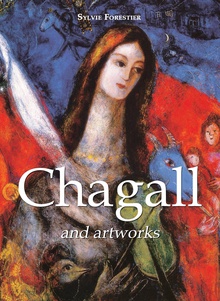
Marc Chagall was born into a strict Jewish family for whom the ban on representations of the human figure had the weight of dogma. A failure in the entrance examination for the Stieglitz School did not stop Chagall from later joining that famous school founded by the Imperial Society for the Encouragement of the Arts and directed by Nicholas Roerich. Chagall moved to Paris in 1910. The city was his “second Vitebsk”. At first, isolated in the little room on the Impasse du Maine at La Ruche, Chagall soon found numerous compatriots also attracted by the prestige of Paris: Lipchitz, …
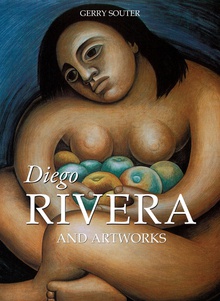
They met in 1928, Frida Kahlo was then 21 years old and Diego Rivera was twice her age. He was already an international reference, she only aspired to become one. An intense artistic creation, along with pain and suffering, was generated by this tormented union, in particular for Frida. Constantly in the shadow of her husband, bearing his unfaithfulness and her jealousy, Frida exorcised the pain on canvas, and won progressively the public’s interest. On both continents, America and Europe, these commited artists proclaimed their freedom and left behind them the traces of their exceptional talent. In this book, Gerry …

Was Leonardo’s pronounced vocation for scientific research a help or a hindrance to him as an artist? It is normal to quote him as an example of scientific and artistic theory joined together. In him, genius took on a new meaning combining reason that actually reinforced the imagination and the emotions. A profound savant and an incomparable creator, he was the only man in the history of mankind who has at once delved into the most radiant beauty and who has united the science of Aristotle with the art of Phidias. Studying nature with passion and all the independence proper …
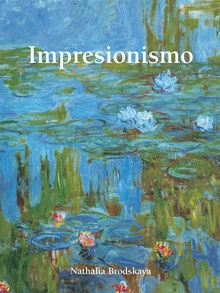
Poco antes de su muerte, Claude Monet escribió: "Todavía lamento el haber sido la causa del nombre que se le dio a este grupo, ya que la mayoría de los artistas no eran impresionistas en absoluto". Comenzando con esta paradoja, la de un conjunto de artistas que se consideraban a sí mismos como un grupo coherente al mismo tiempo que declaraban que su objetivo final era reafirmar la individualidad artística, la autora, Nathalia Brodskaya, explora las contradicciones del arte de finales del siglo XIX. ¿Acaso no fue Manet quien evocó la fórmula definitiva: "pinto lo que veo y no lo …

Als Mitbegründer der symbolistischen Malerei, des Cloisonismus und des Synthetismus, war Emile Bernard eine der glanzvollsten Persönlichkeiten des endenden 19. Jahrhunderts und dem Beginn der modernen Malerei.Auch als Kunsttheoretike und Romanautor machte er sich einen Namen. Im Kreis der Impressionisten und Neoimpressionisten interessierte sich Bernard für den Pointillismus und für die japanischen Farbholzschnitte. Seine Bretoninnen mit Sonnenschirm schuf er als Mitglied der Schule von Pont-Aven.Ab 1885 fuhr er regelmäßig in diesen kleinen Ort im Süden des Finistère und traf dort die anderen Künstler der Gruppe. Nachdem Gauguin – der Begründer der Gruppe – nach Tahiti abgereist war, setzt Emile Bernard …
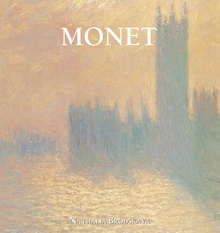
Para Claude Monet, el que se le considerara “impresionista” fue siempre un motivo de orgullo. A pesar de todas las críticas que se han hecho a su trabajo, siguió siendo un verdadero impresionista hasta el final de su muy larga vida. Lo era por convicción profunda y, por el impresionismo, pudo haber sacrificado muchas otras oportunidades que su inmenso talento le ofrecía. Monet no pintaba composiciones clásicas con figuras y nunca fue retratista, aunque su entrenamiento profesional incluía estas habilidades. Eligió un solo género y lo hizo suyo: el paisajismo, y en él logró un grado de perfección que ninguno …
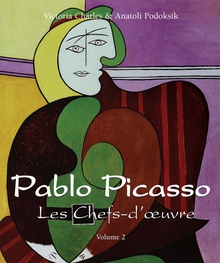
Dans le premier volume, il est traite des jeunes années de Picasso, dans le second, Picasso et Apres la Guerre 1939-1945. Pablo Picasso naît le 25 octobre 1881 à Malaga, en Espagne et meurt en 1973. Il est l’auteur d’une très vaste production qui touche, la sculpture, les poteries, le dessin et bien sur la peinture. Dès la fin des hostilités, Picasso devient un fervent soutien du Parti Communiste, et dessinera se fameuse Colombe de la paix, tout en exposant dans toutes les grands musées du monde dont le M.O.M.A. Picasso reste un des plus grands artistes du 20 siècles. …
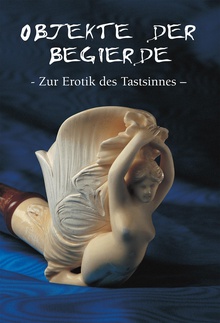
Seit undenklichen Zeiten spielen Gegenstände beim Liebesspiel eine wichtige Rolle. In allen Kulturen und Zivilisationen beschäftigte sich die menschliche Einbildungskraft gerne mit dem Thema der Sexualität. Von den einfachsten Gegenständen bis zu den kunstvollen Elfenbeinskulpturen des fernen Ostens zeigt sich hier die erotische Kunst in ihren unterschiedlichsten Ausprägungen. Schönheit und Raffinesse der Gegenstände zeugen vom Höchststand der Kulturen und Epochen. Vom einfachen Schmuckgegenstand bis zum kompliziert wiedergegebenen Liebesspiel analysiert Professor Hans-Jürgen Döpp die verschiedenen Funktionen der erotischen Objekte und wirft dabei auch einen Seitenblick auf den Sammler und seine Freude am Besitz von so kleinen Schätzen und Prachtstücken, wie sie …
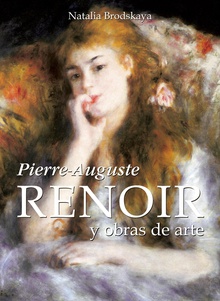
Pierre-Auguste Renoir nació en Limoges, el 25 de febrero de 1841. En 1854, sus padres lo sacaron de la escuela y le consiguieron un sitio en el taller de los hermanos Lévy, donde aprendió a pintar porcelana. El hermano menor de Renoir, Edmond, opinó al respecto: “A partir de lo que pintaba al carbón en las paredes concluyeron que tenía habilidad para las artes. Así fue como nuestros padres lo pusieron a aprender el oficio de pintor de porcelana”. Uno de los trabajadores de los Lévy, Emile Laporte, pintaba al óleo en su tiempo libre. Él le sugirió a Renoir …
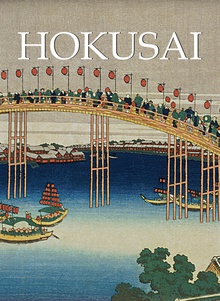
Katsushika Hokusai est sans doute l’artiste japonais le plus connu en Occident, et ce, depuis le milieu du XIXe siècle. Reflet de l’expression artistique d’une civilisation isolée, les œuvres de Hokusai, qui furent parmi les premières en provenance du Japon à émerger en Europe, influencèrent particulièrement les peintres impressionnistes et post-impressionnistes, tels que Vincent van Gogh. Considéré de son vivant comme un maître de l’estampe Ukiyo-e, Hokusai fascine par la variété et l’étendue de son Œuvre. Son travail, de près de quatre-vingt-dix ans, est présenté ici dans toute son importance et sa diversité.

Egon Schiele’s work is so distinctive that it resists categorisation. Admitted to the Vienna Academy of Fine Arts at just sixteen, he was an extraordinarily precocious artist, whose consummate skill in the manipulation of line, above all, lent a taut expressivity to all his work. Profoundly convinced of his own significance as an artist, Schiele achieved more in his abruptly curtailed youth than many other artists achieved in a full lifetime. His roots were in the Jugendstil of the Viennese Secession movement. Like a whole generation, he came under the overwhelming influence of Vienna’s most charismatic and celebrated artist, Gustav …