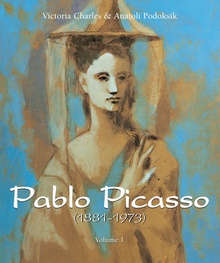
For many people, Pablo Picasso (1881-1973) was undoubtedly the most important artist of the 20th century. Born in Málaga, Spain, Picasso revealed his genius at a very early age and was quick to make contact with the most advanced art circles of his time, first in Barcelona and later in Paris. In the modernist quest for novelty, Picasso turned to pre-modern history and ÂprimitiveÊ art for inspiration. We owe him and his colleague Georges Braque the invention of Cubism, not just one of many avant-garde movements but the aesthetic that would change the art of painting forever. Once free from …
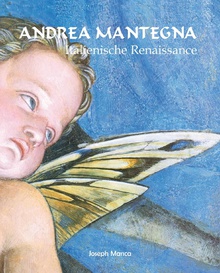
Als Humanist, Geometer und Archäologe ein Mann von herausragender Intelligenz und Phantasie, übte Mantegna dank seiner imposanten Persönlichkeit eine starke Wirkung aus. Er experimentierte mit optischer Illusion und war ein Meister der Perspektive. Seine Ausbildung als Maler erhielt er an der Schule von Padua, zu deren früheren Schülern Donatello und Uccello gehörten. Schon im jungen Alter wurde er mit Aufträgen überhäuft. Berühmt aus dieser Zeit sind seine Ovetari-Fresken in der Eremitani-Kirche in Padua. Innerhalb kürzester Zeit fand Mantegna dank seiner originellen Ideen eine Nische als “moderner” Maler. Seine Eheschließung mit Nicolosia Bellini, Schwester von Giovanni, öffnete ihm die Tore nach …
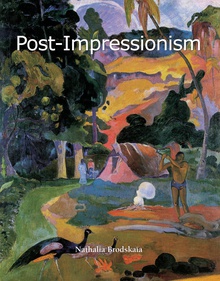
Whilst Impressionism marked the first steps toward modern painting by revolutionising an artistic medium stifled by academic conventions, Post-Impressionism, even more revolutionary, completely liberated colour and opened it to new, unknown horizons. Anchored in his epoch, relying on the new chromatic studies of Michel Eugène Chevreul, Georges Seurat transcribed the chemist’s theory of colours into tiny points that created an entire image. With his heavy strokes, Van Gogh illustrated the midday sun, whilst Cézanne renounced perspective. Rich in its variety and in the singularity of its artists, Post-Impressionism was a passage taken by all the well-known figures of 20th century …

La imagen y la interpretación de su significado se han convertido para la historia del arte en un punto central en su desarrollo como disciplina en estos últimos dos siglos. El título de esta obra es un ejercicio de reconstrucción e interpretación de las obras artísticas del pasado. Como punto de partida, la visión de los primeros habitantes de América, luego el sentir de las manifestaciones virreinales, continuando con las republicanas, y finalmente la interpretación actual. De este modo, los análisis se despliegan desde la cerámica Mochica o la iconografía diaguita, pasando por la pintura del siglo XVIII, la recepción …

* Las técnicas más variadas son presentadas en este libro para que puedan utilizarlas todos los aficionados, según sus conocimientos previos: Sistemas de control, forzales, falsas mezclas, cartas dobles, etc. * Los juegos de cartas para iniciarse, con las técnicas más sencillas, como la carta corrida, la falsa mezcla, etc. * Juegos de cartas para crear un halo de misterio y de curiosidad, como la carta rota y compuesta, las cartas blancas, etc. * Todos los juegos tratados con las técnicas precisas para no perjudicar la presentación de los efectos. Esta obra pone al alcance de los aficionados noveles, numerosos …
Empires are born. Empires reach their peak. Empires die, but leave their mark through their architecture and artistic achievements. From these specks of dust of memory, 40 centuries of history shape our world of the 21st century. The power of ancient Egypt was followed by the influence of Greece, which brought the Persian East together in the conquests of Alexander the Great. After Cleopatra, the last queen of Egypt, Rome became the power that ruled part of the world, finally dying out in the fall of the Byzantine Empire on 29 May 1453. The authors take the reader on a …
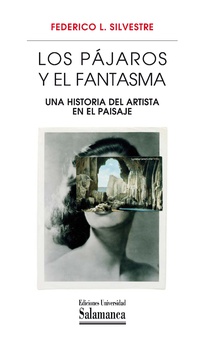
Este libro se mueve entre dos planos. En el primero, una historia de la representación del artista en el paisaje. Cuatrocientos años de pintura occidental —contemplados a través de la obra de Brueghel, Lorena, Both, Wilson, Friedrich…— como excusa para formular preguntas que nos afectan a todos: ¿a qué fuerzas obedece la tendencia aparentemente exhibicionista que sugiere la introducción del autorretrato en el paisaje? ¿Para quién representa el artista ese papel de sí mismo? Si él está ahí de espaldas, ¿de dónde sale ese cuadro? Es decir, ¿quién lo pinta? Por fin, ¿de qué manera nos informa eso sobre nuestras …