Gothic art finds its roots in the powerful architecture of the cathedrals of northern France. It is a medieval art movement that evolved throughout Europe for more than 200 years. Leaving curved Roman forms behind, the architects started using flying buttresses and pointed arches to open cathedrals to the daylight. A period of great economic and social change, the gothic era also saw the development of a new iconography celebrating the Holy Mary, in contrast to the fearful themes of dark Roman times. Full of rich changes in all the different arts (architecture, sculpture, painting, etc.), Gothic art gave way …
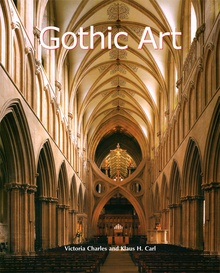
Gothic art finds its roots in the powerful architecture of the cathedrals of northern France. It is a medieval art movement that evolved throughout Europe over more than 200 years. Leaving curved Roman forms behind, the architects started using flying buttresses and pointed arches to open up cathedrals to daylight. A period of great economic and social change, the Gothic era also saw the development of a new iconography celebrating the Holy Mary – in drastic contrast to the fearful themes of dark Roman times. Full of rich changes in all of the various art forms (architecture, sculpture, painting, etc.), …
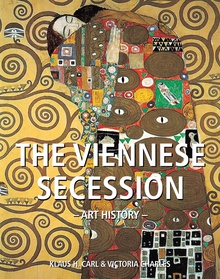
Influenced by Art Nouveau, this movement (created in 1897 by Gustav Klimt, Carl Moll, and Josef Hoffmann) was not an anonymous artistic revolution. Defining itself as a “total art”, without any political or commercial constraint, the Viennese Secession represented the ideological turmoil that affected craftsmen, architects, graphic artists, and designers from this period. Turning away from an established art and immersing themselves in organic, voluptuous, and decorative shapes, these artists opened themselves to an evocative, erotic aesthetic that blatantly offended the bourgeoisie of the time. Painting, sculpture, and architecture are addressed by the authors and highlight the diversity and richness …
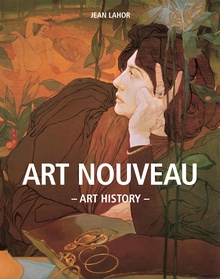
Art Nouveau designates a decorative and architectural style developed in the 1880s and 1890s in the West. Born in reaction to the Industrial Revolution and to the creative vacuum it left behind, Art Nouveau was at the heart of a "renaissance" in the decorative arts. The primary objective of the movement was the creation of a new aesthetic of nature through a return to the study of natural subjects. In order to achieve this, such artists as Gustav Klimt, Koloman Moser, Antoni Gaudí, Jan Toorop, and William Morris favoured innovation in technique and novelty of forms. After its triumph at …
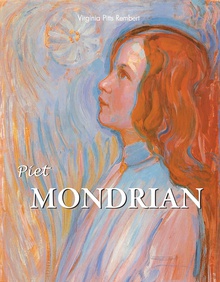
Pioneer and leader of the abstract art movement, Piet Mondrian (1872-1944) was known for his straight lines and pure colours. Fascinated by the mathematical laws of the universe, this Dutch artist nourished his work with his scientific discoveries and created a new abstract language alongside his allies Wassily Kandinsky and Fernand Léger. As his investigations advanced, his works purified and intensified to the rhythm of the travels and encounters that he enjoyed. Recognised during his lifetime as the founder of an avant-garde movement, he propagated his knowledge and his artistic vision to illustrious architects and stylists and still today remains …
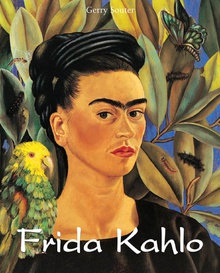
Behind Frida Kahlo’s portraits, lies the story of both her life and work. It is precisely this combination that draws the reader in. Frida’s work is a record of her life, and rarely can we learn so much about an artist from what she records inside the picture frame. Frida Kahlo truly is Mexico’s gift to the history of art. She was just eighteen years old when a terrible bus accident changed her life forever, leaving her handicapped and burdened with constant physical pain. But her explosive character, raw determination and hard work helped to shape her artistic talent. And …

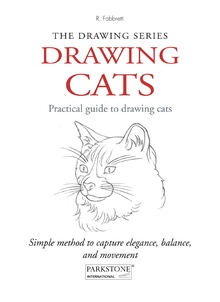
Graceful, mysterious, and endlessly fascinating, the cat has inspired artists across every era from the sacred feline statues of Ancient Egypt to the delicate sketches of Steinlen and Foujita. This book invites you to rediscover the art of the cat through a series of clear, progressive drawing studies. Each page guides you step by step, helping you to capture the subtle movement of a tail, the poised tension of a resting body, or the silent power of a feline leap. With simple methods and patient observation, anyone can learn to express the beauty and character of these elegant companions. Whether …