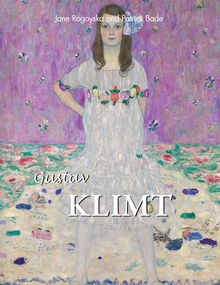
“I am not interested in myself as a subject for painting, but in others, particularly women…”Beautiful, sensuous and above all erotic, Gustav Klimt’s paintings speak of a world of opulence and leisure, which seems aeons away from the harsh, post-modern environment we live in now. The subjects he treats – allegories, portraits, landscapes and erotic figures – contain virtually no reference to external events, but strive rather to create a world where beauty, above everything else, is dominant. His use of colour and pattern was profoundly influenced by the art of Japan, ancient Egypt, and Byzantium. Ravenne, the flat, two-dimensional …
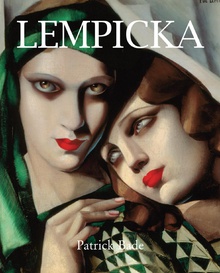
The smoothly metallic portraits, nudes and still lifes of Tamara de Lempicka encapsulate the spirit of Art Deco and the Jazz Age, and reflect the elegant and hedonistic life-style of a wealthy, glamorous and privileged elite in Paris between the two World Wars. Combining a formidable classical technique with elements borrowed from Cubism, Lempicka’s art represented the ultimate in fashionable modernity while looking back for inspiration to such master portraitists as Ingres and Bronzino. This book celebrates the sleek and streamlined beauty of her best work in the 1920s and 30s. It traces the extraordinary life story of this talented …

Romanticism was a reaction against the Neoclassicism that invaded the 19th century, and marked a veritable intellectual rupture. Found in the writings of Victor Hugo and Lord Byron, amongst others, its ideas are expressed in painting by Eugène Delacroix, Caspar David Friedrich and William Blake. In sculpture, François Rude indicated the direction this new artistic freedom would take, endowing his work with a movement and expression never previously seen. By retracing the different stages of its evolution, this book offers a study of the different aspects of the Romantic movement. Thanks to a thorough and in-depth analysis, the reader can …
The new millennium offers perfect timing for publication of a large volume on the history of eroticism. Today, we paradoxically face both new freedoms and increasingly stereotyped language. Political correctness is the new norm and images now stand raised to the status of icons, especially images of women. In earlier millennia, women were goddesses or Holy Virgins, but today they are fashion models. This demotes Apollo into a male model or movie star. What happened to the insolence of the 18th-century libertines or the carefree excesses of the Belle Epoque and legalised brothels? Except for a handful of dusty outdated …
I paint what I see and not what it pleases others to see. What other words than these of Édouard Manet, seemingly so different from the sentiments of Monet or Renoir, could best designate the movement of Impressionism? Without a doubt, this singularity was explained when, shortly before his death, Claude Monet wrote: "I remain sorry to have been the cause of the name given to a group the majority of which did not have anything Impressionist." In this work, Nathalia Brodskaïa examines the contradictions of this late 19th-century movement through the paradox of a group who, while forming a …
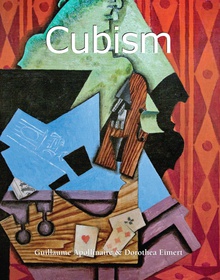
Les Demoiselles d’Avignon: five young women that changed modern art forever. Faces seen simultaneously from the front and in profile, angular bodies whose once voluptuous feminine forms disappear behind asymmetric lines - with this work, Picasso revolutionised the entire history of painting. Cubism was thus born in 1907. Transforming natural forms into cylinders and cubes, painters like Juan Gris and Robert Delaunay, led by Braque and Picasso, imposed a new vision upon the world that was in total opposition to the principles of the Impressionists. Largely diffused in Europe, Cubism developed rapidly in successive phases that brought art history to …
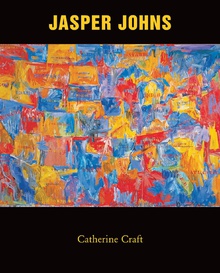
At a time when the dominant mode of painting, Abstract Expressionism, emphasised expressive drama through bold brushwork and largely abstract compositions, Johns’ paintings of the American flag, targets, numbers and the alphabet demonstrated a decided departure from convention. Despite being painted with obvious care, they seemed emotionally reticent, cool and quiet, far from the emotional fireworks then fashionable. “It all began… with my painting a picture of an American flag. Using this design took care of a great deal for me because I didn’t have to design it. So I went on to similar things like the targets - things …

Chagall loved blue. “The blue of the sky which ceaselessly combats the clouds which pass, which pass…” (Baudelaire). Marc Chagall’s journey began in his native Russia and concluded with his Parisian triumph, the extraordinary ceiling of the Paris Opera House, commissioned by André Malraux. On the way, he embraced the spirit of the twentieth century without ever disowning his Jewish-Russian origins. This work follows the path of the artist through his early works, his discovery of the United States and his passion for France. Marc Chagall, unaffiliated with any movement but influenced by his encounters with Bakst, Matisse and Picasso, …