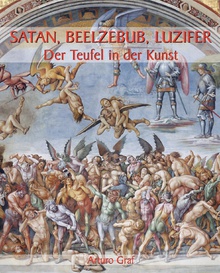
„Der Teufel hält die Fäden, die uns bewegen!“ (Charles Baudelaire, Die Blumen des Bösen, 1857.) Satan, Beelzebub, Luzifer… der Teufel hat viele Namen und Gesichter; sie alle haben Künstlern stets als Inspirationsquelle gedient. Bilder von Teufeln wurden oftmals von kirchlichen Personen von hohem Rang in Auftrag gegeben, um, je nach Gesellschaft, mit Bildern der Furcht oder Ehrfurcht und mit Darstellungen der Hölle die Gläubigen zu bekehren und sie auf den von ihnen propagierten rechten Pfad der Tugend zu geleiten. Für andere Künstler, wie z. B. Hieronymus Bosch, waren sie ein Mittel, um den völligen moralischen Verfall seiner Zeit anzuprangern. Auf …
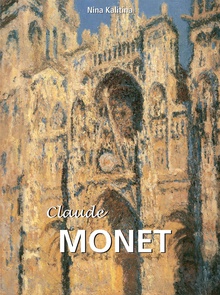
For Monet, the act of creation was always a painful struggle. His obsession with capturing the effects of lighting in nature was much more intense than that of his contemporaries. In his words: “Skills come and go … art is always the same: a transposition of nature that requires as much determination as sensibility. I strive and struggle against the sun … I might as well paint it with gold and precious stones.” A beautiful display of Impressionist work, Great Masters Monet explores the extraordinary paintings of one of the Masters of the 19th century. Monet’s rapid brushstroke style in …

The Bauhaus movement (meaning the “house of building”) developed in three German cities - it began in Weimar between 1919 and 1925, then continued in Dessau, from 1925 to 1932, and finally ended in 1932-1933 in Berlin. Three leaders presided over the growth of the movement: Walter Gropius, from 1919 to 1928, Hannes Meyer, from 1928 to 1930, and Ludwig Mies van der Rohe, from 1930 to 1933. Founded by Gropius in the rather conservative city of Weimar, the new capital of Germany, which had just been defeated by the other European nations in the First World War, the movement …
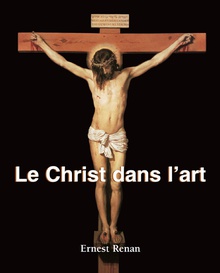
La figure du Christ a, depuis toujours, inspiré les artistes. Déjà, dans les catacombes de l'Antiquité romaine, son portrait apparaissait sur les fresques murales. Plus tard, la vie du Christ se découpe dans les vitraux des églises gothiques ou se dessine sur les toiles des artistes de la Renaissance. Cependant, la figuration du Seigneur ne répond pas à une codification particulière et peut prendre, selon les artistes, des traits divers et variés. Qu'elles soulignent la spiritualité d'un dieu incarné ou les caractéristiques terrestres d'un homme de chair et de sang, les représentations nombreuses du Christ illustrent la fascination que ce …
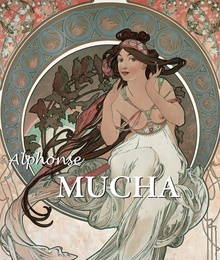
Entre courbes et contre-courbes, Mucha créa, à la fin du XIXe siècle, une égérie nouvelle qui devait hanter les rues de Paris. Au fil des représentations de Sarah Bernhard, cette muse voluptueuse devint un véritable emblème de l'Art nouveau et offrit à l'affichiste succès et renommée. Néanmoins, le talent de l'artiste ne se limita jamais à la lithographie. Nourri par cette passion d'exalter, au mieux, la sensualité du monde qui l'entourait, l'art de Mucha, s'exprima indifféremment tant sur les monumentaux panneaux décoratifs des salles à manger que sur les petites pièces délicates de porcelaine. C'est toute la richesse et la …
“I paint what I see and not what it pleases others to see.” What other words than these of Édouard Manet, seemingly so different from the sentiments of Monet or Renoir, could best define the Impressionist movement? Without a doubt, this singularity was explained when, shortly before his death, Claude Monet wrote: “I remain sorry to have been the cause of the name given to a group the majority of which did not have anything Impressionist.” In this work, Nathalia Brodskaïa examines the contradictions of this late 19th-century movement through the paradox of a group who, while forming a coherent …

Le Bauhaus est une des émergences culturelles les plus importantes et conséquentes du siècle. Walter Gropius fonda cet institut de design en 1919, à Weimar. L’école fut effective à Weimar, Dessau et Berlin. Les enseignements du Bauhaus en design sont aujourd’hui encore respectée dans les écoles de design et d’architecture. Les produits du Bauhaus sont devenus des standards du design et les immeubles du Bauhaus sont entrés dans l’histoire et au patrimoine culturel mondial de l’UNESCO. Ce livre, richement illustré et documenté, offre une vue globale de l’histoire du Bauhaus et projette un nouvel éclairage sur son évolution et sa …
Amsterdam ist nicht nur für seine Grachten oder seine beeindruckenden Sammlungen mit Meisterwerken Rembrandts, Vermeers und van Goghs bekannt, sondern auch für sein der Venus gewidmetes Museum, das jährlich mehr als 500 000 Besucher anzieht. Reisende aus der ganzen Welt strömen in diesen „Tempel der Venus“ gleich neben dem Hauptbahnhof. Seit 1985 von Monique van Marle und ihrem Vater geleitet, ist diese Sammlung erotischer Kunstwerke in der Qualität ihrer Objekte, Drucke und alten Fotografien einzigartig. Abgesehen vom Voyeurismus, bietet dieses Museum eine außergewöhnliche Ausstellungsfläche für die Geschichte der erotischen Kunst. Begleiten Sie den Autor auf seiner Führung, die nicht nur …
Pierre-Auguste Renoir nació en Limoges, el 25 de febrero de 1841. En 1854, sus padres lo sacaron de la escuela y le consiguieron un sitio en el taller de los hermanos Lévy, donde aprendió a pintar porcelana. El hermano menor de Renoir, Edmond, opinó al respecto: “A partir de lo que pintaba al carbón en las paredes concluyeron que tenía habilidad para las artes. Así fue como nuestros padres lo pusieron a aprender el oficio de pintor de porcelana”. Uno de los trabajadores de los Lévy, Emile Laporte, pintaba al óleo en su tiempo libre. Él le sugirió a Renoir …
Pierre Bonnard fut le chef de file d’un groupe de peintres post-impressionnistes, lesquels se nommèrent eux-mêmes les Nabis, du mot hébreux signifiant « prophète ». Influencés par Odilon Redon ou encore Pierre Puvis de Chavannes, l’imagerie populaire ou les estampes japonaises, Bonnard, Vuillard, Vallotton, Denis, pour les plus illustres, révolutionnèrent l’esprit des techniques décoratives durant l’une des époques les plus riches de la peinture française. Et, si l’individualisme croissant de leurs créations ébranla souvent leur unité, les Nabis furent avant tout un groupe d’amis. Les œuvres présentées dans cet ouvrage, candides chez Bonnard, ornementales et mystérieuses chez Vuillard, doucement rêveuses …
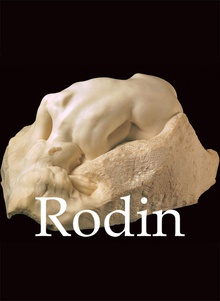
Auguste Rodin (1840-1917) intensiviertseine zeichnerische Tätigkeit als etwa 10-Jähriger und besucht ab 1854 in der Zeichen- und Mathematikschule La Petite ÉcoleKurse von Henri Lecoq de Boisbaudran (1802-1897) und des MalersJean-Hilaire Belloc (1786-1866). Dort entdeckt er für sich die Bildhauerei. Er verlässt 1857diese Schule und versucht, an der berühmten École nationale supérieure des beaux-artsaufgenommen zu werden, scheitert aber dreimal.Ab 1864 beginnt eineachtjährige Zusammenarbeit mit dem Bildhauer Albert-Ernest Cartier-Belleuse (1824-1887), der sich eine 1873 Kooperation mit dem belgischen Bildhauer Antoine-Joseph van Rasbourgh (1831-1902) anschließt. Zu seinen ersten großen Werken zählen u. a. Der Mann mit der gebrochenen Nase(1864), die später vom französischen …
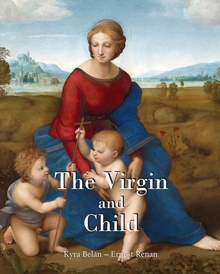
The Virgin and the Child are amongst the most favourite artistic themes since the Middle Ages. Mary was frequently depicted with the Christ Child.This religious scene showcases a mother and her son, sometimes accompanied by other protagonists. Originally distant and formal, the relationship between the two figures was expressed with tendernessat the end of the Middle Ages and became more human. Amongst the famous artists who have treated the subject of the Virgin and the Child are, most notably, Cimabue, Jean Fouquet, Quentin Metsys, Botticelli, Leonardo da Vinci, Raphael, Rubens, and many others. 300 pictures and more than 500 pages …