How is it that the foot and the toes are credited with such strong sexual connotations? Do they represent something out of the ordinary to the human subconscious? How otherwise could these unremarkable parts of the body seem erotic? And what has their appeal to do with the Eternal Mystery that is Woman? Often left uncovered, in former times when total nudity was forbidden or considered unseemly, the foot and its shape allowed the imaginations of observers to roam wild. The only part of the body of a woman occasionally visible (unlike those visible normally or those never visible normally), …
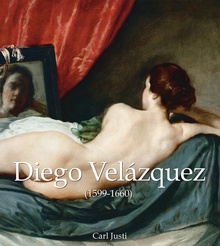
All throughout his fruitful career, Velázquez painted the powerful just as well as the ordinary Spanish people. His body of work bears the imprint of realism worthy of the greatest Flemish masters of the period, and despite outside influences, he undeniably succeeded in developing his own artistic principles. Diego Velázquez (1599-1660) is one of the world’s most famous artists. Representative of 17th-century European painting, he worked for the Spanish court and for the most important personalities, completing numerous portraits. In addition to numerous renditions of scenes of historical and cultural significance, passionate about the human figure, his oeuvreofhis long artistic …
En un ballet, el pas de deux casi siempre es el momento dramático y a la vez lírico en que se produce el nudo o el desenlace de la acción, o el juego del amor y de la muerte, que es la base de toda dramaturgia. El pas de deux alcanza el punto culminante y nos dirige hacia el desenlace. Esta obra aporta un completo estudio de esta técnica para la mayoría de los bailarines que están en la última etapa de su formación profesional, para los que se inician e incluso para los más avanzados. La belleza y originalidad …
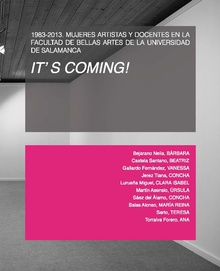
IT' S COMING! 1983-2013. Mujeres artistas y docentes en la Facultad de Bellas Artes de la Universidad de Salamanca as una iniciativa del Instituto Universitario de Investigación en Arte y Tecnología de la Animación (ATA) de la Universidad de Salamanca. Se trata de una exposición colectiva que recoge la obra de 10 mujeres artistas que tuvieron o tienen como centro de trabajo la Facultad de Bellas Artes de la Universidad de Salamanca. Estas mujeres personifican el encuentro entre el mundo artístico por un lado y el mundo académico por el otro. El mundo académico y el mundo artístico se desarrollan …

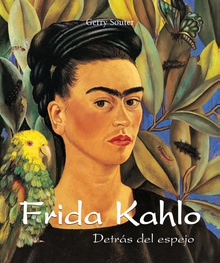
Detrás de los retratos de Frida Kahlo se ocultan tanto la historia de su vida como la de su obra. Es precisamente esta combinación lo que cautiva al espectador. La obra de Frida es un testimonio de su vida. Pocas veces se puede aprender tanto acerca de un artista con sólo contemplar lo que inscribe dentro del marco de sus cuadros. Frida Kahlo es sin lugar a dudas la ofrenda de México a la historia del arte. Tenía apenas dieciocho años cuando un terrible accidente cambió su vida para siempre, dejándola discapacitada y agobiada por un dolor físico permanente. Pero …

Since the dawn of Christianity, artists have been fascinated and stirred by the figure of Christ. His likeness appears in frescoes on the walls of catacombs that date from Roman times; he is featured in the stained glass windows of Gothic churches; and he can be found in various forms in today’s pop culture. The Biblical Saviour is not a static, immaterial deity: Christ’s mortal birth, unusual life and dramatic death make him an accessible subject for religious and secular artists alike.Whether they show the spirituality of God Incarnate or the earthly characteristics of a flesh-and-blood man, artistic depictions of …

Hieronymus Bosch was painting terrifying, yet strangely likeable, monsters, long before computer games were invented, often with a touch of humour. His works are assertive statements about the mental dangers that befall those who abandon the teachings of Christ. With a life that spanned from 1450 to 1516, Bosch was born at the height of the Renaissance and witnessed its wars of religion. Medieval traditions and values were crumbling, thrusting man into a new universe where faith had lost some of its power and much of its magic. Bosch set out to warn doubters of the perils awaiting all and …
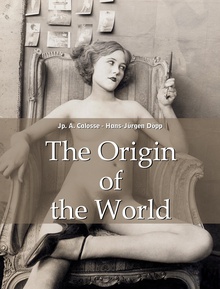
Lacan, the last owner of Courbet’s The Origin of the World, loved the painting so much that he couldn’t even bring himself to look at it. Instead, he hid it behind a “safer” painting. The Chinese called it the “valley of the roses” (watch out for the thorns!), the Persians, the “honey-pot” (watch out for the bees!), and the Greeks, “the mound of Venus” (mind the steep climb!); to each era its fantasies and its theories about the feminine mystique. Then there are the testimonies of poets, painters, and even of some famous psychiatrists. The Origin of the World is …
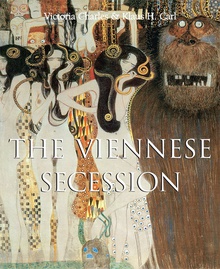
A symbol of modernity, the Viennese Secession was defined by the rebellion of twenty artists who were against the conservative Vienna Künstlerhaus' oppressive influence over the city, the epoch, and the whole Austro-Hungarian Empire. Influenced by Art Nouveau, this movement (created in 1897 by Gustav Klimt, Carl Moll, and Josef Hoffmann) was not an anonymous artistic revolution. Defining itself as a “total art”, without any political or commercial constraint, the Viennese Secession represented the ideological turmoil that affected craftsmen, architects, graphic artists, and designers from this period. Turning away from an established art and immersing themselves in organic, voluptuous, and …

It was in 1946 that the world first came to hear of a coral atoll in the Marshall Islands called Bikini. The following year, French couturier Louis Réard borrowed the name and applied it to a bathing costume for women. Breaking from decades of conformity, Réard dared to ‘undress’ women’s bodies in order to better emphasize what remained clothed - albeit in tiny wisps of material. By taking up the bikini as popular beachwear, women also found themselves thinking differently about their bodies. An ideal of perfection was reinforced by the appearance on the cinema screen of stars such as …