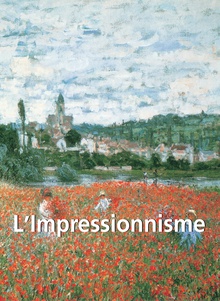
Quel nom conviendrait mieux à cet art dont Émile Zola écrivait que «jamais auparavant des peintures ne lui avaient paru posséder une telle dignité. On peut presque entendre les voix intérieures de la terre et sentir les arbres bourgeonner». Plus qu'un art émotionnel, il s'agissait d'un art révolutionnaire qui rompait catégoriquement avec les règles rigides de l'art académique. Ainsi, les peintres purent se laisser enchanter par la lumière dansant sur les arbres, ou ses reflets dans l'eau. Expérimentée par Théodore Rousseau, la méthode allait être intensément développée par Monet, Renoir, Pissaro, Manet ou encore Berthe Morisot, chacun à sa propre …
Herrenmode, insbesondere die Trends der Unterkleidung, war einst der Elite vorbehalten; heute ist diese Sparte der Mode demokratisiert. Dies ist ein klarer Beweis für den sozialen Fortschritt. Die Ästhetik des Körpers, die von den Griechen einst so hochgeschätzt wurde, scheint wieder einen bedeutenden Platz in der Männerwelt eingenommen zu haben. Die Entwicklung gesellschaftlicher Werte widerspiegelnd, hebt die Geschichte der Unterwäsche den ständigen, spielerischen Austausch hervor, der zwischen weiblichen Trends und der Herrenmode stattfindet. Unterkleidung ist verborgen oder zur Schau gestellt, lang oder kurz und baut somit ein Wechselspiel zwischen dem Verbotenen von gestern und dem Chic von heute auf. Dabei …
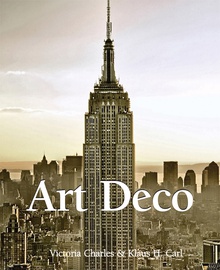
Art Deco style was established on the ashes of a disappeared world, the one from before the First World War, and on the foundation stone of a world yet to become, opened to the most undisclosed promises. Forgetting herself in the whirl of Jazz Age and the euphoria of the “Années Folles”, the Garçonne with her linear shape reflects the architectural style of Art Deco: to the rounded curves succeed the simple and plain androgynous straight line… Architecture, painting, furniture and sculpture, dissected by the author, proclaim the druthers for sharp lines and broken angles. Although ephemeral, this movement keeps …
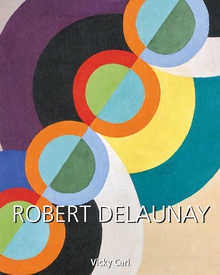
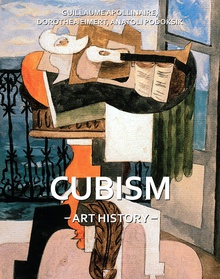
Les Demoiselles d'Avignon: five young women that changed modern art forever. Faces seen simultaneously from the front and in profile, angular bodies whose once voluptuous feminine forms disappear behind asymmetric lines - with this work, Picasso revolutionised the entire history of painting. Cubism was thus born in 1907. Transforming natural forms into cylinders and cubes, painters like Juan Gris and Robert Delaunay, led by Braque and Picasso, imposed a new vision upon the world that was in total opposition to the principles of the Impressionists. Largely diffused in Europe, Cubism developed rapidly in successive phases that brought art history to …
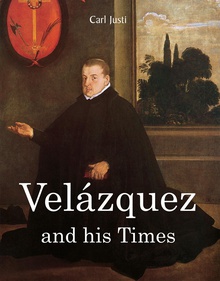
Diego Rodríguez de Silva y Velázquez (June 1599 – August 6 1660), known as Diego Vélasquez, was a painter of the Spanish Golden Age who had considerable influence at the court of King Philip IV. Along with Francisco Goya and Le Greco, he is generally considered to be one of the greatest artists in Spanish history. His style, whilst remaining very personal, belongs firmly in the Baroque movement. Velázquez’s two visits to Italy, evidenced by documents from that time, had a strong effect on the manner in which his work evolved. Besides numerous paintings with historical and cultural value, Diego …
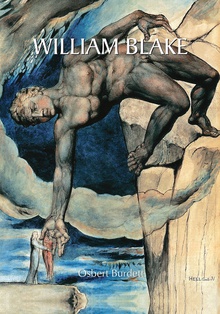
Poet, draughtsman, engraver and painter, William Blake’s work is made up of several elements – Gothic art, Germanic reverie, the Bible, Milton and Shakespeare – to which were added Dante and a certain taste for linear designs, resembling geometric diagrams, and relates him to the great classical movement inspired by Winckelmann and propagated by David. This is the sole point of contact discernible between the classicism of David and English art, though furtive and indirect. Blake is the most mystic of the English painters, perhaps the only true mystic. He was ingenious in his inner imagination, and his interpretations of …

Im Gegensatz zum mittelalterlichen Obskurantismus hat sich in Europa vom 14. bis zum 16. Jahrhundert die RenaissancealsWiedergeburt des antikenGeistes und als wesentliche Geistes-bewegung der Zeit durchgesetzt. Die Akteure der Renaissance stellen den Menschen inseiner körperlichen Beschaffenheit in den Mittelpunktund machen ihn zum Maßstab für ein neues Ordnungssystem.Die Renaissance ist damit der Beginn der anthropozentrischen Welt-anschauung. Religiöse Gestalten wurden vermenschlicht. Es ist eine Epoche der ästhetischen Forschung der Anatomie, der Perspektive und der Naturwissenschaft. Die genialsten Künstler der Kunstgeschichte, wie Botticelli, Raphael, Michelangelo oder Leonardo da Vinci verbinden ihren Namen mit der Epoche und deren opulenter Produktivität. Ihre Werke werden in …
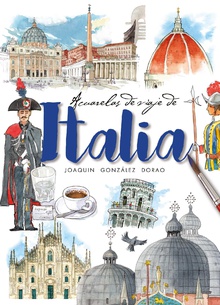
Este libro es la reproducción fiel y a su tamaño de los cuadernos de viaje que realizó Joaquín González Dorao durante sus visitas a Italia a lo largo del año 2020. Fueron varios viajes en los que recorrió Roma, Sicilia, Nápoles, Florencia, la Toscana, Pisa, Cinque Terre, Venecia, Milán y los lagos del norte. Llevó consigo cuadernos de acuarelas de tamaño A4 en los que iba dibujando todo aquello que veía y le llamaba la atención del país. Para realizar sus dibujos hacía primero un dibujo a lápiz, luego lo repasa y estiliza con rotuladores calibrados de tinta negra de …