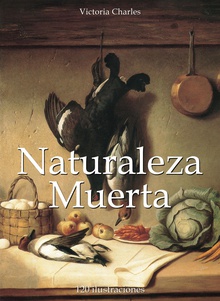

Paul Gauguin fue primero un marino y luego un exitoso corredor de bolsa en París. En 1874 comenzó a pintar los fines de semana, como pasatiempo. Nueve años después, tras la caída de la bolsa de valores, se sintió lo bastante confiado en su habilidad para ganarse la vida pintando, que renunció a su puesto y se dedicó a la pintura de tiempo completo. Siguiendo el ejemplo de Cézanne, Gauguin pintó naturalezas muertas desde el principio de su vida artística. Incluso poseía una naturaleza muerta de Cézanne, que aparece en el cuadro de Gauguin Retrato de Marie Lagadu. El año …

Romanticism was a reaction against the Neoclassicism that invaded the 19th century, and marked a veritable intellectual rupture. Found in the writings of Victor Hugo and Lord Byron, amongst others, its ideas are expressed in painting by Eugène Delacroix, Caspar David Friedrich and William Blake. In sculpture, François Rude indicated the direction this new artistic freedom would take, endowing his work with a movement and expression never previously seen. By retracing the different stages of its evolution, this book offers a study of the different aspects of the Romantic movement. Thanks to a thorough and in-depth analysis, the reader can …
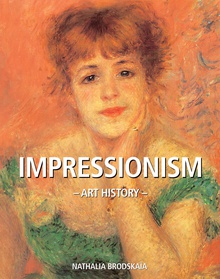
I paint what I see and not what it pleases others to see. What other words than these of Édouard Manet, seemingly so different from the sentiments of Monet or Renoir, could best designate the movement of Impressionism? Without a doubt, this singularity was explained when, shortly before his death, Claude Monet wrote: "I remain sorry to have been the cause of the name given to a group the majority of which did not have anything Impressionist." In this work, Nathalia Brodskaïa examines the contradictions of this late 19th-century movement through the paradox of a group who, while forming a …
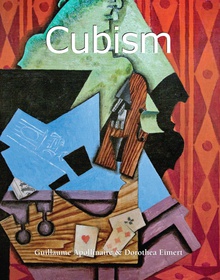
Les Demoiselles d’Avignon: five young women that changed modern art forever. Faces seen simultaneously from the front and in profile, angular bodies whose once voluptuous feminine forms disappear behind asymmetric lines - with this work, Picasso revolutionised the entire history of painting. Cubism was thus born in 1907. Transforming natural forms into cylinders and cubes, painters like Juan Gris and Robert Delaunay, led by Braque and Picasso, imposed a new vision upon the world that was in total opposition to the principles of the Impressionists. Largely diffused in Europe, Cubism developed rapidly in successive phases that brought art history to …
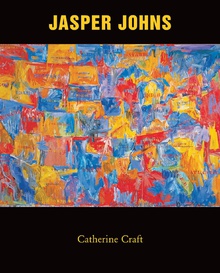
At a time when the dominant mode of painting, Abstract Expressionism, emphasised expressive drama through bold brushwork and largely abstract compositions, Johns’ paintings of the American flag, targets, numbers and the alphabet demonstrated a decided departure from convention. Despite being painted with obvious care, they seemed emotionally reticent, cool and quiet, far from the emotional fireworks then fashionable. “It all began… with my painting a picture of an American flag. Using this design took care of a great deal for me because I didn’t have to design it. So I went on to similar things like the targets - things …
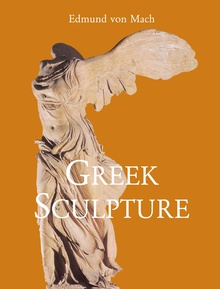
Greek Sculpture is probably the most well known aspect of Greek art, for a contemporary it expresses the most beautiful ideal and plastic perfection. It is the first of the Ancient Arts that looked to free itself from the imitative constraints, of the faithful representation of nature. Only a small part of the production of Greek Sculpture is known to us. Many of the masterpieces described by Antique literature are henceforth lost or badly damaged, and a large part, we know are copies, more or less skillful and faithful to the Roman era. Many have been restored by Western Sculptors, …
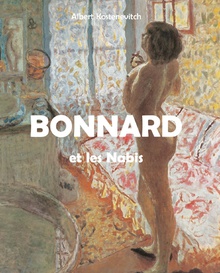
Pierre Bonnard était le chef d’un groupe de peintres post-impressionnistes. Ils se nommèrent eux-mêmes les Nabis, du mot hébreux signifiant ‘prophète’. Bonnard, Vuillard, Roussel, Denis, les plus illustres des Nabis, ont révolutionné l’esprit des techniques décoratives durant l’une des époques les plus riches de la peinture française. Influencés par Odilon Redon, Puvis de Chavannes, l’imagerie populaire ou les estampes japonaises, ces post-impressionnistes furent avant tout un groupe d’amis fréquentat les mêmes milieux culturels. L’individualisme croissant de leurs créations ébranla souvent l’unité du groupe. Bien que liés par une même philosophie, leurs oeuvres divergeaient nettement. Cet ouvrage permet de les comparer …