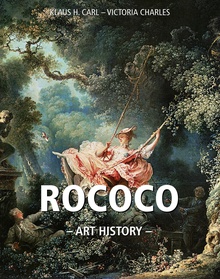
Deriving from the French word rocaille, in reference to the curved forms of shellfish, and the Italian Barocco, the French created the term Rococo. Appearing at the beginning of the 18th-century, it rapidly spread to the whole of Europe. Extravagant and light, Rococo responded perfectly to the spontaneity of the aristocracy of the time. In many aspects, this art was linked to its predecessor, Baroque, and it is thus also referred to as late Baroque style. While artists such as Tiepolo, Boucher and Reynolds carried the style to its apogee, the movement was often condemned for its superficiality. In the …
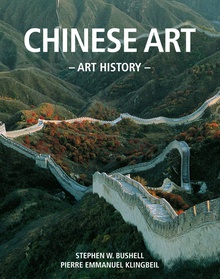
As the centre of Far-Eastern art, China has always fascinated Westerners, who take an interest in its religious leaders and savants as much as in its artists. Sophisticated and mysterious, Chinese art has persistently developed for 10,000 years through unequalled talent, which long ago established its artistic preeminence. Admired and imitated by all, today Chinese paintings and porcelain are the timeless reminders of a decadent past which continues to astound people around the world. Dealing not only with architecture, sculpture and painting but also with bronze and porcelain, this text offers a complete panorama of Chinese arts and civilisation until …
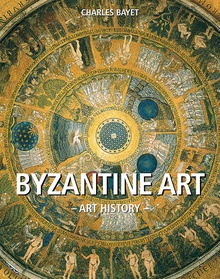
For more than a millennium, from its creation in 330 A.D. until its fall in 1453, the Byzantine Empire was a cradle of artistic effervescence that we are only beginning to rediscover. Endowed with the rich heritage of Roman, Eastern and Christian cultures, Byzantine artists developed an architectural and pictorial tradition, marked by symbolism, whose influence extended far beyond the borders of the Empire. Today, Italy, Northern Africa, and the Near East preserve the vestiges of this sophisticated artistic tradition, with all of its mystical and luminous beauty. The magnificence of the palaces, churches, paintings, enamels, ceramics and mosaics from …
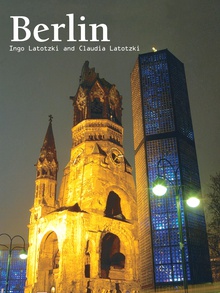
In the past decade, Berlin has become the construction site of a new Reichstag, image of the German democracy, of futuristic buildings and incredible museums like the Pergamon or the Charlotteburg. Mythical sites such as the Alexanderplatz, the Unter den Linden, the arch of Brandeburg, the favourite esplanades of the Berliners, the Kurfürstendamm, breathe a new life and are illuminated once a year for the joyful celebration of the Love Parade. For these festivities, young people from all over the world come to express their passion for the city that has now become a symbol of joy and love. “Ich …
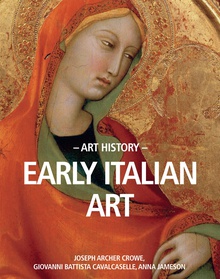
Oscillating between the majesty of the Greco-Byzantine tradition and the modernity predicted by Giotto, Early Italian Painting addresses the first important aesthetic movement that would lead to the Renaissance, the Italian Primitives. Trying new mediums and techniques, these revolutionary artists no longer painted frescoes on walls, but created the first mobile paintings on wooden panels. The visages of the figures were painted to shock the spectator in order to emphasise the divinity of the character being represented. The bright gold leafed backgrounds were used to highlight the godliness of the subject. The elegance of both line and colour were combined …
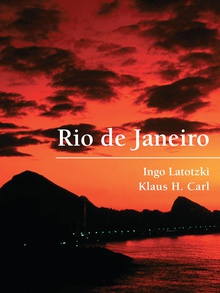
Like so many other cities of South America, Rio is an urban sprawl containing some truly stunning contrasts. Yet Rio comes alive, really, for only two things – soccer and the samba. According to tradition, founded by the Portuguese navigator André Gonçalves on 1 January 1502, declared the capital of Brazil by King John in 1763, Rio underwent major reorganization under President Alvarez at the beginning of the 20th century. Avenues and boulevards were laid out in a logic that added overall cohesion to the city. The greatest architects of the time and place were invited to make use of …
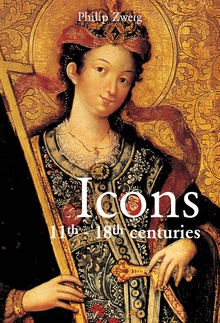

Gothic art finds its roots in the powerful architecture of the cathedrals of northern France. It is a medieval art movement that evolved throughout Europe for more than 200 years. Leaving curved Roman forms behind, the architects started using flying buttresses and pointed arches to open cathedrals to the daylight. A period of great economic and social change, the gothic era also saw the development of a new iconography celebrating the Holy Mary, in contrast to the fearful themes of dark Roman times. Full of rich changes in all the different arts (architecture, sculpture, painting, etc.), Gothic art gave way …
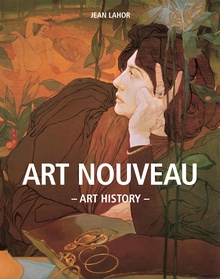
Art Nouveau designates a decorative and architectural style developed in the 1880s and 1890s in the West. Born in reaction to the Industrial Revolution and to the creative vacuum it left behind, Art Nouveau was at the heart of a "renaissance" in the decorative arts. The primary objective of the movement was the creation of a new aesthetic of nature through a return to the study of natural subjects. In order to achieve this, such artists as Gustav Klimt, Koloman Moser, Antoni Gaudí, Jan Toorop, and William Morris favoured innovation in technique and novelty of forms. After its triumph at …
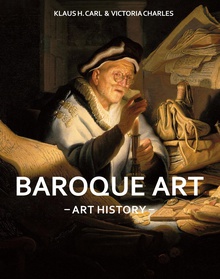
The Baroque period lasted from the beginning of the 17th-century to the middle of the 18th-century. Baroque art was artists' response to the Catholic Church's demand for solemn grandeur following the Council of Trent, and through its monumentality and grandiloquence, it seduced the great European courts. Amongst the Baroque arts, architecture has, without doubt, left the greatest mark in Europe: the continent is dotted with magnificent Baroque churches and palaces, commissioned by patrons at the height of their power. The works of Gian Lorenzo Bernini of the Southern School and Peter Paul Rubens of the Northern School alone show the …
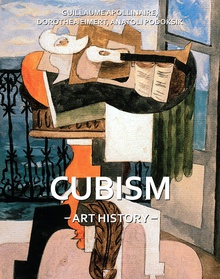
Les Demoiselles d'Avignon: five young women that changed modern art forever. Faces seen simultaneously from the front and in profile, angular bodies whose once voluptuous feminine forms disappear behind asymmetric lines - with this work, Picasso revolutionised the entire history of painting. Cubism was thus born in 1907. Transforming natural forms into cylinders and cubes, painters like Juan Gris and Robert Delaunay, led by Braque and Picasso, imposed a new vision upon the world that was in total opposition to the principles of the Impressionists. Largely diffused in Europe, Cubism developed rapidly in successive phases that brought art history to …
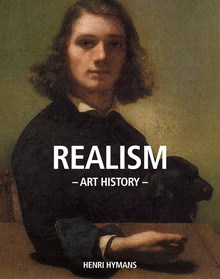
From a historical perspective, Realism stands as a pivotal reaction against the extravagances of Romanticism, emerging in a time rife with social and political upheaval brought about by the Industrial Revolution. Artists like Gustave Courbet, the movement’s vanguard, along with Jean-Baptiste Corot, Honoré Daumier, Henri Fantin-Latour, Édouard Manet, and Jean-François Millet, shifted the artistic lens from the fantastic to the tangible, painting the world around them with unprecedented fidelity. These pioneers, renowned for their depictions of everyday life and social commentary, employed innovative techniques to capture the light, texture, and movement of the real world. Their works, often categorised under …