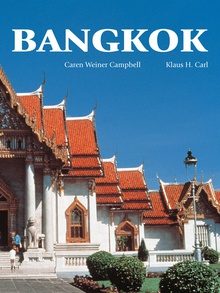
Bangkok by night draws its lifeblood from the realms of the steamy and the seamy. The capital of Thailand is world-famous for its innumerable massage parlours, yet at the same time the city is rich in historical treasures. Some of its Buddhist temples are more than 400 years old, and contrast strangely with Bangkok’s otherwise cutting-edge modernity. Its unique charm stems also from the winding presence of the Chao Phraya river, a waterway that can hardly be seen due to the multitude of small vessels that ply up and down it daily carrying a vast horde of passengers and goods, …
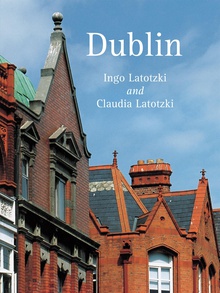
Consolidated by the Norsemen in 841, Dublin became the capital of the Republic of Ireland (Eire) when the country gained formal independence in 1922. It is primarily an industrial city, and boasts distilleries, breweries and flour-mills among the more scenic delights that include the Tobacco Factory, the Customhouse, the 13th-century St Patrick's Cathedral and the Gothic-style Catholic church of St Audoen. As shown by the author, Ingo Latotzki, Dublin remains a city that is both poetic and tragic. It was here that Irishmen determined to achieve national independence instigated the Easter Rising of April 1916, an attempt at a revolt …
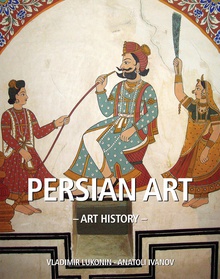
Housed in the Hermitage Museum along with other institutes, libraries, and museums in Russia and the republics of the former Soviet Union are some of the most magnif icent treasures of Persian Art. For the most part, many of these works have been lost, but have been catalogued and published here for the first time with an unsurpassed selection of colour plates. In a comprehensive introduction, Vladimir Loukonine, Director of the Oriental Art section of the Hermitage Museum, and his colleague Anatoli Ivanov have broadly documented the major developments of Persian Art: from the first signs of civilisation on the …
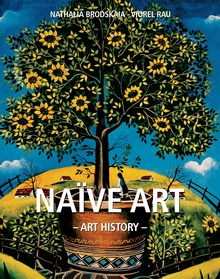
Naive art first became popular at the end of the 19th-century. Until that time this form of expression, created by untrained artists and characterised by spontaneity and simplicity, enjoyed little recognition from professional artists and art critics. Influenced by primitive arts, naive painting is distinguished by the fluidity of its lines, vivacity, and joyful colours, as well as by its rather clean-cut, simple shapes. Naive art is represented by such artists as Henri Rousseau, Séraphine de Senlis, André Bauchant, and Camille Bombois. This movement has also found adherents abroad, including such prominent artists as Joan Miró, Guido Vedovato, Niko Pirosmani, …
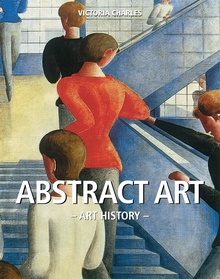
At the beginning of the 20th-century, trends started to emerge that began to diverge from a naturalistic conception of reality and set out to explore beneath the mere superficial appearance of things. Throughout, the author shows that, regardless of the multitude of stylistic backgrounds in individual Western countries, everywhere, realisation that a work of art was no longer made in the spirit of the old aesthetics of imitation as if taken from nature, but rather rises from its own independent dimension of existence. A work of art is now autonomous. In this book, the author traces and analyses the origins …
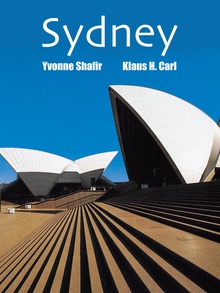
Sydney Bay was discovered by European explorers in 1770. Populated at first by colonial convicts and their guards, the city today accounts for one fifth of the entire population of Australia. Renowned for its Opera House, it presents an ultramodern vista to the tourists’ gaze. Sydney Harbour Bridge - one of the longest bridges in the world - and the immense high-rise buildings that sore skywards both astound and fascinate. At the same time the great city is truly cosmopolitan, incorporating a celebrated Chinatown and even more prominently an Aboriginal area in which the colourful way of life of these …
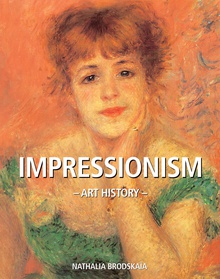
I paint what I see and not what it pleases others to see. What other words than these of Édouard Manet, seemingly so different from the sentiments of Monet or Renoir, could best designate the movement of Impressionism? Without a doubt, this singularity was explained when, shortly before his death, Claude Monet wrote: "I remain sorry to have been the cause of the name given to a group the majority of which did not have anything Impressionist." In this work, Nathalia Brodskaïa examines the contradictions of this late 19th-century movement through the paradox of a group who, while forming a …
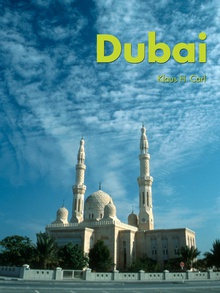
Saint-Exupéry might have had the Little Prince say that he liked the desert because that is where camels can hide out. Dubai is one of the seven Gulf Emirates and has become a high-tech avantgarde metropolis where superlatives are superfluous. Major wonders of architectural imagination and scale include the National Bank of Dubai, Clock Tower, Creek Side and Dubai Internet City. It also operates the world's largest man-made harbour in Jebel Ali, which features a major water desalination plant. It is the world's third largest trans-shipment hub after Hong Kong and Singapore. Nonetheless, Dubai preserves close ties to the past, …
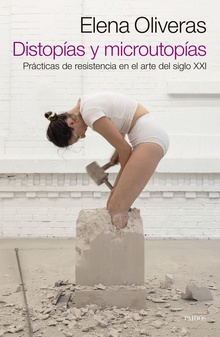
Prácticas de resistencia en el arte del siglo XXI.Un artista es incapaz de producir nada si no hay un viento que hinche sus velas. Y ese viento tiene que ser precisamente el que sopla en ese momento, no el viento del futuro. ¿Una frase de Bertolt Brecht en el comienzo de un recorrido por el presente más candente del arte? Es que no puede ecualizar mejor esa idea lo que Elena Oliveras propone en su nuevo libro, trabajo que no en vano dedica "a todos los artistas que luchan por hacer del mundo un lugar más justo". La autora de …
Un libro envuelto en niebla, engaños y ausencia." Cartas marcadas es un libro envuelto en niebla. La cerrazón que cubre las calles de Flores se tiende también sobre los capítulos de la novela, provocando confusiones y obligándonos a marchar despacio. Por otra parte, la acción perversa de los Conspiradores ha llenado el texto de tachaduras, episodios falsos y agregados fraudulentos, para no hablar de páginas y capítulos enteros que han sido robados. La niebla no sólo dificulta la percepción, sino que además tiene, como los vapores oraculares, un efecto alucinatorio. Vemos poco y lo poco que vemos es dudoso. Los …
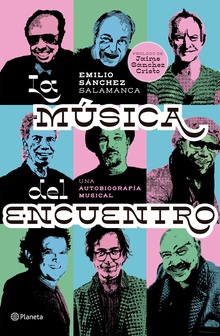
"Quiero destacar el contenido del primer libro de Emilio, dedicado a su primer y más grande amor en la vida: la música. Curiosamente hay una canción que define esta pasión de mi hijo de principio a fin: Music, de John Miles, producida por Alan Parsons y que recomiendo a todos los lectores", del prólogo de Jaime Sánchez Cristo, padre del autor La pasión por la música, llevó a Emilio Sánchez Salamanca a entrevistar a sus grandes ídolos, a verlos en vivo, a estar en los principales escenarios del mundo -privilegios como ver a Michael Jackson en el Madison Square Garden de …