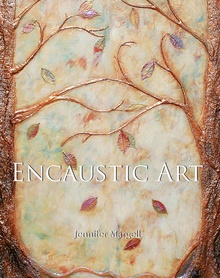
Encaustic painting is one of the world’s most venerable art forms, having been practised consistently around the world since the ancient Egyptians first used it to decorate sarcophagi, and enjoying continuing popularity in the modern era with artists such as Paul Klee and Diego Rivera. In this new text, Jennifer Margell offers readers a comprehensive introduction to the medium, featuring instructive how-tos for encaustic art beginners, revealing interviews with some of the most celebrated practitioners of the medium, and a gallery featuring one of the largest published collections of encaustic art to date.
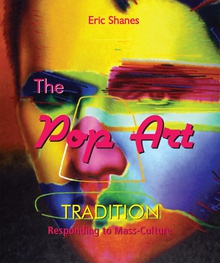
This book offers a radically new perspective on the so-called ‘Pop Art’ creative dynamic that has been around since the 1950s. It does so by enhancing the term ‘Pop Art’ which has always been recognised as a misnomer, for it obscures far more than it clarifies. Instead, the book connects all the art in question to mass-culture which has always provided its core inspiration. Above all, the book suggests that this Mass-Culture Art has created a new Modernist tradition which is still flourishing. The book traces that tradition down the forty and more years since Pop/Mass-Culture Art first came into …
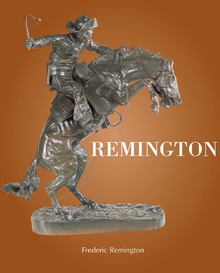
It is impossible to reflect upon Frederic Remington’s art without thinking of the merely human elements. Remington became interested in the American Indian, probably because he became interested in the active, exciting life of the American Great Plains. The Indian appealed to him not in any histrionic way, not as a figure stepped out from the pages of Hiawatha, but just as a human subject. Remington hit upon this truth when he travelled west. What he found there was majesty that he did not make, solely, an affair of Indians in war paint and feathers. Remington knew how the light …
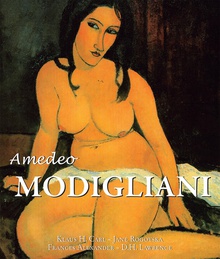
Equally famous for his masterful canvasses and tumultuous mental health, Amedeo Modigliani (1884-1920) was, in many ways, the prototypical tortured artist. A lifelong sufferer of painfully degenerative tuberculosis, Modigliani was famous for denying his disease with a frenzied bohemian lifestyle of hard drinking, drug abuse, and passionate love affairs. But at the same time, he managed to produce some of the modern movement’s most enduring masterpieces, and today his work sells for record-breaking sums whenever it comes up for auction. In this fascinating examination of Modigliani’s life and works, Klaus H. Carl, Frances Alexander, and Jane Rogoyska turn their penetrating …
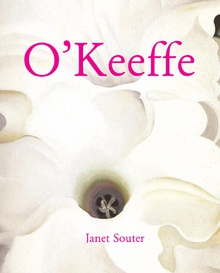
In 1905 Georgia travelled to Chicago to study painting at the Art Institute of Chicago. In 1907 she enrolled at the Art Students’ League in New York City, where she studied with William Merritt Chase. During her time in New York she became familiar with the 291 Gallery owned by her future husband, photographer Alfred Stieglitz. In 1912, she and her sisters studied at university with Alon Bement, who employed a somewhat revolutionary method in art instruction originally conceived by Arthur Wesley Dow. In Bement’s class, the students did not mechanically copy nature, but instead were taught the principles of …
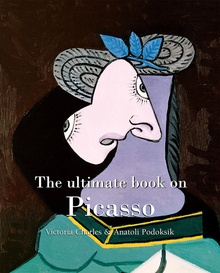
Few people discuss the fact that Pablo Picasso (1881-1973) was the most important artist of the 20th century. Born in Malaga, Spain, Picasso revealed his genius at a very early age and was quick to make contact with the most advanced art circles of his time, first in Barcelona and later in Paris. In the modernist quest for novelty, Picasso turned to pre-Modern history and ‘primitive’ art for inspiration. We owe him and his colleague Georges Braque the invention of Cubism, not just one of many avant-garde movements but the aesthetic that would change the art of painting forever. Once …
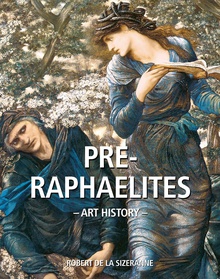
In Victorian England, with the country swept up in the Industrial Revolution, the Pre-Raphaelites, close to William Morris' Arts and Crafts movement, yearned for a return to bygone values. Wishing to revive the pure and noble forms of the Italian Renaissance, the major painters of the circle such as John Everett Millais, Dante Gabriel Rossetti and William Holman Hunt, in opposition to the academicism of the time, favoured realism and biblical themes over the affected canons of the 19th-century. This work, with its captivating text and rich illustrations, describes with enthusiasm this singular movement which notably inspired Art Nouveau and …
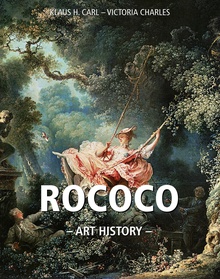
Deriving from the French word rocaille, in reference to the curved forms of shellfish, and the Italian Barocco, the French created the term Rococo. Appearing at the beginning of the 18th-century, it rapidly spread to the whole of Europe. Extravagant and light, Rococo responded perfectly to the spontaneity of the aristocracy of the time. In many aspects, this art was linked to its predecessor, Baroque, and it is thus also referred to as late Baroque style. While artists such as Tiepolo, Boucher and Reynolds carried the style to its apogee, the movement was often condemned for its superficiality. In the …
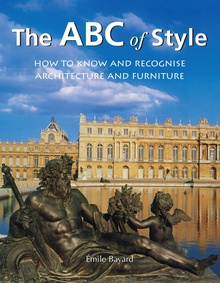
Ever wondered why your ceiling is shaped like the arches in a gothic cathedral? Or why your offi ce building looks so different from its neighboring counterparts? The ABC of Style invites you to explore the many different architectural and decorative interior styles from their ancient origins to the 1940s. Take a journey through history to see how the French aristocracy styled their palaces and castles to the simple designs of the Dominican monastic churches during the middle ages. Often, political changes implicate a stylistic transformation. Thus, the different European styles were frequently named after a sovereign or a historical …
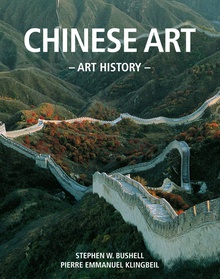
As the centre of Far-Eastern art, China has always fascinated Westerners, who take an interest in its religious leaders and savants as much as in its artists. Sophisticated and mysterious, Chinese art has persistently developed for 10,000 years through unequalled talent, which long ago established its artistic preeminence. Admired and imitated by all, today Chinese paintings and porcelain are the timeless reminders of a decadent past which continues to astound people around the world. Dealing not only with architecture, sculpture and painting but also with bronze and porcelain, this text offers a complete panorama of Chinese arts and civilisation until …
¿Le gustaría saber qué piensa su gatito? ¿Y si para entenderlo mejor recurre a la astrología tradicional? Gracias a esta podrá conocer aquello que siempre ha querido saber sobre él y nunca se ha atrevido a preguntarle. Este interesante libro, escrito con un estilo desenfadado, hará las delicias de los amantes de los gatos, ya que les explicará las pequeñas manías y las grandes cualidades de estos según sea su horóscopo (Sagitario, Piscis, Tauro, Aries…) ¿Qué nos dicen los astros sobre nuestros amigos los gatos? Aquí encontrará una manera original y divertida de descubrir el carácter oculto de estos pequeños …
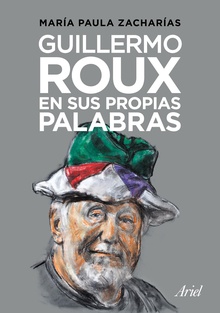
Guillermo Roux en sus propias palabras reconstruye la luminosa trayectoria de uno de los grandes artistas plásticos argentinos, a partir del diálogo que sostuvo durante cuatro años con María Paula Zacharías, reconocida periodista de arte. El relato comienza con su infancia en la década de 1930, cuando su padre –dibujante e ilustrador profesional– lo alentó a amar el oficio. A los 15 años Roux ingresó como dibujante a la editorial de Dante Quinterno; luego vivió varias vidas, viajando de Buenos Aires a Roma y de Jujuy a Nueva York, hasta tomar la decisión que marcaría un antes y un después: …