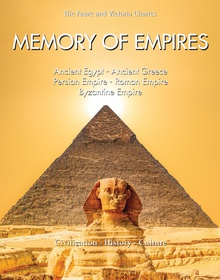
Empires are born. Empires reach their peak. Empires die, but leave their mark through their architecture and artistic achievements. From these specks of dust of memory, 40 centuries of history shape our world of the 21st century. The power of ancient Egypt was followed by the influence of Greece, which brought the Persian East together in the conquests of Alexander the Great. After Cleopatra, the last queen of Egypt, Rome became the power that ruled part of the world, finally dying out in the fall of the Byzantine Empire on 29 May 1453. The authors take the reader on a …
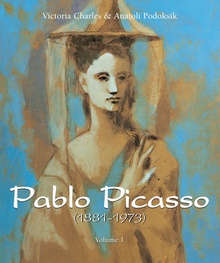
For many people, Pablo Picasso (1881-1973) was undoubtedly the most important artist of the 20th century. Born in Málaga, Spain, Picasso revealed his genius at a very early age and was quick to make contact with the most advanced art circles of his time, first in Barcelona and later in Paris. In the modernist quest for novelty, Picasso turned to pre-modern history and ÂprimitiveÊ art for inspiration. We owe him and his colleague Georges Braque the invention of Cubism, not just one of many avant-garde movements but the aesthetic that would change the art of painting forever. Once free from …
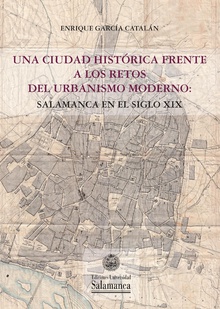
Nuevas maneras de pensar, examinar y actuar en materia urbanística durante el siglo XIX marcaron un punto de inflexión en el desarrollo de las ciudades por toda Europa. En Salamanca, los protagonistas implicados en este proceso afrontaron la difícil tarea de intervenir en un núcleo urbano histórico, tejido a base de calles estrechas y edificios monumentales. El conflicto fue resuelto con polémicas intervenciones, destacando aquellas que afectaron a las principales infraestructuras, vías y nudos de comunicación, desde la muralla y el puente Mayor, hasta las calles de la Rúa, San Pablo, Toro o la Plaza Mayor y demás plazas satélites. …
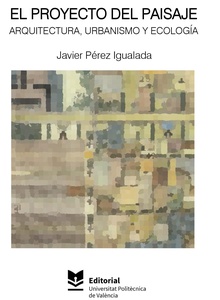
En la presente publicación, abordaremos el proyecto del paisaje como territorio situado en la confluencia de tres ejes temáticos o fuentes de sentido: el eje formal, el eje ambiental y el eje socio-funcional. Cada uno de estos ejes agrupa diversos materiales de base. La perspectiva adoptada, y los contenidos que se presentan en base a ella, hacen que este libro pueda considerarse como el complemento perfecto al libro Arquitectura del paisaje: Forma y materia, publicado también por el autor en la Editorial UPV. Conjuntamente, los dos libros forman un cuerpo coherente de contenidos en arquitectura del paisaje, que engloba por …
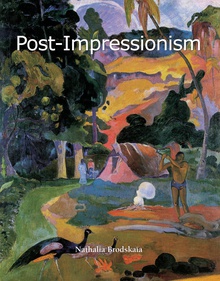
Whilst Impressionism marked the first steps toward modern painting by revolutionising an artistic medium stifled by academic conventions, Post-Impressionism, even more revolutionary, completely liberated colour and opened it to new, unknown horizons. Anchored in his epoch, relying on the new chromatic studies of Michel Eugène Chevreul, Georges Seurat transcribed the chemist’s theory of colours into tiny points that created an entire image. With his heavy strokes, Van Gogh illustrated the midday sun, whilst Cézanne renounced perspective. Rich in its variety and in the singularity of its artists, Post-Impressionism was a passage taken by all the well-known figures of 20th century …
Un libro en primera persona sobre la trampa de la belleza femenina: ¿Cuál es el poder de mi cuerpo? ¿Es realmente mi poder?«Implacable y valiente. Un libro importante para una conversación llena de matices. Debería ser obligatorio leerlo.» Lisa TaddeoEmily Ratajkowski es una de las modelos internacionales más aclamadas de la actualidad. Desde que se hiciera famosa por aparecer desnuda en el videoclip de Blurred Lines, ha conquistado el mundo de la moda y se ha enriquecido a su costa, en lo que en su momento vio como un camino claro hacia la libertad personal y el poder.En este ensayo …
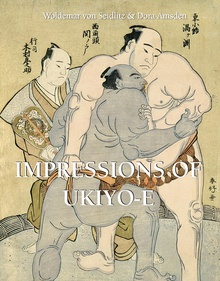
Ukiyo-e (‘pictures of the floating world’) is a branch of Japanese art which originated during the period of prosperity in Edo (1615-1868). Characteristic of this period, the prints are the collective work of an artist, an engraver, and a printer. Created on account of their low cost thanks to the progression of the technique, they represent daily life, women, actors of kabuki theatre, or even sumo wrestlers. Landscape would also later establish itself as a favourite subject. Moronobu, the founder, Shunsho, Utamaro, Hokusai, and even Hiroshige are the most widely-celebrated artists of the movement. In 1868, Japan opened up to …
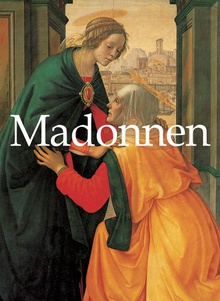
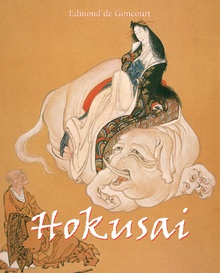
Without a doubt, Katsushika Hokusai is the most famous Japanese artist since the middle of the nineteenth century whose art is known to the Western world. Reflecting the artistic expression of an isolated civilisation, the works of Hokusai - one of the first Japanese artists to emerge in Europe - greatly influenced the Impressionist and Post-Impressionist painters, such as Vincent van Gogh. Considered during his life as a living Ukiyo-e master, Hokusai fascinates us with the variety and the significance of his work, which spanned almost ninety years and is presented here in all its breadth and diversity.
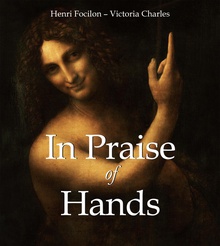
To speak about art is to evoke the hand of the creator who produced the work. It is to confer to its gestures the importance of thoughts and to explore their point of convergence on the canvas or the stone. With this text, Henri Focillon delivers one of the most beautiful odes to the hand and, simultaneously, to the talent of artists, studying Hokusai, Cézanne, and even Rodin. What do artists such as Rembrandt, David, Gauguin, and Hokusai have in common? A virtuosity of the hand, replies Henri Focillon. The viewer often forgets that behind the works, it is first …