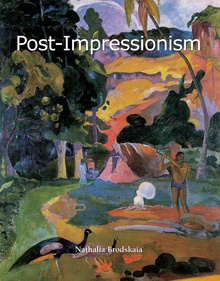
Whilst Impressionism marked the first steps toward modern painting by revolutionising an artistic medium stifled by academic conventions, Post-Impressionism, even more revolutionary, completely liberated colour and opened it to new, unknown horizons. Anchored in his epoch, relying on the new chromatic studies of Michel Eugène Chevreul, Georges Seurat transcribed the chemist’s theory of colours into tiny points that created an entire image. With his heavy strokes, Van Gogh illustrated the midday sun, whilst Cézanne renounced perspective. Rich in its variety and in the singularity of its artists, Post-Impressionism was a passage taken by all the well-known figures of 20th century …

“I am not interested in myself as a subject for painting, but in others, particularly women…”Beautiful, sensuous and above all erotic, Gustav Klimt’s paintings speak of a world of opulence and leisure, which seems aeons away from the harsh, post-modern environment we live in now. The subjects he treats – allegories, portraits, landscapes and erotic figures – contain virtually no reference to external events, but strive rather to create a world where beauty, above everything else, is dominant. His use of colour and pattern was profoundly influenced by the art of Japan, ancient Egypt, and Byzantium. Ravenne, the flat, two-dimensional …

El arquitecto y diseñador español Antoni Gaudí (1852-1926) es una importante e influyente figura en la historia del arte contemporáneo de España. El uso del color, la utilización de diferentes materiales y la introducción de movimiento en sus construcciones fueron toda una innovación en el terreno de la arquitectura. En su diario, Gaudí expresó sus propios sentimientos sobre el arte: “los colores usados en arquitectura tienen que ser intensos, lógicos y fértiles”. El autor, Jeremy Roe, utiliza una amplia gama de detalles fotográficos y arquitectónicos que le permiten revelar el contexto del arte de Barcelona mientras nos introduce en el …
Desde sus inicios la fotografía en México ha sido un género artístico dominado por no indígenas y la cultura indígena una constante temática dentro de la misma. No fue hasta los 1990s cuando surgieron los primeros grupos de fotógrafos indígenas profesionales que además de tener gran éxito en México, lograron atención y reconocimiento a nivel internacional. Con sus trabajos enriquecen la visión de los fotógrafos no indígenas conocida hasta entonces y dan nuevo rumbo a la presencia del mundo indígena en la fotografía mexicana. En esta tesis doctoral decidí poner en directa comparación ambos grupos de artistas para así subrayar …
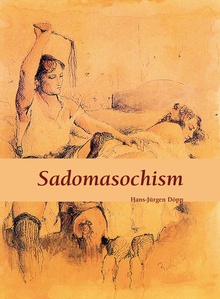
The “happy-few” aspect of the sadomasochistic relations, the fashions that have had a great impact on the population, make these practices seem somewhat commonplace. A number of magazines and films recount these sexual adventures with complete honesty. The enthusiasts are no longer exceptions. Beyond the stereotypes of women in leather boots with a whip in hand, they discover the pleasures of pain. It is a form of sexuality where pleasure looses its codification since procreation is no longer the goal. Travelling towards the limits of emotions is the theme explored by Professor Döpp, supporting his developments on an exceptional iconography.

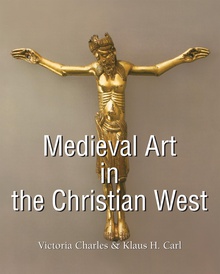
September 4, 476 A. D. marked the end of the Western Roman Empire. After several centuries of prosperity, Europe sank into chaos. With Charlemagne, a new dynamic begins that of a civilising reconstruction. The Romanesque period is part of the rediscovery of this Roman Empire, lost in memories, but living on in the architectural testimonies of the cities and the countryside. In art history, Romanesque art refers to the period between the beginning of the 11th and the end of the 12th century. This era was characterised by a great diversity of regional schools, each practising their own unique style. …
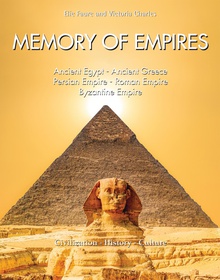
Empires are born. Empires reach their peak. Empires die, but leave their mark through their architecture and artistic achievements. From these specks of dust of memory, 40 centuries of history shape our world of the 21st century. The power of ancient Egypt was followed by the influence of Greece, which brought the Persian East together in the conquests of Alexander the Great. After Cleopatra, the last queen of Egypt, Rome became the power that ruled part of the world, finally dying out in the fall of the Byzantine Empire on 29 May 1453. The authors take the reader on a …