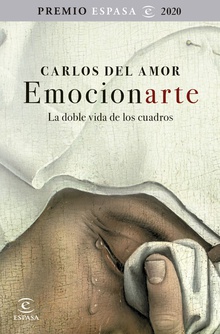
EDICIÓN ESPECIAL Incluye inédito: «Un paseo por los museos»Con un estilo literario y profundamente divulgativo, seductor y personal, Carlos del Amor nos ofrece un viaje por treinta y cinco obras de todos los tiempos, con especial atención a la pintura femenina y a la española. Un viaje a través de texturas, colores, claroscuros, historias, miradas, vidas, abrazos, besos…, que nos descubre un caleidoscopio donde se aúnan verdad y ficción, historia del arte, imaginación y emoción. «El arte es una celebración. Un cuadro no se acaba en lo que encierra su marco, un cuadro vive antes y después de que lo miremos. …
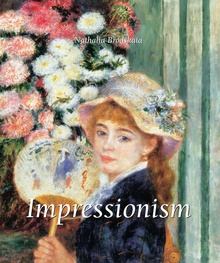
Just before his death, Claude Monet wrote: “I’m still sorry to have been the cause of the name given to this group, most of whom were not in the least bit impressionistic”. Starting with this paradox – an ensemble that saw itself as a coherent group, while affirming artistic individuality as the ultimate goal – the author, Nathalia Brodskaïa, explores the contradictions of late nineteenth–century art. Was it not Manet who evoked the definitive formula: “I paint what I see and not what others want to see” ? There would be a long way to go before the world recognised …

The Bauhaus movement (meaning the “house of building”) developed in three German cities - it began in Weimar between 1919 and 1925, then continued in Dessau, from 1925 to 1932, and finally ended in 1932-1933 in Berlin. Three leaders presided over the growth of the movement: Walter Gropius, from 1919 to 1928, Hannes Meyer, from 1928 to 1930, and Ludwig Mies van der Rohe, from 1930 to 1933. Founded by Gropius in the rather conservative city of Weimar, the new capital of Germany, which had just been defeated by the other European nations in the First World War, the movement …
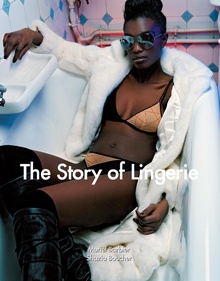
What is the social merit or purpose of all those bras and panties on perfectly sculpted bodies that we see spread across billboards and magazines? Many women indulge in lingerie to please men. Yet, ever since Antiquity, women have always kept lingerie hidden away under outer garments. Thus, lingerie must be more than erotic bait. Authors Muriel Barbier and Shazia Boucher have researched iconography to explore the relationship of lingerie to society, the economy and the corridors of intimacy. They correlate lingerie with emancipation, querying whether it asserts newfound freedoms or simply adjusts to conform to changing social values. The …
El trabajo presentado como Tesis Doctoral se propone un examen pormenorizado de la historia del Museo Nacional de Bellas Artes de La Habana y su colección de retratos de la pintura española del siglo XIX. Esta institución atesora una importante colección de pintura europea de ese período y, particularmente la pintura española decimonónica destaca por el gran volumen y el valor de sus piezas. Así, analizamos los retratos ejecutados por artistas de la talla de Vicente López Portaña (1772-1850), José de Madrazo y Agudo (1781-1859), José Gutiérrez de la Vega (1791-1865), Antonio María Esquivel y Suárez de Urbina (1806-1857), Federico …

Le Bauhaus est une des émergences culturelles les plus importantes et conséquentes du siècle. Walter Gropius fonda cet institut de design en 1919, à Weimar. L’école fut effective à Weimar, Dessau et Berlin. Les enseignements du Bauhaus en design sont aujourd’hui encore respectée dans les écoles de design et d’architecture. Les produits du Bauhaus sont devenus des standards du design et les immeubles du Bauhaus sont entrés dans l’histoire et au patrimoine culturel mondial de l’UNESCO. Ce livre, richement illustré et documenté, offre une vue globale de l’histoire du Bauhaus et projette un nouvel éclairage sur son évolution et sa …
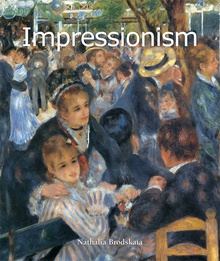
“I paint what I see and not what it pleases others to see.” What other words than these of Édouard Manet, seemingly so different from the sentiments of Monet or Renoir, could best define the Impressionist movement? Without a doubt, this singularity was explained when, shortly before his death, Claude Monet wrote: “I remain sorry to have been the cause of the name given to a group the majority of which did not have anything Impressionist.” In this work, Nathalia Brodskaïa examines the contradictions of this late 19th-century movement through the paradox of a group who, while forming a coherent …
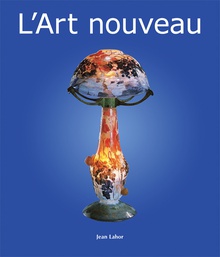
Le terme « Art nouveau » désigne un style décoratif et architectural qui se développe dans les années 1880-1890 en Occident. Né en réaction contre les dérives de l’industrialisation et le vide créatif qu’elle entraîne, l’Art nouveau est à l’origine d’une véritable renaissance des arts décoratifs. L’objectif premier est la création d’une nouvelle esthétique de la nature, par un retour à l’étude du motif naturel. Pour ce faire, des artistes tels que Gustav Klimt, Koloman Moser, Antoni Gaudí, Jan Toorop et William Morris privilégient la recherche technique et la nouveauté des formes. Cette mode n’a eu de cesse, depuis son …
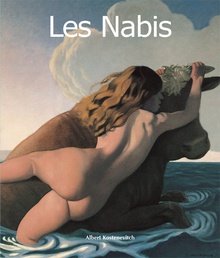
Pierre Bonnard fut le chef de file d’un groupe de peintres post-impressionnistes, lesquels se nommèrent eux-mêmes les Nabis, du mot hébreux signifiant « prophète ». Influencés par Odilon Redon ou encore Pierre Puvis de Chavannes, l’imagerie populaire ou les estampes japonaises, Bonnard, Vuillard, Vallotton, Denis, pour les plus illustres, révolutionnèrent l’esprit des techniques décoratives durant l’une des époques les plus riches de la peinture française. Et, si l’individualisme croissant de leurs créations ébranla souvent leur unité, les Nabis furent avant tout un groupe d’amis. Les œuvres présentées dans cet ouvrage, candides chez Bonnard, ornementales et mystérieuses chez Vuillard, doucement rêveuses …

Deriving from the French word rocaille, in reference to the curved forms of shellfish, and the Italian barocco, the French created the term ‘Rococo’. Appearing at the beginning of the 18th century, it rapidly spread to the whole of Europe. Extravagant and light, Rococo responded perfectly to the spontaneity of the aristocracy of the time. In many aspects, this art was linked to its predecessor, Baroque, and it is thus also referred to as late Baroque style. While artists such as Tiepolo, Boucher and Reynolds carried the style to its apogee, the movement was often condemned for its superficiality. In …
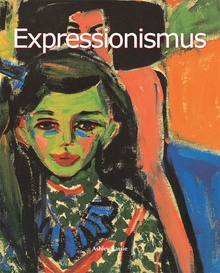
Max Beckmann, Otto Dix, George Grosz, Emil Nolde, E.-L. Kirchner, Paul Klee, Franz Marc sowie die Österreicher Oskar Kokoschka und Egon Schiele gehörten der Generation der höchst individuellen Künstler an, die zu der impulsiven und oft auch kontroversen neuen Bewegung des Expressionismus in Deutschland und Österreich des frühen 20. Jahrhunderts beitrugen. Diese Publikation stellt ihre Arbeit vor und verbindet sie mit dem kulturellen Kontext und weiteren Bewegungen jener Zeit. Die Autorin, die Kunsthistorikerin Ashley Bassie, erklärt, wie die expressionistische Kunst den Weg zu einer neuen, intensiven, bewegenden Betrachtung psychologischer, emotionaler und sozialer Themen des frühen 20. Jahrhunderts bereitete. Dieses Buch …
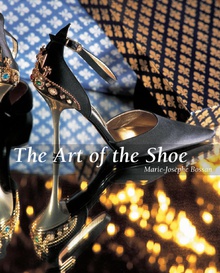
Abandoning a French look on the subject, Mrs. Bossan, the author, develops her study with a dichotomous vision: that of time that touches the history of mankind and that of geography and sociology, which lead to an almost ethnographic analysis. The author dissects the shoe and all that surrounds it: from its history to painting and literature. After this book, it will be difficult to publish a book with a more complete treatment of the subject. Illustrated with an iconography that is exceptional both for its aestheticism and the pieces chosen, this book is a reference for historians, sociologists and …