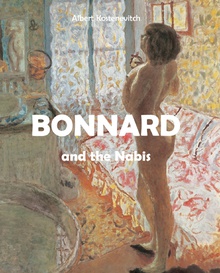
Pierre Bonnard was the leader of a group of post-impressionist painters who called themselves the Nabis, from the Hebrew word meaning ‘prophet’. Bonnard, Vuillard, Roussel and Denis, the most distinguished of the Nabis, revolutionized the spirit of decorative techniques during one of the richest periods in the history of French painting. Influenced by Odilon Redon and Puvis de Chavanne, by popular imagery and Japanese etchings, this post-impressionist group was above all a close circle of friends who shared the same cultural background and interests. An increasing individualism in their art often threatened the group’s unity and although tied together by …
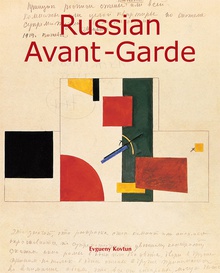
The Russian Avant-garde was born at the turn of the 20th century in pre-revolutionary Russia. The intellectual and cultural turmoil had then reached a peak and provided fertile soil for the formation of the movement. For many artists influenced by European art, the movement represented a way of liberating themselves from the social and aesthetic constraints of the past. It was these Avant-garde artists who, through their immense creativity, gave birth to abstract art, thereby elevating Russian culture to a modern level. Such painters as Kandinsky, Malevich, Goncharova, Larionov, and Tatlin, to name but a few, had a definitive impact …
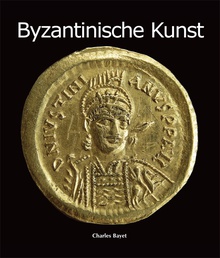
Über ein Jahrtausend lang, von seiner Gründung im Jahre 330 n. Chr. bis zu seinem Untergang im Jahre 1453, war das Byzantinische Reich eine Wiege von künstlerischem Überfluss, die erst jetzt wiederentdeckt wird. Ausgestattet mit dem reichen Erbe der römischen, östlichen und christlichen Kulturen, entwickelten die byzantinischen Künstler eine architektonische und malerische, vom Symbolismus geprägte Tradition, die auch über die Grenzen des Reiches hinaus einen großen Einfluss ausübte. Italien, Nordafrika und der Nahe Osten schützen und erhalten heutzutage die antiken Überreste dieser anspruchsvollen künstlerischen Tradition mit all ihrer geheimnisvollen und verzaubernden Schönheit. Die Pracht der Paläste, Kirchen, Malereien, Töpferwaren, Keramiken …
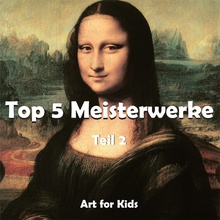
Seit die alten Griechen die ersten Kouroi schufen, inspirierten Kinder einige der größten Künstler der Welt. Ob Porträts von ihren eigenen Kindern, Freunden oder Familienmitgliedern, oder als nostalgische psychologische Studie der eigenen Kindheit, Darstellungen von Kindern in der Kunst bleiben eindrucksvolle Beispiele für den Schnittpunkt zwischen der malerischen Unschuld der Kindheit und der methodischen Arbeit des erwachsenen Künstlers. In diesem neuen Puzzle-Buch bekommen Kinder die Gelegenheit, kleine Jungen und Mädchen wie sie selbst, von großen Künstlern dargestellt, zu sehen und dabei zu erfahren, wie Kinder im Laufe der Geschichte aufwuchsen, und gleichzeitig eine Verbindung zur Welt der Kunst zu entwickeln.
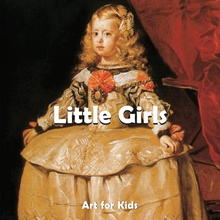
Ever since the ancient greeks sculpted the first kouros, children have been a source of inspiration for some of the world’s greatest artists. Whether portraits of their own children, friends, and family members, or a nostalgic psychological portrayal of the artist’s own youth, depictions of children in art remain arresting examples of an intersection between the picturesque innocence of childhood and the methodical work of adult artistry. In this delightful new puzzle book, children get a chance to see little boys and girls just like them as portrayed by great artists, learning about how children grew up throughout history while …
EDICIÓN ESPECIAL Incluye inédito: «Un paseo por los museos»Con un estilo literario y profundamente divulgativo, seductor y personal, Carlos del Amor nos ofrece un viaje por treinta y cinco obras de todos los tiempos, con especial atención a la pintura femenina y a la española. Un viaje a través de texturas, colores, claroscuros, historias, miradas, vidas, abrazos, besos…, que nos descubre un caleidoscopio donde se aúnan verdad y ficción, historia del arte, imaginación y emoción. «El arte es una celebración. Un cuadro no se acaba en lo que encierra su marco, un cuadro vive antes y después de que lo miremos. …
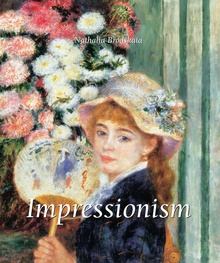
Just before his death, Claude Monet wrote: “I’m still sorry to have been the cause of the name given to this group, most of whom were not in the least bit impressionistic”. Starting with this paradox – an ensemble that saw itself as a coherent group, while affirming artistic individuality as the ultimate goal – the author, Nathalia Brodskaïa, explores the contradictions of late nineteenth–century art. Was it not Manet who evoked the definitive formula: “I paint what I see and not what others want to see” ? There would be a long way to go before the world recognised …

Deriving from the French word rocaille, in reference to the curved forms of shellfish, and the Italian barocco, the French created the term ‘Rococo’. Appearing at the beginning of the 18th century, it rapidly spread to the whole of Europe. Extravagant and light, Rococo responded perfectly to the spontaneity of the aristocracy of the time. In many aspects, this art was linked to its predecessor, Baroque, and it is thus also referred to as late Baroque style. While artists such as Tiepolo, Boucher and Reynolds carried the style to its apogee, the movement was often condemned for its superficiality. In …
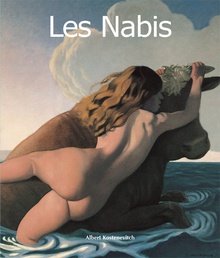
Pierre Bonnard fut le chef de file d’un groupe de peintres post-impressionnistes, lesquels se nommèrent eux-mêmes les Nabis, du mot hébreux signifiant « prophète ». Influencés par Odilon Redon ou encore Pierre Puvis de Chavannes, l’imagerie populaire ou les estampes japonaises, Bonnard, Vuillard, Vallotton, Denis, pour les plus illustres, révolutionnèrent l’esprit des techniques décoratives durant l’une des époques les plus riches de la peinture française. Et, si l’individualisme croissant de leurs créations ébranla souvent leur unité, les Nabis furent avant tout un groupe d’amis. Les œuvres présentées dans cet ouvrage, candides chez Bonnard, ornementales et mystérieuses chez Vuillard, doucement rêveuses …
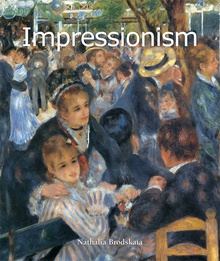
“I paint what I see and not what it pleases others to see.” What other words than these of Édouard Manet, seemingly so different from the sentiments of Monet or Renoir, could best define the Impressionist movement? Without a doubt, this singularity was explained when, shortly before his death, Claude Monet wrote: “I remain sorry to have been the cause of the name given to a group the majority of which did not have anything Impressionist.” In this work, Nathalia Brodskaïa examines the contradictions of this late 19th-century movement through the paradox of a group who, while forming a coherent …

Le Bauhaus est une des émergences culturelles les plus importantes et conséquentes du siècle. Walter Gropius fonda cet institut de design en 1919, à Weimar. L’école fut effective à Weimar, Dessau et Berlin. Les enseignements du Bauhaus en design sont aujourd’hui encore respectée dans les écoles de design et d’architecture. Les produits du Bauhaus sont devenus des standards du design et les immeubles du Bauhaus sont entrés dans l’histoire et au patrimoine culturel mondial de l’UNESCO. Ce livre, richement illustré et documenté, offre une vue globale de l’histoire du Bauhaus et projette un nouvel éclairage sur son évolution et sa …

The Bauhaus movement (meaning the “house of building”) developed in three German cities - it began in Weimar between 1919 and 1925, then continued in Dessau, from 1925 to 1932, and finally ended in 1932-1933 in Berlin. Three leaders presided over the growth of the movement: Walter Gropius, from 1919 to 1928, Hannes Meyer, from 1928 to 1930, and Ludwig Mies van der Rohe, from 1930 to 1933. Founded by Gropius in the rather conservative city of Weimar, the new capital of Germany, which had just been defeated by the other European nations in the First World War, the movement …