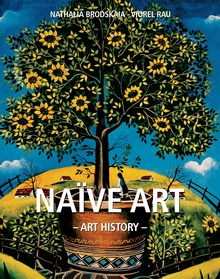
Naive art first became popular at the end of the 19th-century. Until that time this form of expression, created by untrained artists and characterised by spontaneity and simplicity, enjoyed little recognition from professional artists and art critics. Influenced by primitive arts, naive painting is distinguished by the fluidity of its lines, vivacity, and joyful colours, as well as by its rather clean-cut, simple shapes. Naive art is represented by such artists as Henri Rousseau, Séraphine de Senlis, André Bauchant, and Camille Bombois. This movement has also found adherents abroad, including such prominent artists as Joan Miró, Guido Vedovato, Niko Pirosmani, …
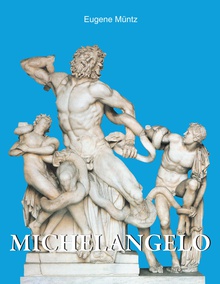
Michelangelo, like Leonardo, was a man of many talents; sculptor, architect, painter and poet, he made the apotheosis of muscular movement, which to him was the physical manifestation of passion. He moulded his draughtsmanship, bent it, twisted it, and stretched it to the extreme limits of possibility. There are not any landscapes in Michelangelo's painting. All the emotions, all the passions, all the thoughts of humanity were personified in his eyes in the naked bodies of men and women. He rarely conceived his human forms in attitudes of immobility or repose. Michelangelo became a painter so that he could express …

Taiwan's specific situation in Asia is the source of its thorn past. Situated in the South East of China, Taiwan was at the crossroads of many maritime routes and squeezed between its neighbors, China and Japan. After centuries of foreign occupation, Taiwan has a unique history. Taiwan, Art and Civilization sheds light on Taiwan's beautiful scenery as well as its colorful history in the form of a true initiatory trip. Through magnificent illustrations, Taiwan reveals its secret beauty, its fauna and flora intertwined with its unique architecture. Home of the traditional and the modern, the gorgeous island is also the …
In the 1920s, Berlin, once perceived as a puritan city, became the capital of lust and the debauchery of morals. It was in this capricious town that an exceptional museum dedicated entirely to eroticism opened its doors. Abandoning all aspects of voyeurism, the Erotic Museum in Berlin is a magical place in which the imagination of man and the most refined works of art interact. This remarkable book is comprised of more than 350 rare illustrations, and accompanied by a major study written by, history professor, HansJürgen Döpp. It covers various aspects of erotica throughout time and continents.
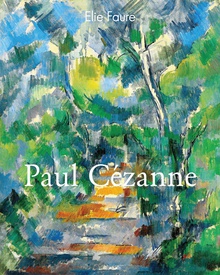
Cézanne was perhaps the most complex artist of the 19th century. One of the greatest of the Postimpressionists, his works and ideas were crucial to the aesthetic development of many 20th-century artists and art movements, especially Cubism. Cézanne’s ambition, in his own words, was "to make out of Impressionism something as solid and durable as the paintings of the museums". He aimed to achieve the monumental in a modern language of glowing, vibrating tones. Cézanne wanted to retain the natural colour of an object and to harmonize it with the various influences of light and shade trying to destroy it; …
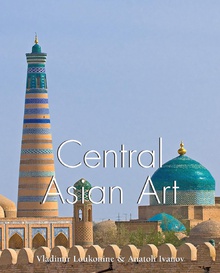
The strict prohibition on the representation of the human form has channeled artistic creation into architecture and architectural decoration. This book is a magical tour through Central Asia - Khirgizia, Tadjikistan, Turkmenia, and Uzbekistan - a cradle of Ancient civilisations and are pository of the Oriental arts inspired by Buddhism and Islam. There are magnificent, full-colour photographs of the abandoned cities of Mervand Urgench, Khiva, the capital of the Kharezm, with its mausoleum of Sheikh Seid Allahuddin,and, the Golden Road to Samarkand, the Blue City, a center of civilisation for 2,500 years.
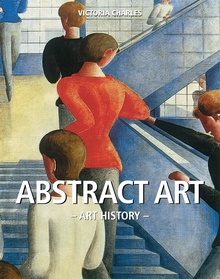
At the beginning of the 20th-century, trends started to emerge that began to diverge from a naturalistic conception of reality and set out to explore beneath the mere superficial appearance of things. Throughout, the author shows that, regardless of the multitude of stylistic backgrounds in individual Western countries, everywhere, realisation that a work of art was no longer made in the spirit of the old aesthetics of imitation as if taken from nature, but rather rises from its own independent dimension of existence. A work of art is now autonomous. In this book, the author traces and analyses the origins …
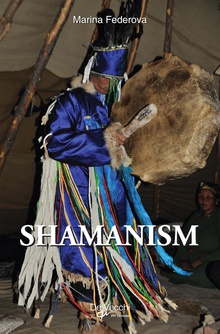
Ethnographic Insights and Rare Photographs from the Early 20th Century. This remarkable volume brings together rare archival photographs from the Ethnological Museum of St. Petersburg and a deeply researched ethnographic narrative that illuminates the spiritual worlds of Siberian and Korean shamans. Captured in the early 1900s, these images bear witness to a time when ritual, myth, and everyday life were inseparable. Through detailed commentary and vivid illustration, the book explores shamanic cosmologies, ceremonial practices, healing rites, and the social roles of shamans within their communities. From the trance dances of Korean mudang to the animistic traditions of Siberian kam, each …
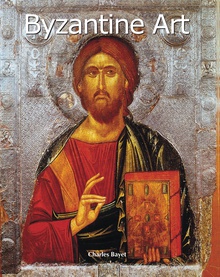
For more than a millennium, from its creation in 330 CE until its fall in 1453, the Byzantine Empire was a cradle of artistic effervescence that is only beginning to be rediscovered. Endowed with the rich heritage of Roman, Eastern, and Christian cultures, Byzantine artists developed an architectural and pictorial tradition, marked by symbolism, whose influence extended far beyond the borders of the Empire. Today, Italy, North Africa, and the Near East preserve the vestiges of this sophisticated artistic tradition, with all of its mystical and luminous beauty. The magnificence of the palaces, churches, paintings, enamels, ceramics, and mosaics from …
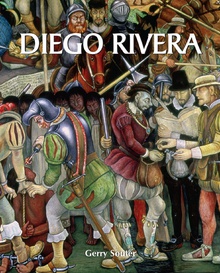
They met in 1928, Frida Kahlo was then 21 years old and Diego Rivera was twice her age. He was already an international reference, she only aspired to become one. An intense artistic creation, along with pain and suffering, was generated by this tormented union, in particular for Frida. Constantly in the shadow of her husband, bearing his unfaithfulness and her jealousy, Frida exorcised the pain on canvas, and won progressively the public’s interest. On both continents, America and Europe, these commited artists proclaimed their freedom and left behind them the traces of their exceptional talent. In this book, Gerry …
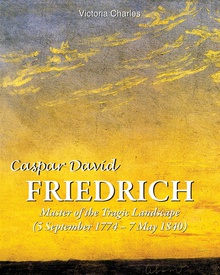
Caspar David Friedrich (1774-1840), a prominent German painter of the 19th century, was a vital figure in the Romantic movement. His artwork is characterised by its poetic and melancholic essence, displaying a profound sense of spirituality and transcendence. In his paintings, he masterfully blended external nature depictions with deep inner symbolism. His often desolate landscapes and grand architecture evoke a yearning for peace, solitude, and spiritual elevation. The skilful utilisation of light and shadow in his composition amplifies the emotional resonance of Friedrich's art, imbuing it with an almost mystical quality. The artistic legacy of Caspar David Friedrich continues to …