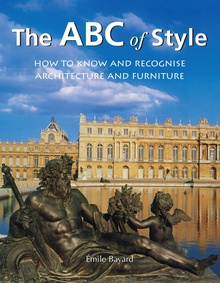
Ever wondered why your ceiling is shaped like the arches in a gothic cathedral? Or why your offi ce building looks so different from its neighboring counterparts? The ABC of Style invites you to explore the many different architectural and decorative interior styles from their ancient origins to the 1940s. Take a journey through history to see how the French aristocracy styled their palaces and castles to the simple designs of the Dominican monastic churches during the middle ages. Often, political changes implicate a stylistic transformation. Thus, the different European styles were frequently named after a sovereign or a historical …
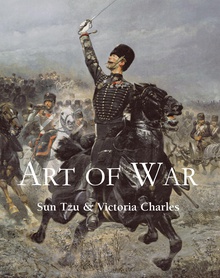
Over the course of history, many wars have changed the political and cultural landscape of our world. While these events are defined by their upheaval and violence, they frequently contribute to the formation of the identity of entire generations or groups of people, and thus have significant cultural effects. Despite the physical and emotional destruction that occurs during these turbulent periods, they have inspired prolific artistic creation. In the wake of traumatic events over the centuries, a myriad of artists have produced works that immortalise the most dramatic moments of these wars in order to establish them in history forever. …
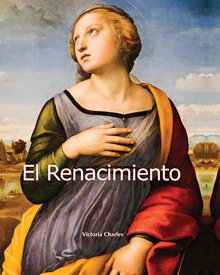
El Renacimiento se inició a finales del siglo catorce en Italia y ya estaba extendido por toda Europa en la segunda mitad del siglo dieciséis. El redescubrimiento del esplendor de la antigua Grecia y Roma supuso el comienzo del renacimiento de las artes como consecuencia de la descomposición de la certeza dogmática de la Edad Media. Surgió una generación de artistas que comenzaron a innovar dentro del ámbito de la pintura, así como de la escultura y arquitectura. Representando lo ideal y lo actual, lo sacro y lo profano, este período supuso un marco de referencia que ejercería su influencia …
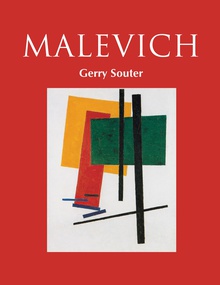
Kasimir Malevich (1878-1935) was a painter and a great art theorist, but first and foremost he was the founder of Suprematism, a style seeking pure abstraction based on geometrical forms. “Suprematism,” he wrote, “has led me to discover something that had not been understood until then… There is in human consciousness an imperious desire of space and the will to escape from Earth.” This new publication presents the brilliant and original works of Malevich, who had no professional background as a painter before the age of twenty-seven and who learned to draw out of sheer curiosity and his will to …
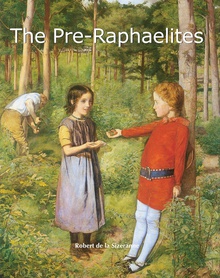
In Victorian England, with the country swept up in the Industrial Revolution, the Pre-Raphaelites, close to William Morris’ Arts and Crafts movement, yearned for a return to bygone values. Wishing to revive the pure and noble forms of the Italian Renaissance, the major painters of the circle (such as John Everett Millais, Dante Gabriel Rossetti and William Holman Hunt) favoured realism and biblical themes over the academicism of the time. This work, with its captivating text and rich illustrations, describes with enthusiasm this singular movement which notably inspired Art Nouveau and Symbolism.
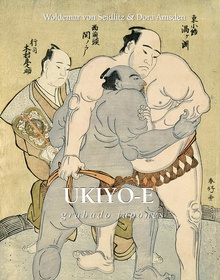
Ukiyo-e, imágenes del universo en mutación, es el nombre de un género artístico nacido en Japón durante el próspero período Edo (1615-1868). Estas impresiones típicas son resultado del trabajo colectivo entre un artista, un grabador y un impresor. Su auge y desarrollo se debió, en gran parte, a que los avances de la técnica permitieron una producción en serie accesible para muchos habitantes. Estas estampas representan escenas de la vida cotidiana, retratos de mujeres, actores del teatro Kabouki o luchadores de Sumo. Los paisajes también fueron uno de los temas recurrentes. El fundador del movimiento, Moronobu, y también artistas como …
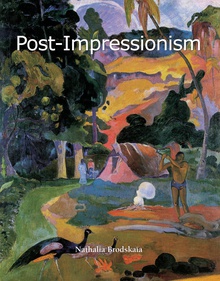
Whilst Impressionism marked the first steps toward modern painting by revolutionising an artistic medium stifled by academic conventions, Post-Impressionism, even more revolutionary, completely liberated colour and opened it to new, unknown horizons. Anchored in his epoch, relying on the new chromatic studies of Michel Eugène Chevreul, Georges Seurat transcribed the chemist’s theory of colours into tiny points that created an entire image. With his heavy strokes, Van Gogh illustrated the midday sun, whilst Cézanne renounced perspective. Rich in its variety and in the singularity of its artists, Post-Impressionism was a passage taken by all the well-known figures of 20th century …
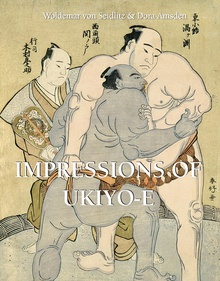
Ukiyo-e (‘pictures of the floating world’) is a branch of Japanese art which originated during the period of prosperity in Edo (1615-1868). Characteristic of this period, the prints are the collective work of an artist, an engraver, and a printer. Created on account of their low cost thanks to the progression of the technique, they represent daily life, women, actors of kabuki theatre, or even sumo wrestlers. Landscape would also later establish itself as a favourite subject. Moronobu, the founder, Shunsho, Utamaro, Hokusai, and even Hiroshige are the most widely-celebrated artists of the movement. In 1868, Japan opened up to …

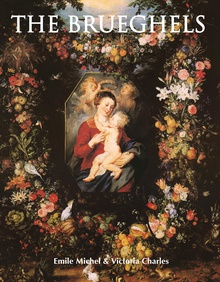
Pieter Brueghel was the first important member of a family of artists who were active for four generations. Firstly a drawer before becoming a painter later, he painted religious themes, such as Babel Tower, with very bright colours. Influenced by Hieronymus Bosch, he painted large, complex scenes of peasant life and scripture or spiritual allegories, often with crowds of subjects performing a variety of acts, yet his scenes are unified with an informal integrity and often with wit. In his work, he brought a new humanising spirit. Befriending the Humanists, Brueghel composed true philosophical landscapes in the heart of which …