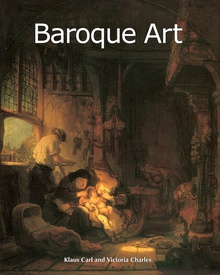
The Baroque period lasted from the beginning of the seventeenth century to the middle of the eighteenth century. Baroque art was artists’ response to the Catholic Church’s demand for solemn grandeur following the Council of Trent, and through its monumentality and grandiloquence it seduced the great European courts. Amongst the Baroque arts, architecture has, without doubt, left the greatest mark in Europe: the continent is dotted with magnificent Baroque churches and palaces, commissioned by patrons at the height of their power. The works of Gian Lorenzo Bernini of the Southern School and Peter Paul Rubens of the Northern School alone …

El Simbolismo apareció en Francia y Europa entre la década de 1880 y el principio del siglo veinte. Los simbolistas, fascinados por la mitología de la Antigüedad, intentaban escapar del reino del pensamiento racional impuesto por la ciencia. Deseaban trascender el mundo de lo visible y lo racional para alcanzar el mundo del pensamiento puro, coqueteando constantemente con los límites del inconsciente. Los franceses Gustave Moreau, Odilon Redon, los belgas Fernand Khnopff y Félicien Rops, los ingleses Edward Burne-Jones y Dante Gabriel Rossetti, así como el holandés Jan Toorop son los artistas más representativos del movimiento.
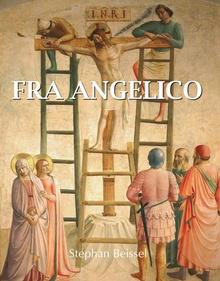
Secluded within cloister walls, a painter and a monk, and brother of the order of the Dominicans, Angelico devoted his life to religious paintings. Little is known of his early life except that he was born at Vicchio, in the broad fertile valley of the Mugello, not far from Florence, that his name was Guido de Pietro, and that he passed his youth in Florence, probably in some bottegha, for at twenty he was recognised as a painter. In 1418 he entered in a Dominican convent in Fiesole with his brother. They were welcomed by the monks and, after a …
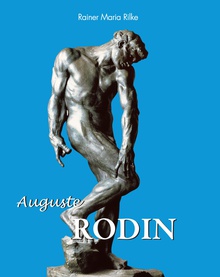
Influenced by the masters of Antiquity, the genius of Michelangelo and Baroque sculpture, particularly of Bernini, Auguste Rodin (1840-1917) is one of the most renowned artists in history. Though Rodin is considered a founder of modern sculpture, he did not set out to critique past classical traditions. Many of his sculptures were criticised and considered controversial because of their sensuality or hyperrealist qualities. His most original works departed from traditional themes of mythology and allegory, and embraced the human body, celebrating individualism and physicality. This book uncovers the life and career of this highly acclaimed artist by exploring his most …
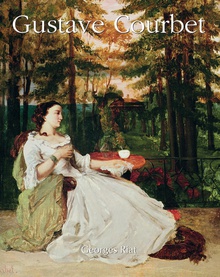
Ornans, Courbet’s birthplace, is near the beautiful valley of the Doubs River, and it was here as a boy, and later as a man, that he absorbed the love of landscape. He was by nature a revolutionary, a man born to oppose existing order and to assert his independence; he had that quality of bluster and brutality which makes the revolutionary count in art as well as in politics. In both directions his spirit of revolt manifested itself. He went to Paris to study art, yet he did not attach himself to the studio of any of the prominent masters. …
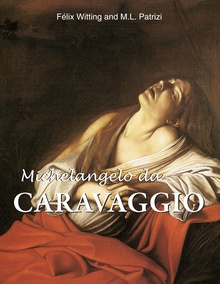
After staying in Milan for his apprenticeship, Michelangelo da Caravaggio arrived in Rome in 1592. There he started to paint with both realism and psychological analysis of the sitters. Caravaggio was as temperamental in his painting as in his wild life. As he also responded to prestigious Church commissions, his dramatic style and his realism were seen as unacceptable. Chiaroscuro had existed well before he came on the scene, but it was Caravaggio who made the technique definitive, darkening the shadows and transfixing the subject in a blinding shaft of light. His influence was immense, firstly through those who were …
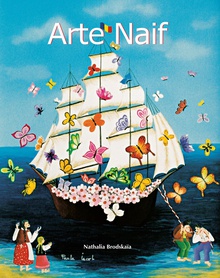
El arte naif se hizo popular por primera vez a finales del siglo diecinueve. Hasta ese momento, esta forma de expresión creada por artistas sin formación y caracterizados por su espontaneidad y simplicidad contaba con poco reconocimiento entre los artistas profesionales y los críticos de arte. Influenciada por las artes primitivas, la pintura naif se caracteriza por la fluidez de sus líneas, por su vivacidad y sus colores alegres, así como por sus formas más bien sencillas, claramente definidas. El arte naif está representado por artistas como Henri Rousseau, Séraphine de Senlis, André Bauchant y Camille Bombois. Este movimiento también …
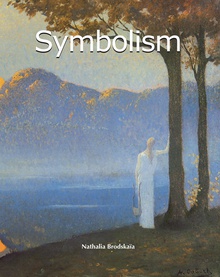
Symbolism appeared in France and Europe between the 1880s and the beginning of the 20th century. The Symbolists, fascinated with ancient mythology, attempted to escape the reign of rational thought imposed by science. They wished to transcend the world of the visible and the rational in order to attain the world of pure thought, constantly flirting with the limits of the unconscious. The French Gustave Moreau, Odilon Redon, the Belgians Fernand Khnopff and Félicien Rops, the English Edward Burne-Jones and Dante Gabriel Rossetti, and the Dutch Jan Toorop are the most representative artists of the movement.
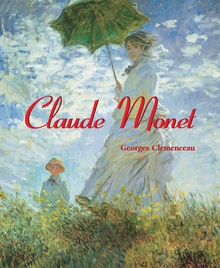
Claude Monet (Paris, 1840 – Giverny, 1926) Pour Claude Monet, le qualificatif d'impressionniste est toujours resté un sujet de fierté. Malgré tout ce que les critiques ont pu écrire sur son oeuvre, Monet n'a cessé d'être véritablement impressionniste jusqu'à la fin de sa très longue vie. Il l'a été par conviction profonde, et peut-être a-t-il sacrifié à son impressionnisme beaucoup d'autres possibilités que lui offrait son immense talent. Monet n'a pas peint de compositions classiques avec des personnages, il n'est pas devenu portraitiste, bien que tout cela fût compris dans sa formation professionnelle. Il s'est choisi, en fait, un seul …