Taiwan's specific situation in Asia is the source of its thorn past. Situated in the South East of China, Taiwan was at the crossroads of many maritime routes and squeezed between its neighbors, China and Japan. After centuries of foreign occupation, Taiwan has a unique history. Taiwan, Art and Civilization sheds light on Taiwan's beautiful scenery as well as its colorful history in the form of a true initiatory trip. Through magnificent illustrations, Taiwan reveals its secret beauty, its fauna and flora intertwined with its unique architecture. Home of the traditional and the modern, the gorgeous island is also the …
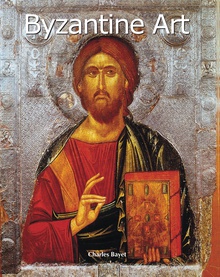
For more than a millennium, from its creation in 330 CE until its fall in 1453, the Byzantine Empire was a cradle of artistic effervescence that is only beginning to be rediscovered. Endowed with the rich heritage of Roman, Eastern, and Christian cultures, Byzantine artists developed an architectural and pictorial tradition, marked by symbolism, whose influence extended far beyond the borders of the Empire. Today, Italy, North Africa, and the Near East preserve the vestiges of this sophisticated artistic tradition, with all of its mystical and luminous beauty. The magnificence of the palaces, churches, paintings, enamels, ceramics, and mosaics from …
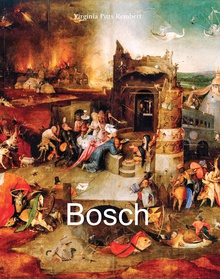
Hieronymus Bosch was painting frightening, yet vaguely likable monsters long before computer games were ever invented, often including a touch of humour. His works are assertive statements about the mental illness that befalls any man who abandons the teachings of Christ. With a life that spanned from 1450 to 1516, Bosch experienced the drama of the highly charged Renaissance and its wars of religion. Medieval tradition and values were crumbling, paving the way to thrust man into a new universe where faith lost some of its power and much of its magic. Bosch set out to warn doubters of the …
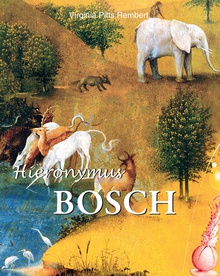
Hieronymus Bosch was painting terrifying, yet strangely likeable, monsters, long before computer games were invented, often with a touch of humour. His works are assertive statements about the mental dangers that befall those who abandon the teachings of Christ. With a life that spanned from 1450 to 1516, Bosch was born at the height of the Renaissance and witnessed its wars of religion. Medieval traditions and values were crumbling, thrusting man into a new universe where faith had lost some of its power and much of its magic. Bosch set out to warn doubters of the perils awaiting all and …
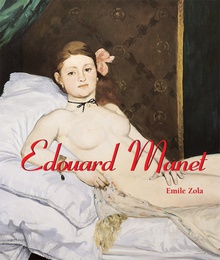
Edouard Manet (Paris, 1832 – 1883). Manet est l'un des plus célèbres artistes de la seconde moitié du XIXe siècle, lié aux impressionnistes sans faire vraiment partie de leur groupe. Chérissant son indépendance, il eut une grande influence sur la peinture française, en partie due au choix de ses sujets tirés de la vie quotidienne, de son usage de couleurs pures et de sa technique rapide et libre. C'est son œuvre qui assura la transition entre le réalisme de Courbet et la vision novatrice des impressionnistes. Issu de la grande bourgeoisie, il choisit de devenir peintre après avoir raté son …
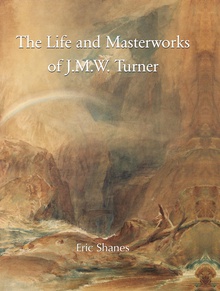
At fifteen, Turner was already exhibiting View of Lambeth. He soon acquired the reputation of an immensely clever watercolourist. A disciple of Girtin and Cozens, he showed in his choice and presentation of theme a picturesque imagination which seemed to mark him out for a brilliant career as an illustrator. He travelled, first in his native land and then on several occasions in France, the Rhine Valley, Switzerland and Italy. He soon began to look beyond illustration. However, even in works in which we are tempted to see only picturesque imagination, there appears his dominant and guiding ideal of lyric …
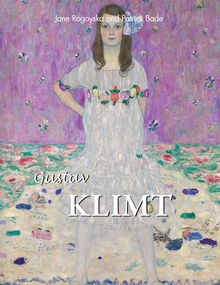
“I am not interested in myself as a subject for painting, but in others, particularly women…”Beautiful, sensuous and above all erotic, Gustav Klimt’s paintings speak of a world of opulence and leisure, which seems aeons away from the harsh, post-modern environment we live in now. The subjects he treats – allegories, portraits, landscapes and erotic figures – contain virtually no reference to external events, but strive rather to create a world where beauty, above everything else, is dominant. His use of colour and pattern was profoundly influenced by the art of Japan, ancient Egypt, and Byzantium. Ravenne, the flat, two-dimensional …
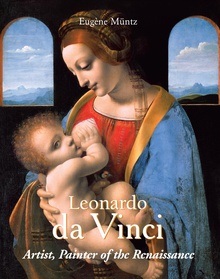
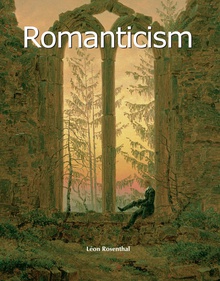
Romanticism was a reaction against the Neoclassicism that invaded the 19th century, and marked a veritable intellectual rupture. Found in the writings of Victor Hugo and Lord Byron, amongst others, its ideas are expressed in painting by Eugène Delacroix, Caspar David Friedrich and William Blake. In sculpture, François Rude indicated the direction this new artistic freedom would take, endowing his work with a movement and expression never previously seen. By retracing the different stages of its evolution, this book offers a study of the different aspects of the Romantic movement. Thanks to a thorough and in-depth analysis, the reader can …
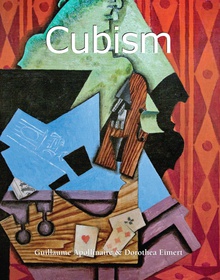
Les Demoiselles d’Avignon: five young women that changed modern art forever. Faces seen simultaneously from the front and in profile, angular bodies whose once voluptuous feminine forms disappear behind asymmetric lines - with this work, Picasso revolutionised the entire history of painting. Cubism was thus born in 1907. Transforming natural forms into cylinders and cubes, painters like Juan Gris and Robert Delaunay, led by Braque and Picasso, imposed a new vision upon the world that was in total opposition to the principles of the Impressionists. Largely diffused in Europe, Cubism developed rapidly in successive phases that brought art history to …