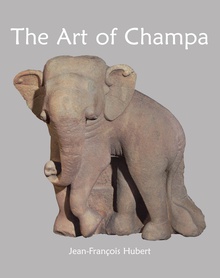
In the 5th century, the Champa kingdom held sway over a large area of today’s Vietnam. Several magnificent structures still testify to their former presence in the Nha Trang region. Cham sculpture was worked in a variety of materials, principally sandstone, but also gold, silver and bronze. It was primarily used to illustrate themes from Indian mythology. The kingdom was gradually eroded during the 15th century by the inexorable descent of the people towards the south (“Nam Tiên”) from their original base in the Red River region. The author explores, describes, and comments on the various styles of Cham sculpture, …
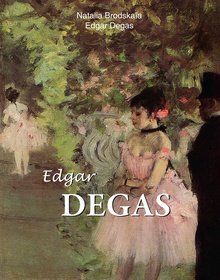
Degas was closest to Renoir in the impressionist’s circle, for both favoured the animated Parisian life of their day as a motif in their paintings. Degas did not attend Gleyre’s studio; most likely he first met the future impressionists at the Café Guerbois. He started his apprenticeship in 1853 at the studio of Louis-Ernest Barrias and, beginning in 1854, studied under Louis Lamothe, who revered Ingres above all others, and transmitted his adoration for this master to Edgar Degas. Starting in 1854 Degas travelled frequently to Italy: first to Naples, where he made the acquaintance of his numerous cousins, and …
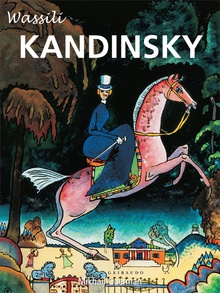
Tra gli artisti più noti del XX secolo, Kandinsky si distinse per il valore internazionale della sua parabola esistenziale e della sua arte, che congiunse Russia, Germania e Francia; per il suo impegno come insegnante al celebre Bauhaus e la produzione di versi e scritti teorici; per il suo saldo e determinato cammino verso l’individualità. Nella cultura odierna egli occupa un posto d’eccezione: il posto di un artista che rifuggì la vanità e il desiderio di scioccare lo spettatore; il posto di un maestro incline alla meditazione, fondatore del Blaue Reiter e autore di Lo spirituale nell’arte; il posto di …
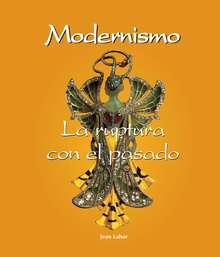
La expresión Art Nouveau hace referencia a un estilo decorativo y arquitectónico desarrollado en Occidente en las décadas de 1880 y 1890. Nacido como reacción a la revolución industrial y al vacío creativo que dejó tras de sí, el Art Nouveau fue el núcleo de un “renacimiento” de las artes decorativas. El objetivo fundamental del movimiento era la creación de una nueva estética de la Naturaleza a través de un retorno al estudio de los temas naturales. Para lograrlo, artistas como Gustav Klimt, Koloman Moser, Antoni Gaudí, Jan Toorop y William Morris favorecieron la innovación en la técnica y la …
Oscillating between the majesty of the Greco-Byzantine tradition and the modernity predicted by Giotto, Early Italian Painting addresses the first important aesthetic movement that would lead to the Renaissance, the Italian Primitives. Trying new mediums and techniques, these revolutionary artists no longer painted frescos on walls, but created the first mobile paintings on wooden panels. The faces of the figures were painted to shock the spectator in order to emphasise the divinity of the character being represented. The bright gold leafed backgrounds were used to highlight the godliness of the subject. The elegance of both line and colour were combined …
Canaletto began his career as a theatrical scene painter, like his father, in the Baroque tradition. Influenced by Giovanni Panini, he is specialised in vedute (views) of Venice, his birth place. Strong contrast between light and shadow is typical of this artist. Furthermore, if some of those views are purely topographical, others include festivals or ceremonial subjects. He also published, thanks to John Smith, his agent, a series of etchings of Cappricci. His main purchasers were British aristocracy because his views reminded them of their Grand Tour. In his paintings geometrical perspective and colours are structuring. Canaletto spent ten years …
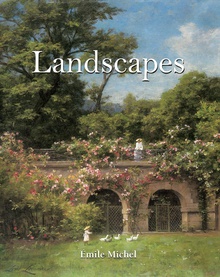
Although considered a minor genre for a long time, the art of landscape has risen above its forebears - religious and historic painting - to become a genre of its own. Giorgione in Italy, the Brueghels of the Flemish School, Claude Lorrain and Poussain of the French School, the Dutch landscape painters and Turner and Constable of England are just a few of the great landscapists who have left their indelible mark on the history of landscape and the art of painting as a whole. After serving for a long time as a backdrop for paintings and as a skill-practising …
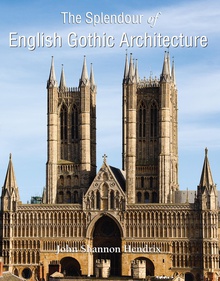
This book explains and celebrates the richness of Englishchurches and cathedrals, which have a major place inmedieval architecture. The English Gothic style developedsomewhat later than in France, but rapidly developed itsown architectural and ornamental codes. The author, John Shannon Hendrix, classifies English Gothic architecture in four principal stages: the early English Gothic, the decorated, the curvilinear, and the perpendicular Gothic. Several photographs of these architectural testimonies allow us to understand the whole originality of Britain during the Gothic era: in Canterbury, Wells, Lincoln, York, and Salisbury. The English Gothic architecture is a poetic one, speaking both to the senses and …
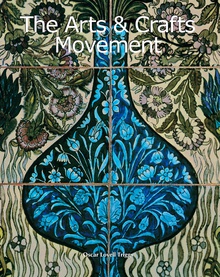
“Have nothing in your house that you do not know to be useful, or believe to be beautiful.” This quote alone from William Morris could summarise the ideology of the Arts & Crafts movement, which triggered a veritable reform in the applied arts in England. Founded by John Ruskin, then put into practice by William Morris, the Arts & Crafts movement promoted revolutionary ideas in Victorian England. In the middle of the “soulless” Industrial Era, when objects were standardised, the Arts & Crafts movement proposed a return to the aesthetic at the core of production. The work of artisans and …
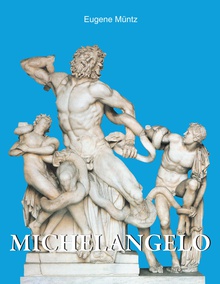
Michelangelo, like Leonardo, was a man of many talents; sculptor, architect, painter and poet, he made the apotheosis of muscular movement, which to him was the physical manifestation of passion. He moulded his draughtsmanship, bent it, twisted it, and stretched it to the extreme limits of possibility. There are not any landscapes in Michelangelo's painting. All the emotions, all the passions, all the thoughts of humanity were personified in his eyes in the naked bodies of men and women. He rarely conceived his human forms in attitudes of immobility or repose. Michelangelo became a painter so that he could express …