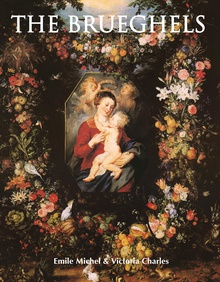
Pieter Brueghel was the first important member of a family of artists who were active for four generations. Firstly a drawer before becoming a painter later, he painted religious themes, such as Babel Tower, with very bright colours. Influenced by Hieronymus Bosch, he painted large, complex scenes of peasant life and scripture or spiritual allegories, often with crowds of subjects performing a variety of acts, yet his scenes are unified with an informal integrity and often with wit. In his work, he brought a new humanising spirit. Befriending the Humanists, Brueghel composed true philosophical landscapes in the heart of which …
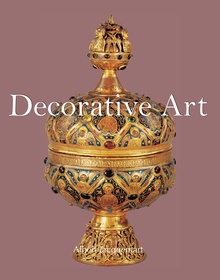
From the Middle Ages to contemporary times, decorative art can be defined by the artistic materials, designs and objects used in both architecture and interior design. Similar to many art forms decorative art continues to evolve, originating with pieces as simple as a chair, noted for its utility, to purely ornamental objects, celebrated for their aesthetic beauty. Decorative Art aims to eulogize these often undervalued objects by giving praise to all mediums of decorative art throughout the centuries. Originally never considered as fine art, their artistic potential was not acknowledged until the twentieth century when industrial production replaced artisanal creation. …
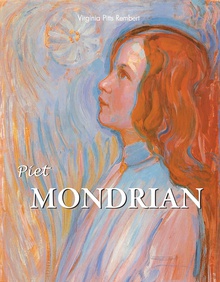
Pioneer and leader of the abstract art movement, Piet Mondrian (1872-1944) was known for his straight lines and pure colours. Fascinated by the mathematical laws of the universe, this Dutch artist nourished his work with his scientific discoveries and created a new abstract language alongside his allies Wassily Kandinsky and Fernand Léger. As his investigations advanced, his works purified and intensified to the rhythm of the travels and encounters that he enjoyed. Recognised during his lifetime as the founder of an avant-garde movement, he propagated his knowledge and his artistic vision to illustrious architects and stylists and still today remains …

The Renaissance began at the end of the 14th century in Italy and had extended across the whole of Europe by the second half of the 16th century. The rediscovery of the splendour of ancient Greece and Rome marked the beginning of the rebirth of the arts following the break-down of the dogmatic certitude of the Middle Ages. A number of artists began to innovate in the domains of painting, sculpture, and architecture. Depicting the ideal and the actual, the sacred and the profane, the period provided a frame of reference which influenced European art over the next four centuries. …
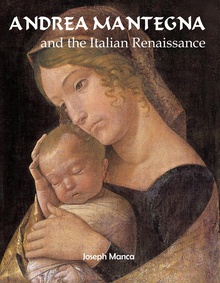
Mantegna; humanist, geometrist, archaeologist, of great scholastic and imaginative intelligence, dominated the whole of northern Italy by virtue of his imperious personality. Aiming at optical illusion, he mastered perspective. He trained in painting at the Padua School where Donatello and Paolo Uccello had previously attended. Even at a young age commissions for Andrea’s work flooded in, for example the frescos of the Ovetari Chapel of Padua. In a short space of time Mantegna found his niche as a modernist due to his highly original ideas and the use of perspective in his works. His marriage with Nicolosia Bellini, the sister …


Salvador Dalí (1904-1989), conocido principalmente por su estilo único y grandilocuente, puede presumir de un repertorio extraordinario donde concurren cine, escultura, fotografía y, por supuesto, pintura. Mientras que su nombre es a menudo asociado, con razón, al surrealismo, Dalí demostró su maestría en géneros tan dispares como el clasicismo, el modernismo y el cubismo. No por menos, supone una figura crucial en la historia del arte que ha inspirado innumerables libros y estudios. En este volumen los lectores podrán encontrar una fascinante apreciación de la vida y obra de uno de los pioneros del arte que más controversia y excitación …
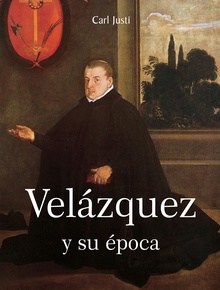
Diego Rodríguez de Silva y Velázquez (6 de junio de 1599 – 6 de agosto de 1660), conocido como Diego Velázquez, fue un pintor del Siglo de Oro español que tuvo una influencia considerable en la corte del rey Felipe IV. Junto con Francisco de Goya y El Greco, es considerado uno de los artistas más importantes de la historia de España. Su estilo, aunque se mantuvo muy personal, se enmarca claramente en el movimiento barroco. Las dos visitas de Velázquez a Italia, demostradas por documentos de la época, tuvieron una gran influencia en la manera en la que evolucionó …

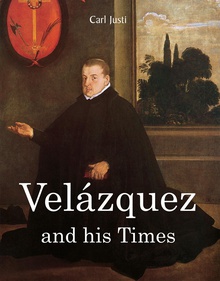
Diego Rodríguez de Silva y Velázquez (June 1599 – August 6 1660), known as Diego Vélasquez, was a painter of the Spanish Golden Age who had considerable influence at the court of King Philip IV. Along with Francisco Goya and Le Greco, he is generally considered to be one of the greatest artists in Spanish history. His style, whilst remaining very personal, belongs firmly in the Baroque movement. Velázquez’s two visits to Italy, evidenced by documents from that time, had a strong effect on the manner in which his work evolved. Besides numerous paintings with historical and cultural value, Diego …