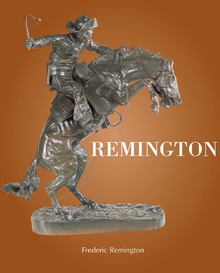
It is impossible to reflect upon Frederic Remington’s art without thinking of the merely human elements. Remington became interested in the American Indian, probably because he became interested in the active, exciting life of the American Great Plains. The Indian appealed to him not in any histrionic way, not as a figure stepped out from the pages of Hiawatha, but just as a human subject. Remington hit upon this truth when he travelled west. What he found there was majesty that he did not make, solely, an affair of Indians in war paint and feathers. Remington knew how the light …
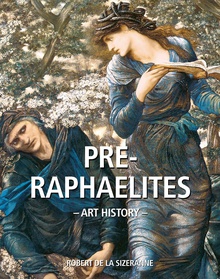
In Victorian England, with the country swept up in the Industrial Revolution, the Pre-Raphaelites, close to William Morris' Arts and Crafts movement, yearned for a return to bygone values. Wishing to revive the pure and noble forms of the Italian Renaissance, the major painters of the circle such as John Everett Millais, Dante Gabriel Rossetti and William Holman Hunt, in opposition to the academicism of the time, favoured realism and biblical themes over the affected canons of the 19th-century. This work, with its captivating text and rich illustrations, describes with enthusiasm this singular movement which notably inspired Art Nouveau and …
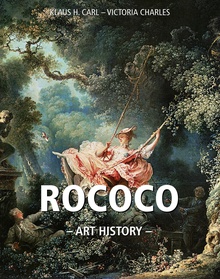
Deriving from the French word rocaille, in reference to the curved forms of shellfish, and the Italian Barocco, the French created the term Rococo. Appearing at the beginning of the 18th-century, it rapidly spread to the whole of Europe. Extravagant and light, Rococo responded perfectly to the spontaneity of the aristocracy of the time. In many aspects, this art was linked to its predecessor, Baroque, and it is thus also referred to as late Baroque style. While artists such as Tiepolo, Boucher and Reynolds carried the style to its apogee, the movement was often condemned for its superficiality. In the …
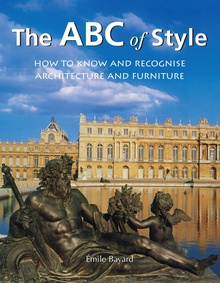
Ever wondered why your ceiling is shaped like the arches in a gothic cathedral? Or why your offi ce building looks so different from its neighboring counterparts? The ABC of Style invites you to explore the many different architectural and decorative interior styles from their ancient origins to the 1940s. Take a journey through history to see how the French aristocracy styled their palaces and castles to the simple designs of the Dominican monastic churches during the middle ages. Often, political changes implicate a stylistic transformation. Thus, the different European styles were frequently named after a sovereign or a historical …
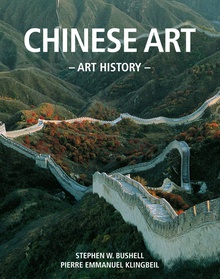
As the centre of Far-Eastern art, China has always fascinated Westerners, who take an interest in its religious leaders and savants as much as in its artists. Sophisticated and mysterious, Chinese art has persistently developed for 10,000 years through unequalled talent, which long ago established its artistic preeminence. Admired and imitated by all, today Chinese paintings and porcelain are the timeless reminders of a decadent past which continues to astound people around the world. Dealing not only with architecture, sculpture and painting but also with bronze and porcelain, this text offers a complete panorama of Chinese arts and civilisation until …

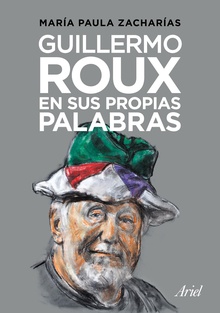
Guillermo Roux en sus propias palabras reconstruye la luminosa trayectoria de uno de los grandes artistas plásticos argentinos, a partir del diálogo que sostuvo durante cuatro años con María Paula Zacharías, reconocida periodista de arte. El relato comienza con su infancia en la década de 1930, cuando su padre –dibujante e ilustrador profesional– lo alentó a amar el oficio. A los 15 años Roux ingresó como dibujante a la editorial de Dante Quinterno; luego vivió varias vidas, viajando de Buenos Aires a Roma y de Jujuy a Nueva York, hasta tomar la decisión que marcaría un antes y un después: …
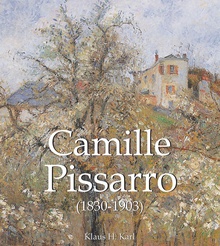
Camille Pissarro was a pivotal figure of Impressionism, perhaps the world’s most famous art movement. He also tackled different forms of Neoimpressionism, while maintaining very personal characteristics in his art all throughout his life. A key figure in the Impressionist movement and a participant in every one of their exhibitions, Camille Pissarro (1830-1903) was considered the patriarch of the group. Born in the Danish West Indies, he travelled to Venezuela, and studied with Corot in France, who influenced his early works and who triggered his passion to paint outdoors. His style evolved as he progressed in life, influenced too by …
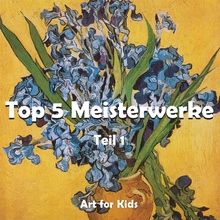
Seit die alten Griechen die ersten Kouroi schufen, inspirierten Kinder einige der größten Künstler der Welt. Ob Porträts von ihren eigenen Kindern, Freunden oder Familienmitgliedern, oder als nostalgische psychologische Studie der eigenen Kindheit, Darstellungen von Kindern in der Kunst bleiben eindrucksvolle Beispiele für den Schnittpunkt zwischen der malerischen Unschuld der Kindheit und der methodischen Arbeit des erwachsenen Künstlers. In diesem neuen Puzzle-Buch bekommen Kinder die Gelegenheit, kleine Jungen und Mädchen wie sie selbst, von großen Künstlern dargestellt, zu sehen und dabei zu erfahren, wie Kinder im Laufe der Geschichte aufwuchsen, und gleichzeitig eine Verbindung zur Welt der Kunst zu entwickeln.
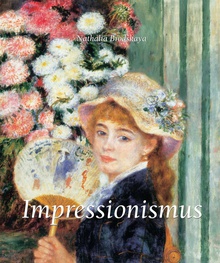
Kurz vor seinem Tod schrieb Claude Monet: „Es tut mir noch immer Leid, dass ich verantwortlich bin für den Namen einer Gruppe von Malern, von denen die meisten ganz und gar keine Impressionisten waren.“ Monet charakterisierte seine Einstellung zur Malerei so: „Ich male, was ich sehe, und nicht das, was die Anderen gern sehen möchten.“ In diesem offensichtlichen Paradox zwischen einer Gruppe, die sich selbst als ein zusammengehöriges Ganzes sah, aber auch als den Ausdruck der künstlerischen Individualität als ihrem höchsten Ziel, sieht die Autorin, Nathalia Brodskaya, die Ursache der zahlreichen Widersprüche in der Kunst gegen Ende des 19. Jahrhunderts. …
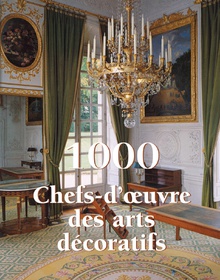
Des poteries sumériennes antiques aux verres teintés de Tiffany, les arts décoratifs constituent une part importante de la vie des hommes depuis des générations. Alors que les beaux-arts demeurent davantage dans les galeries et les musées, les arts décoratifs sont ceux de la vie de tous les jours, associant la beauté à la fonctionnalité, le prosaïque au fantastique. Dans cet ouvrage, Albert Jacquemart et Émile Michel célèbrent la beauté et le potentiel artistique des objets du quotidien. Après avoir parcouru ce livre, les lecteurs auront un nouvel avis sur les subtilités artistiques des objets utilitaires.
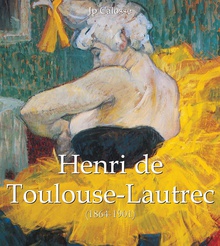
Henri de Toulouse-Lautrec est un peintre, dessinateur, lithographe, affichiste et illustrateur français, né le 24 novembre 1864 et mort le 9 septembre 1901.Toulouse-Lautrec a vécu pour son art. Peintre du postimpressionnisme, illustrateur de l’Art nouveau et remarquable lithographe, il a croqué le mode de vie de la Bohème parisienne à la fin du XIXe siècle. Au milieu des années 1890, il est considéré comme « L’âme de Montmartre », dans le quartier parisien où il habite. Ses peintures décrivent la vie au Moulin-Rouge et dans les cabarets et théâtres montmartrois ou parisiens. Il peint Aristide Bruant mais aussi la vie …