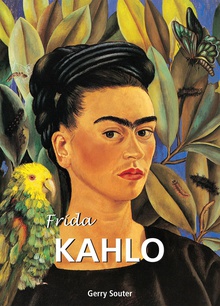
Hidden behind the portraits of Frida Kahlo is the remarkable story of the artist’s life. It is precisely this combination that attracts the spectator. Frida’s work is a testimony of her life; it is not often that one can understand an artist simply by looking within the frame of their paintings. Frida Kahlo is without any doubt Mexico’s gift to art history. She was just eighteen when a terrible accident changed her life forever, leaving her disabled and in constant pain. But her explosive temper, her unwavering determination and her eagerness gave her the strength to develop her artistic talent. …

Learning to draw animals can become a fascinating adventure. This book guides you step by step, helping you bring animals to life on the page with confidence and ease. From familiar domestic companions to exotic wildlife from distant continents, you will discover how to draw a wide variety of animals using a clear and accessible method based on simple geometric shapes. Ovals, rectangles and triangles gradually evolve into lively, expressive figures. As you progress through the chapters, you will learn to understand proportions, balance and movement while sharpening your sense of observation and developing technical precision. With practice and attention …
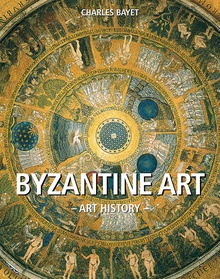
For more than a millennium, from its creation in 330 A.D. until its fall in 1453, the Byzantine Empire was a cradle of artistic effervescence that we are only beginning to rediscover. Endowed with the rich heritage of Roman, Eastern and Christian cultures, Byzantine artists developed an architectural and pictorial tradition, marked by symbolism, whose influence extended far beyond the borders of the Empire. Today, Italy, Northern Africa, and the Near East preserve the vestiges of this sophisticated artistic tradition, with all of its mystical and luminous beauty. The magnificence of the palaces, churches, paintings, enamels, ceramics and mosaics from …
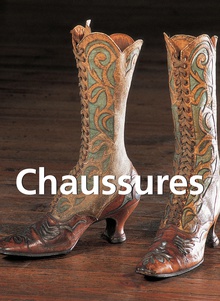
Qu’y-a-t-il de plus banal qu’une paire de chaussures ? Pourtant, aujourd’hui encore, la moitié de l’humanité n’en connaît pas l’usage. Dans un monde où la chaussure est devenue un objet de consommation, comment oublier que nos arrière-grands-parents l’utilisaient pour les cérémonies et autres occasions exceptionnelles. L’industrie a accompli son devoir : produire en grande quantité à des prix plus abordables. Mais il fut un temps où la chaussure symbolisait la force des légions romaines, la puissance des seigneurs du Moyen Âge européen ou encore l’oppression des femmes chinoises. C’est une histoire longue et passionnante que l’auteur Marie-Josèphe Bossan, conservateur du …

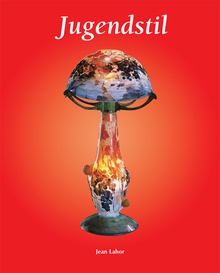
Der Jugendstil (französisch : Art nouveau) bezeichnet einen in den 1880er und 1890er Jahren entwickelten Stil in der angewandten Kunst und der Architektur der westlichen Welt. Er stellte eine Reaktion auf die industrielle Revolution und das kreative Vakuum in ihrem Gefolge dar und bildete den Nukleus der „Renaissance“ der angewandten Künste. Das Hauptziel der Bewegung bestand darin, durch eine Rückkehr zum Studium natürlicher Objekte eine neue Ästhetik der Natur zu entwickeln. Um dieses Ziel zu erreichen, bevorzugten Künstler wie Gustav Klimt, Koloman Moser, Antoni Gaudí, Jan Toorop und William Morris innovative Techniken und neue Formen. Der Jugendstil setzte sich mit …
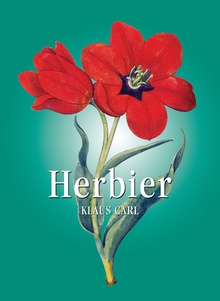
Le terme « herbier » dans son acceptation première désigne un ouvrage traitant des plantes. C'est ce sens qu'il faudra retenir pour l'herbier que nous vous proposons. Nous avons choisi l'herbier de Basilius Besler, médecin, botaniste et éditeur allemand, du XVIe-XVIIe siècle. Besler dirigea la pharmacie Zum Marienbild à Nuremberg de 1589 à 1629, ville où il créa également un jardin botanique et un cabinet de curiosités. En 1597, l'évêque d'Eichstätt demanda à Besler de créer un jardin botanique sur un terrain à Willibaldsburg. Le jardin dessiné par Besler, d'une superficie d'un hectare et comportant huit terrasses, devint rapidement célèbre. …

Amante de los animales o artista en ciernes, ¿quién no ha deseado alguna vez dibujar un animal? Tanto si la pretensión es realizar bocetos para impresionar a los amigos como si se trata de mera satisfacción personal, o si la finalidad es inmortalizar nuestro animal de compañía para adornar orgullosos con su retrato nuestras paredes, todo esto está al alcance de nuestra mano. A pesar de lo que se piensa muchas veces, no resulta difícil aprender solos a dibujar. Para llegar a esto, basta con seguir un método lógico y racional. Este libro desvela cómo llegar a dibujar gatos a …
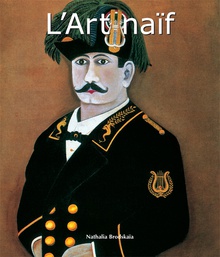
L’art naïf connaît ses premiers succès à la fin du XIXe siècle. Des « peintres du dimanche » développent avec spontanéité et simplicité une forme d’expression qui, jusqu’alors, avait peu intéressé les artistes et les critiques d’art. Influencée par les arts primitifs, la peinture naïve se distingue par la précision de ses traits, la vivacité et la gaieté de ses couleurs, ainsi que ses formes brutes, souvent élémentaires. L’art naïf est représenté par des artistes tels qu’Henri Rousseau, Séraphine de Senlis, André Bauchant et Camille Bombois. Ce mouvement s’est également développé à l’étranger, où se sont démarqués des artistes aussi …
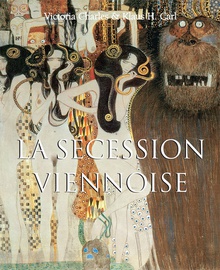
« À chaque âge son art, à chaque art sa liberté. » Voila la devise de la Sécession viennoise, mouvement dissident (1892-1906), qui fut porté par une vingtaine d’artistes éclairés luttant contre l’académisme conservateur pétrifiant Vienne et tout l’empire austro-hongrois. Courant de l’Art nouveau, la Sécession, officiellement fondée en 1897 par Klimt, Moll et Hoffmann, ne fut pas une révolution artistique anonyme parmi tant d’autres. Contestataires par essence, les sécessionnistes viennois ont peint ce qu’on ne devait pas peindre : les frôlements, les baisers, les violences. Se définissant comme un art total sans contrainte politique ni commerciale, l’effervescence de ce …
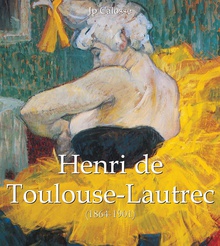
Known for his posters for cabarets and performances, Henri de Toulouse-Lautrec (1864- 1901) was the painter of Parisian nightlife par excellence. Completely immerged in the bohemian milieu of the period, he produced numerous paintings and lithographs representing the lower levels of society. More than any other painter of his time, Lautrec stands out as the embodiment of Paris. At night, the city of hidden and frenzied pleasures, as well as of outdoor games during the day; the city on whose perpetual stage-boards the passing show ceaselessly changes into history has never been better understood or more strikingly expressed on canvas. …